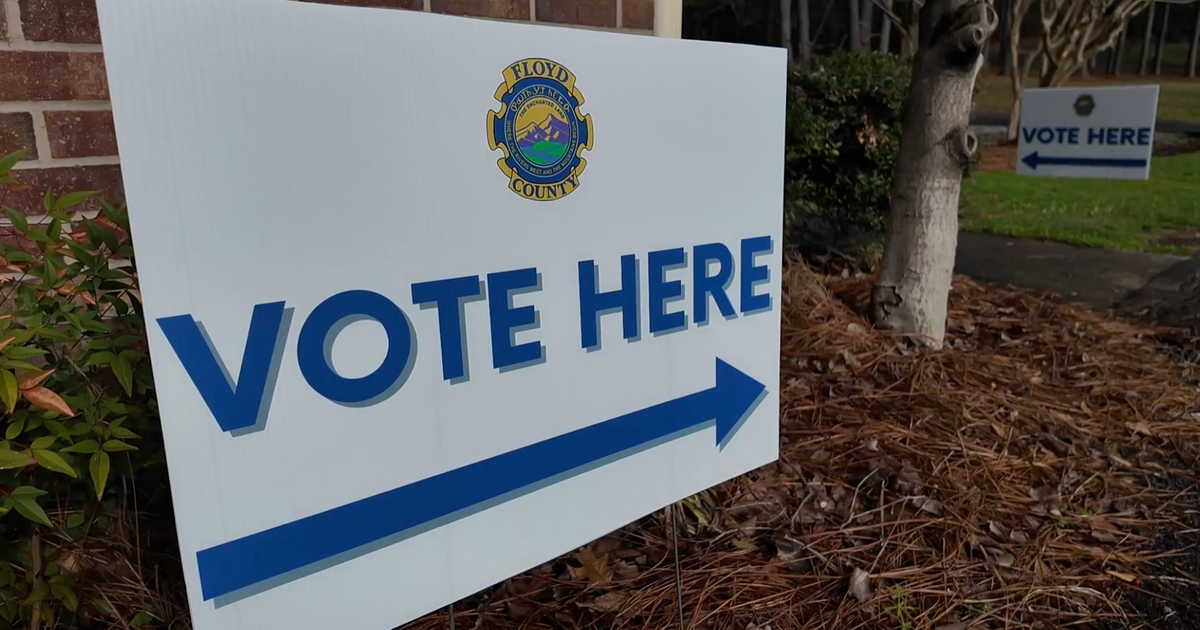
A runoff in Georgia's 14th Congressional District Tuesday pits Republican Clay Fuller vs. Democrat Shawn Harris to replace Marjorie Taylor Greene; the winner could slightly affect the House where Republicans (including one independent who caucuses) hold 218 seats vs. Democrats' 214. Harris narrowly outperformed Fuller in the March 10 special election but no candidate won a majority, forcing the runoff; Fuller has Trump's endorsement and the district is historically very pro-Greene (Greene won by ~50 points in 2020 and ~30 points in subsequent reelections). The race is being framed as an early test of voter reaction to Trump's handling of the Iran conflict and economic pain points (cost of living, health care).
The runoff functions as a high-leverage political signal with outsized market implications because a single-seat outcome meaningfully changes the negotiating power for near-term fiscal decisions and authorization votes. Mechanically, even a single-seat shift increases the probability of expedited appropriations or emergency supplemental authorizations for military operations; market participants should treat this as a binary catalyst that can reprice defense demand expectations over a 3–12 month horizon.
Transmission to markets runs through three clear channels: defense spending (direct revenue linearity to prime contractors), energy-risk premia (Brent volatility and insurance costs), and real-rate/term-premium adjustments (geopolitical risk lifts the term premium by ~10–30bps in stressed episodes). A hawkish political signal can produce a 5–12% knee-jerk rally in defense names and a 3–8% move in integrated oil stocks in the first 30–90 days, while a de-escalation outcome tends to reverse those moves within 2–6 weeks.
Timing matters: the runoff is an immediate binary; the May primaries and November general are the next inflection points to reprice sustained policy direction. Tail risks include rapid diplomatic de-escalation (which would unwind defense/oil moves within weeks) and a domestic shock (economic data or bank stress) that pushes investors to ignore geopolitics for cyclical risk management. Position sizes should therefore be tactical, event-driven, and paired with explicit hedges that bleed time-value rather than directional exposure alone.
AI-powered research, real-time alerts, and portfolio analytics for institutional investors.
Request DemoOverall Sentiment
neutral
Sentiment Score
0.00
