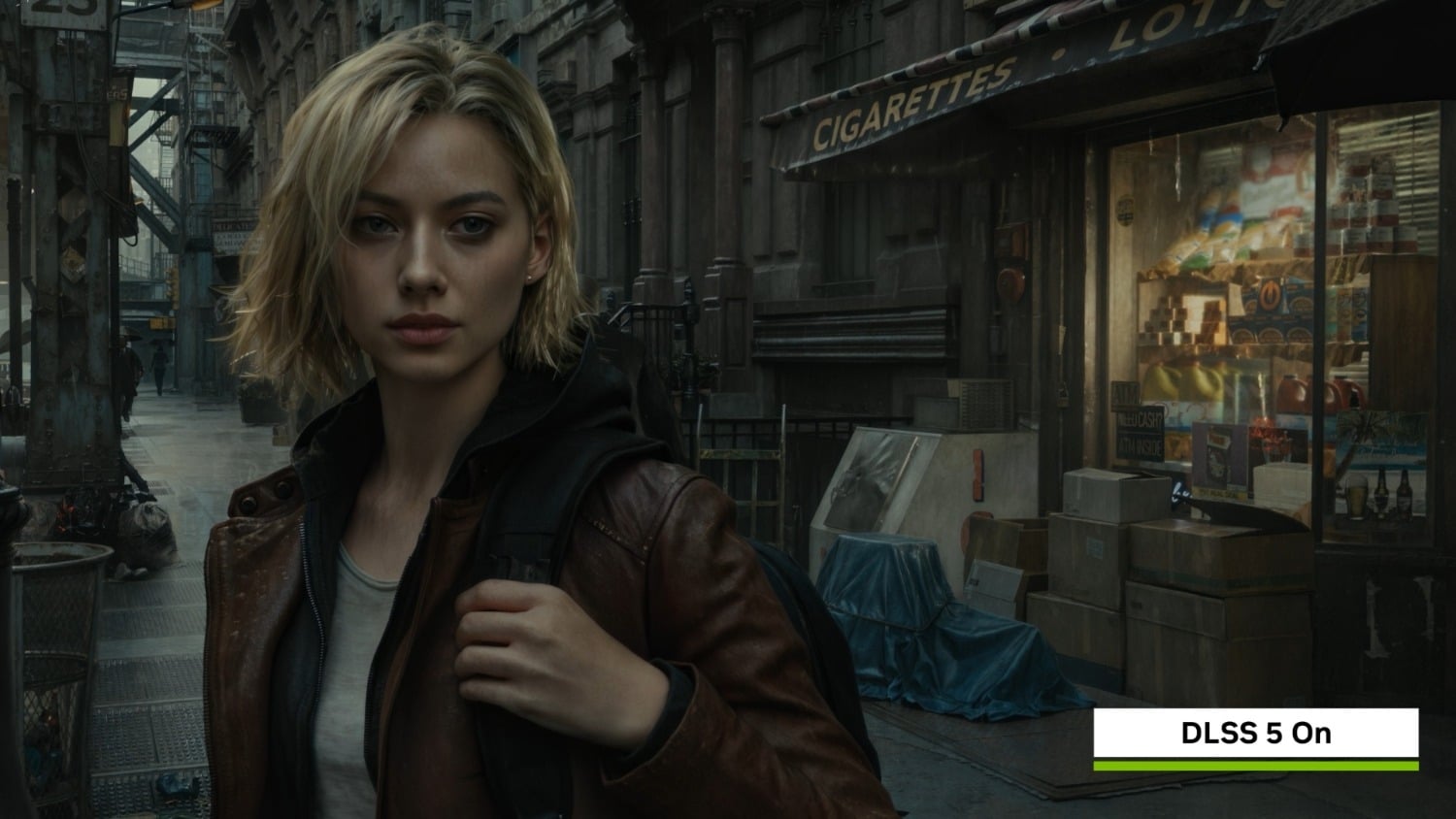
NVIDIA's DLSS 5 announcement trailer, which had ~2.3M views, was removed from YouTube after Italian broadcaster La7 issued a copyright claim that blocked uploads. The takedown compounds ongoing community backlash over DLSS 5's character-rendering visuals — CEO Jensen Huang has publicly addressed criticisms — creating short-term reputational and PR risk but likely minimal direct financial impact; expect the issue to be resolved quickly.
Primary beneficiary remains the hardware-side AI provider who captures utility from developer adoption rather than PR cycles — a single marketing stutter does not change unit economics of AI rasterization. The marginal value to game studios and cloud streamers is reduced GPU-hours per frame; every 10-20% shader/RT cost reduction maps to roughly 8-12% lower cloud rendering spend, which compounds across live-service titles and could shorten payback on engine integration to <12 months for large studios. That mechanics-focused dynamic favors NVDA over purely consumer-facing competitors because it monetizes via higher GPU utilization in data centers and more expensive silicon nodes over multiple years.
Platform-level second-order risk is material for ad/hosting businesses: false positives from automated copyright/ID systems create legal, regulatory and advertiser-reputation externalities that can increase moderation costs and slow product launches. Expect Google/YouTube risk to surface on two timelines — a near-term operational hit as they scramble to correct false takedowns (days-weeks) and a medium-term regulatory/legal franchise risk if lawmakers push for stricter liability/appeal processes (6-18 months). For NVDA, developer relationships and distribution channels are the real choke points — if studios insist on conservative, opt-in DLSS defaults to avoid character-art backlash, adoption could lag initial product-cycle assumptions by 3-9 months.
The market is over-reactive to headline noise but under-pricing the regulatory/frictional costs that platforms may bear. Tactical trades should separate secular AI-rendering demand (NVDA) from platform moderation/regulatory exposure (GOOGL/GOOG). Positioning that captures continued GPU demand while hedging near-term PR/regulatory volatility on platforms offers asymmetric payoff: long NVDA convexity with short-dated protection, and selective short or hedged positions in ad/hosters until policy clarity emerges (watch date-stamped policy fixes or hearings as catalysts).
AI-powered research, real-time alerts, and portfolio analytics for institutional investors.
Request DemoOverall Sentiment
mildly negative
Sentiment Score
-0.25
Ticker Sentiment
