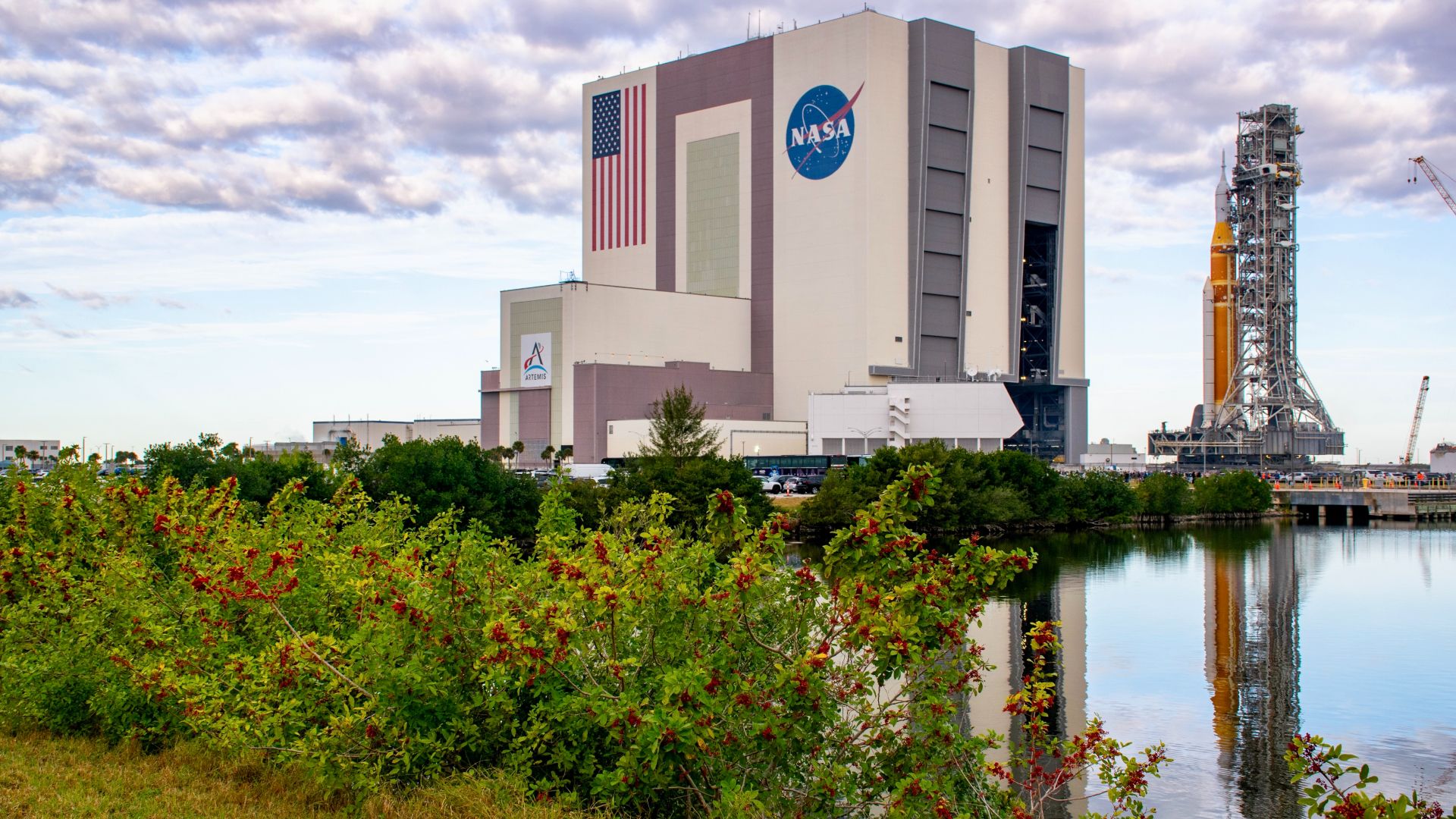
NASA has moved the Artemis 2 SLS wet dress rehearsal up to as early as Jan. 31, with cryogenic fueling of more than 700,000 gallons (2.65 million liters) to bring the vehicle to roughly 5.75 million pounds fully fueled and run terminal countdown operations down to T‑33 seconds. A successful test could clear the way for a crewed launch as early as Feb. 6 for a roughly 10‑day free‑return lunar mission carrying four astronauts, though weather risks and prior fueling-leak issues inject schedule uncertainty ahead of follow-on Artemis 3 lunar-landing plans targeted for 2028.
Market structure: A clean wet dress rehearsal and an on-time Artemis 2 launch would be an explicit positive signal for large defense/space primes (Lockheed Martin LMT, Northrop Grumman NOC, Boeing BA) and thematic space ETFs (UFO, ARKX) because it reduces program execution risk and increases likelihood of sustained NASA budgets; small specialized suppliers (single-source vendors) face binary operational risk. Pricing power shifts modestly toward primes that supply Artemis hardware and sustainers of lunar infrastructure; SpaceX (private) remains the swing actor for HLS pricing/power given Starship’s role in Artemis 3.
Risk assessment: Tail risks include a catastrophic fueling-related failure or systemic ground-infrastructure flaw that delays the program 6–18+ months (resulting in 10–30% re-rating risk for small-cap suppliers and reputational hit for BA/LMT). Immediate window: Jan 29–Feb 6 (wet dress rehearsal + possible launch); short term: 0–3 months (Congressional budget language, contractor statements); long term: 2026–2028 (Artemis 3 and HLS awards). Hidden dependencies: weather/freezing, cryogenic transfer integrity, single-point hardware (escape system brakes), and political funding cycles.
Trade implications: Favor selective long exposure to resilient primes and space ETFs on confirmed test/launch success, while using short-duration options to limit downside. Consider pair trades to exploit execution-risk differences (e.g., long NOC vs short BA) and use 3–6 month 10% OTM calls for convex upside after positive catalysts; hedge with tail protection sized to 0.5–1% of portfolio.
Contrarian angles: The market often underprices the downside of a single technical fault — a failed wet dress rehearsal could push program risk premia higher and widen credit spreads for smaller contractors by 100–200bp. Conversely, a flawless run could be a near-term sentiment catalyst that is underappreciated by mainstream allocators stuck in macro rotation, creating a 20–40% upside window for narrow-space thematic exposure over 3–12 months.
AI-powered research, real-time alerts, and portfolio analytics for institutional investors.
Request DemoOverall Sentiment
neutral
Sentiment Score
0.15
