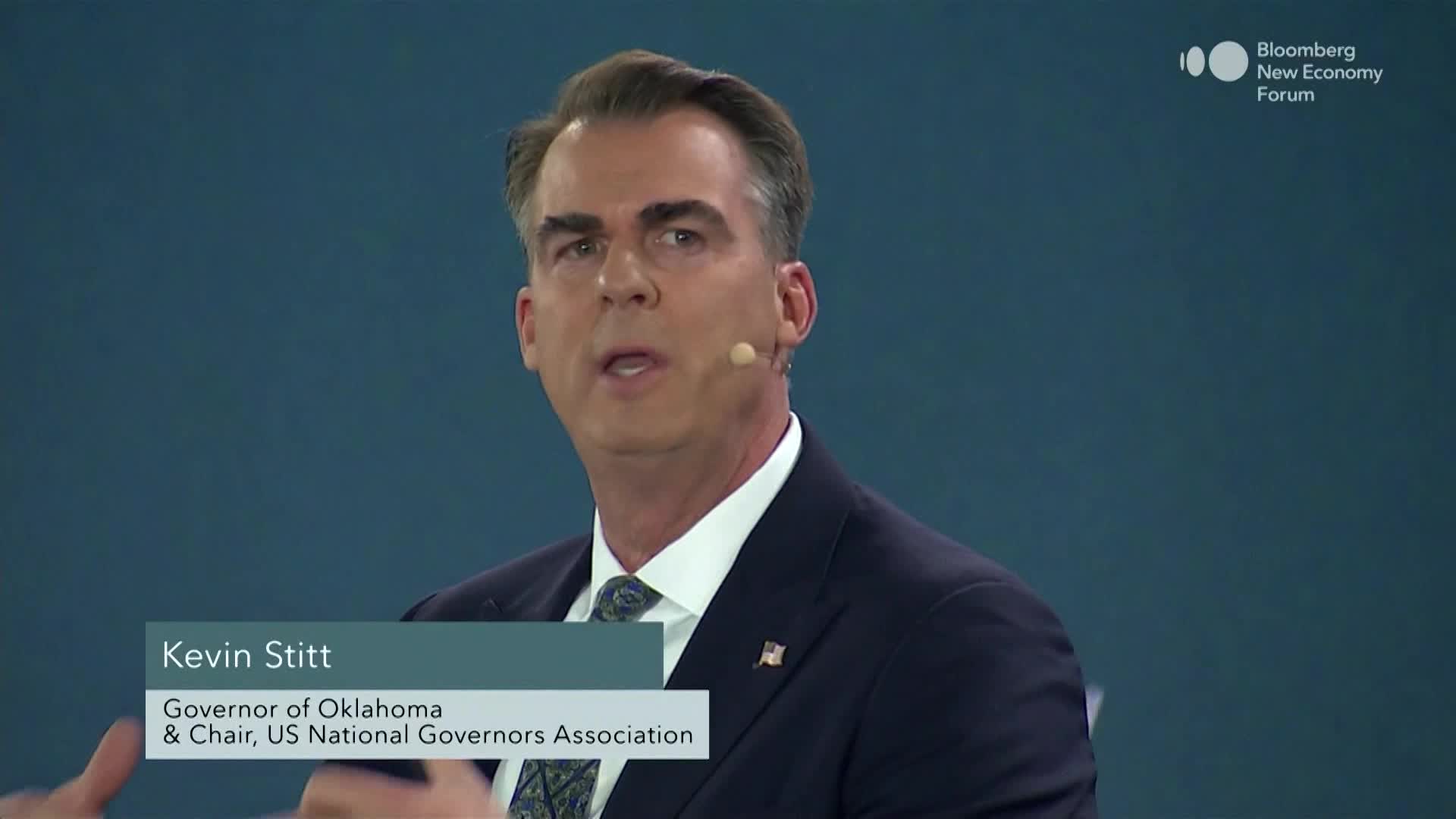
At the 2025 Bloomberg New Economy Forum in Singapore, former Commerce Secretary Gina Raimondo, Oklahoma Governor and NGA Chair Kevin Stitt, and FCLTGlobal CEO Sarah Keohane Williamson joined Bloomberg’s David Gura to debate the future of U.S. manufacturing amid ongoing reindustrialization efforts. The panel underscored high-level engagement between federal, state and private-sector leaders on rebuilding domestic industrial capacity, highlighting the policy and capital-allocation challenges that will shape competitiveness and supply-chain resilience going forward.
At the 2025 Bloomberg New Economy Forum in Singapore, former Commerce Secretary Gina Raimondo, Oklahoma Governor and NGA Chair Kevin Stitt, and FCLTGlobal CEO Sarah Keohane Williamson joined Bloomberg’s David Gura to debate the future of U.S. manufacturing, focusing on reindustrialization and rebuilding domestic industrial capacity. The panel emphasized coordinated federal, state and private-sector engagement as central to improving competitiveness and supply-chain resilience, identifying policy design and capital allocation as the primary bottlenecks to progress.
The coverage and accompanying signals show a neutral sentiment (0.0) and a low near-term market-impact score (0.1), and no specific tickers were implicated, indicating this is a strategic, policy-driven narrative rather than an immediate earnings or market-moving event. Themes highlighted include Trade Policy & Supply Chain, Regulation & Legislation, and Technology & Innovation, implying investment opportunities will be mediated by legislative outcomes, state incentive programs and the pace of capital deployment into automation and onshoring projects.
Implications for investors are that benefits from U.S. reindustrialization are likely uneven and long-dated: firms with clear near-term contracts, state-level support, or demonstrable technology-driven productivity gains should capture early value, while broad market reactions will remain muted until policy clarity and capital flows materialize. Key risks are execution lag, shifting policy incentives across jurisdictions, and the capital intensity required to materially change supply-chain footprints.
AI-powered research, real-time alerts, and portfolio analytics for institutional investors.
Request DemoOverall Sentiment
neutral
Sentiment Score
0.00
