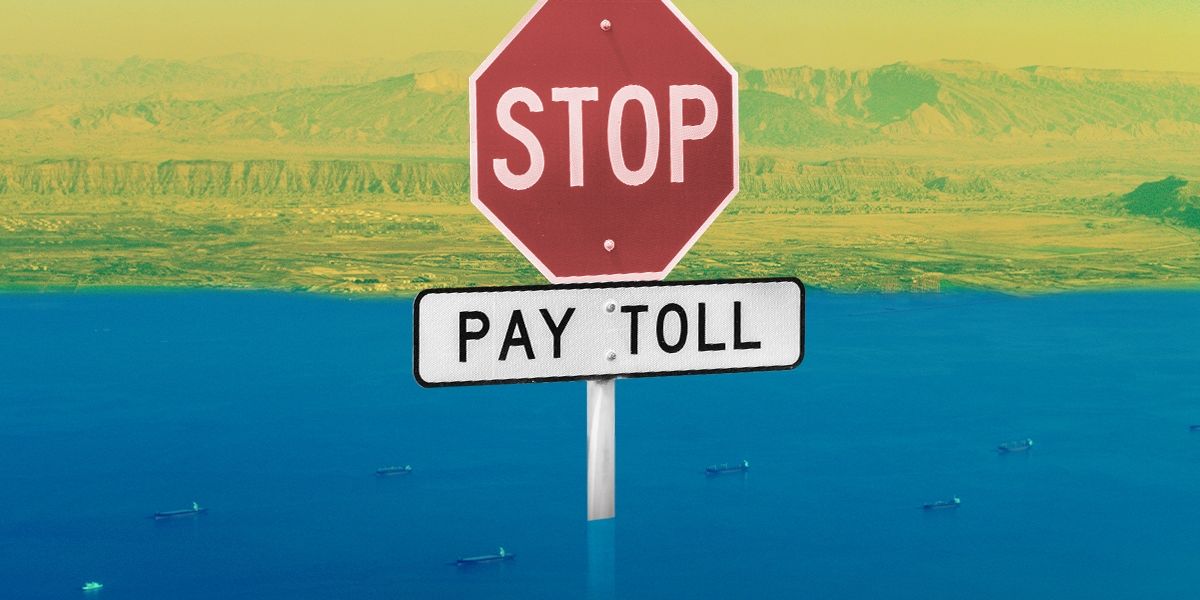
The U.S.-Iran ceasefire (roughly 10–14 days) reopened coordination for safe passage through the Strait of Hormuz and permits Iran/Oman to levy a proposed ~$1/barrel toll (payable in yuan or stablecoins), implying an effective carbon price of ~ $2.33/ton CO2; oil prices fell below $100 after-hours (benchmark had jumped from $67 to $115 since Feb 28). The toll is modest, mainly borne by Persian Gulf producers and would fund Iran’s IRGC rather than decarbonization. Separately, the EPA finalized looser methane rules (criticized for enabling more flaring), a tax-analysis shows U.S. oil majors send a small share of 2025 tax payments to the U.S. (Chevron ~2%, Exxon ~9%, ConocoPhillips ~22%), and Hawaiian Electric warns residential bills could rise ~20–30% amid oil-driven power costs.
The ceasefire and Iran–Oman transit proposal compress immediate headline volatility but create a persistent structural surcharge on Persian‑Gulf exports that functions like a geographically concentrated marginal cost shift. That asymmetric cost — collected outside Western fiscal systems and settled in yuan/stablecoins — raises transaction frictions for Gulf producers and will nudge trading flows toward China‑friendly corridors, tightening risk premia on insurance and freight rather than on commodity fundamentals.
Majors with large international tax footprints and fixed downstream commitments (CVX, XOM) face a twofold squeeze: a modest hit to realized margin on Gulf barrels and growing political/regulatory risk in their primary domiciles as revenue flows reroute. Conversely, assets that capture domestic price uplift (select US E&P and refiners long light sweet barrels) and the renewables/electrification supply chain stand to gain secularly as customers and governments accelerate fuel switching — an acceleration that can show measurable demand elasticity inside 12–36 months.
Key catalysts to watch are operational details (who actually collects tolls, settlement rails), insurance market repricing for Gulf transits, and US policy responses (SPR draws or secondary sanctions). In the near term (days–weeks) market moves will be driven by news flow on enforcement and Oman’s stance; over 3–12 months, capex reallocation and trade‑settlement shifts will matter most. Tail risks include abrupt reclosure or escalation that reintroduces $10+/bbl swings and forces rapid course corrections in hedges and rate cases.
The consensus underweights the potency of payment‑rail changes: if yuan/stablecoin settlement becomes routinized, it incrementally undermines the dollar’s transaction primacy in energy trade and accelerates non‑USD clearing infrastructure — a multi‑year structural tailwind for China‑aligned financial plumbing and a slow headwind for US financial/energy sovereignty premiums.
AI-powered research, real-time alerts, and portfolio analytics for institutional investors.
Request DemoOverall Sentiment
mildly negative
Sentiment Score
-0.20
Ticker Sentiment
