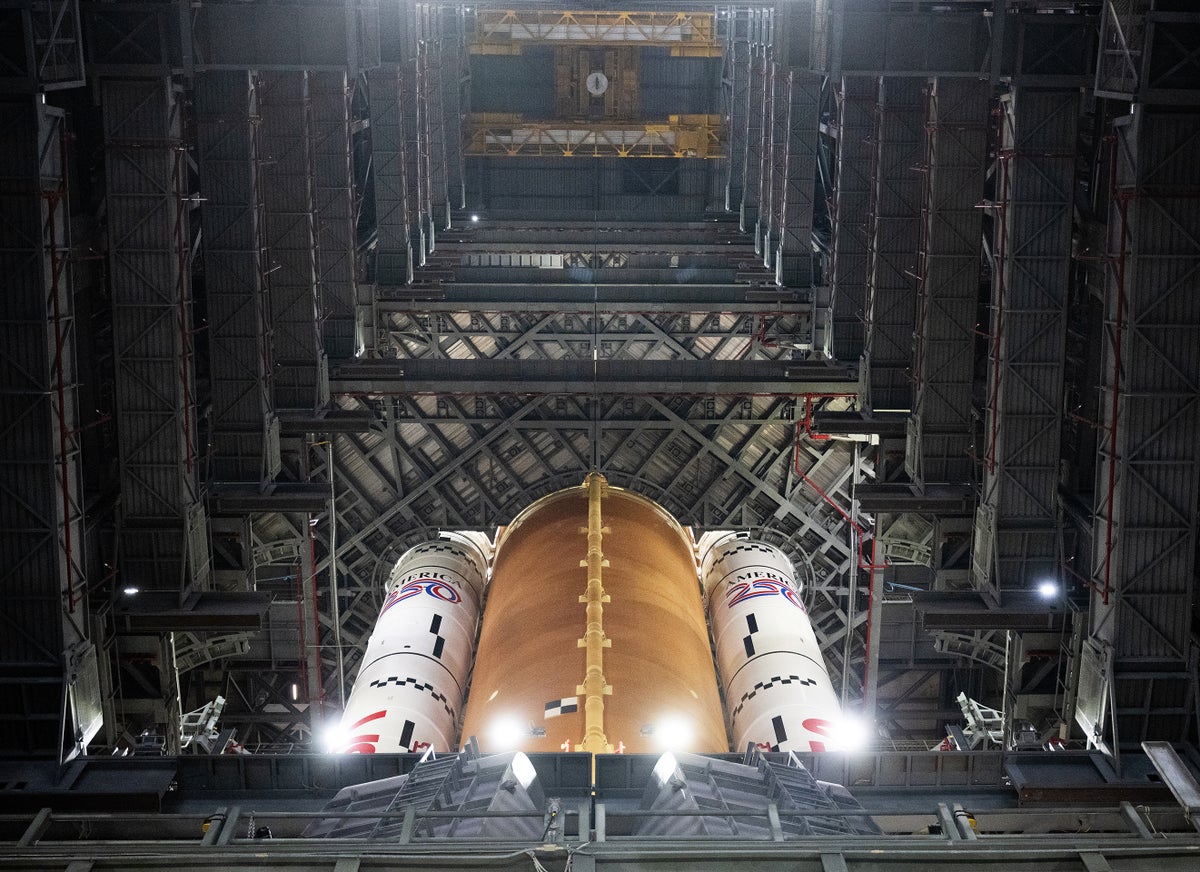
2026 is poised to be a landmark year for space activity with NASA’s Artemis II crewed lunar flyby (first crewed SLS/Orion flight) potentially launching as early as February, alongside multiple high-profile missions including Firefly’s Blue Ghost 2, China’s Chang’e 7, JAXA’s MMX to Phobos, Rocket Lab/MIT’s Venus Life Finder, China’s Tianwen-2 asteroid sample-return and ESA’s Hera rendezvous with Didymos. Major telescope deployments (Nancy Grace Roman, China’s Xuntian, and ramped Vera C. Rubin operations) and continued JWST observations will advance science, while sustained flight tests of reusable vehicles (SpaceX Starship, Blue Origin’s New Glenn, LandSpace’s Zhuque-3) are driving lower launch costs and intensifying competition in commercial launch markets — a structural trend with potential long-term upside for aerospace supply chains and service providers.
Market structure: The 2026 cadence (Artemis II, Starship tests, New Glenn/Zhuque-3 flights, Roman/Rubin ramp) accelerates a shift from scarcity to scale in launch services — expect launch pricing pressure of roughly -30% to -60% over 3 years if reusability proves routine, benefiting large satellite OEMs (MAXR) and constellation operators while compressing margins for small, single-use launchers. Government prime contractors (LMT, NOC, BA) win near-term program revenue from Artemis/SLS sustainment and payload contracts, but face competition for commercial launches and supply-chain repricing. Increased launch cadence will raise demand for satellite buses and sensors, improving revenue visibility for mid-cap space suppliers over 12–36 months.
Risk assessment: Key tail risks include a major Starship failure or FAA grounding (10–25% probability) that would slow reusability adoption, and geopolitically-driven export controls or Chinese launch subsidies that could bifurcate global market share. Timing matters: immediate (days–weeks) catalysts are license decisions and JWST observations in spring 2026; short-term (months) are Artemis II slip risks and Tianwen-2 milestones; long-term (2–5 years) is structural price collapse and consolidation. Hidden dependencies: government budget appropriations and insurance market capacity; a 10–20% cut to NASA/ESA budgets would materially change contractor revenue forecasts.
Trade implications: Tactical longs: establish 1.5–3% positions in RKLB and MAXR for 12–36 month exposure to increasing payload demand and private science missions; add 1% in defense primes LMT or NOC to capture Artemis hardware follow-ons. Shorts/hedges: trim or short small pure-play launchers (including FLY exposure) by 50% if runway <12 months; buy 12–18 month protective puts on micro-launch peers sized 0.5–1% portfolio. Options: buy Dec 2026 call spreads on RKLB (12–18 month tenor) to cap premium outlay while retaining upside if reusable cadence accelerates.
Contrarian angles: Consensus overweights ‘winner-take-all’ SpaceX narrative; market may underprice fragmentation as New Glenn and Zhuque-3 materialize — expect multi-player pricing competition that favors vertically integrated satellite manufacturers over raw launchers. The market may be underestimating consolidation risk: a 20–30% probability exists that >3 small launchers fail or get acquired within 24 months, creating value opportunities to buy survivors post-distress. Unintended consequence: arming launch competition without matching downstream demand growth could crater small-launch valuations faster than realized.
AI-powered research, real-time alerts, and portfolio analytics for institutional investors.
Request DemoOverall Sentiment
moderately positive
Sentiment Score
0.45
Ticker Sentiment
