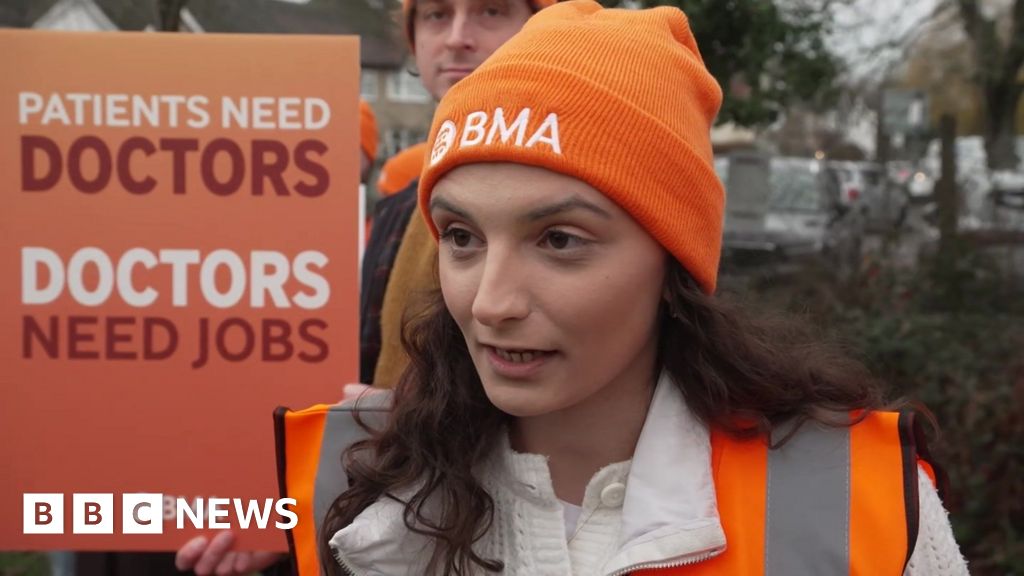
The UK saw a five-day walkout by resident (junior) doctors over pay and shortages of specialty training places, with protesters citing fierce competition (30,000 applicants for 10,000 posts in 2025) and fears of future unemployment; this is the 14th walkout in the long-running dispute. The government says it has offered a 28.9% pay uplift and will create 4,000 extra specialty training places prioritising UK graduates, but the BMA contends real pay is still about a fifth below 2008 levels and calls the offer insufficient. Hospitals report immediate operational disruption—Royal Berkshire estimates about 350 appointments per strike day (roughly 5% of daily cases) will need rescheduling—underscoring a worsening workforce pipeline that may exacerbate NHS capacity constraints and raise fiscal and political risks.
A five-day walkout by resident (junior) doctors began at 07:00 GMT and is the 14th strike in a prolonged dispute over pay and training capacity; protesting clinicians cite sleep deprivation, overwork and the prospect of unemployment if specialist training places are not increased. The BMA states real pay for resident doctors is about a fifth lower than in 2008 after inflation, while the government highlights a proposed 28.9% pay uplift and a jobs package as its response. The Department of Health reported 30,000 applicants for 10,000 specialty training places in 2025, and the government has pledged emergency legislation to create 4,000 additional training posts and prioritise UK-trained graduates to relieve the "choked" recruitment pipeline.
Hospitals are already seeing measurable operational impact: Royal Berkshire NHS Trust estimates roughly 350 appointments per strike day (about 5% of daily cases) will need rescheduling, creating backlog and patient-impact risk. Front-line doctors and the BMA characterize the government offer as insufficient and untimely, keeping the risk of further industrial action elevated despite the announced measures. The combination of recurrent strikes, constrained training throughput and government intervention raises near-term service-delivery disruption and medium-term fiscal and political uncertainty for the NHS and its suppliers.
AI-powered research, real-time alerts, and portfolio analytics for institutional investors.
Request DemoOverall Sentiment
moderately negative
Sentiment Score
-0.40
