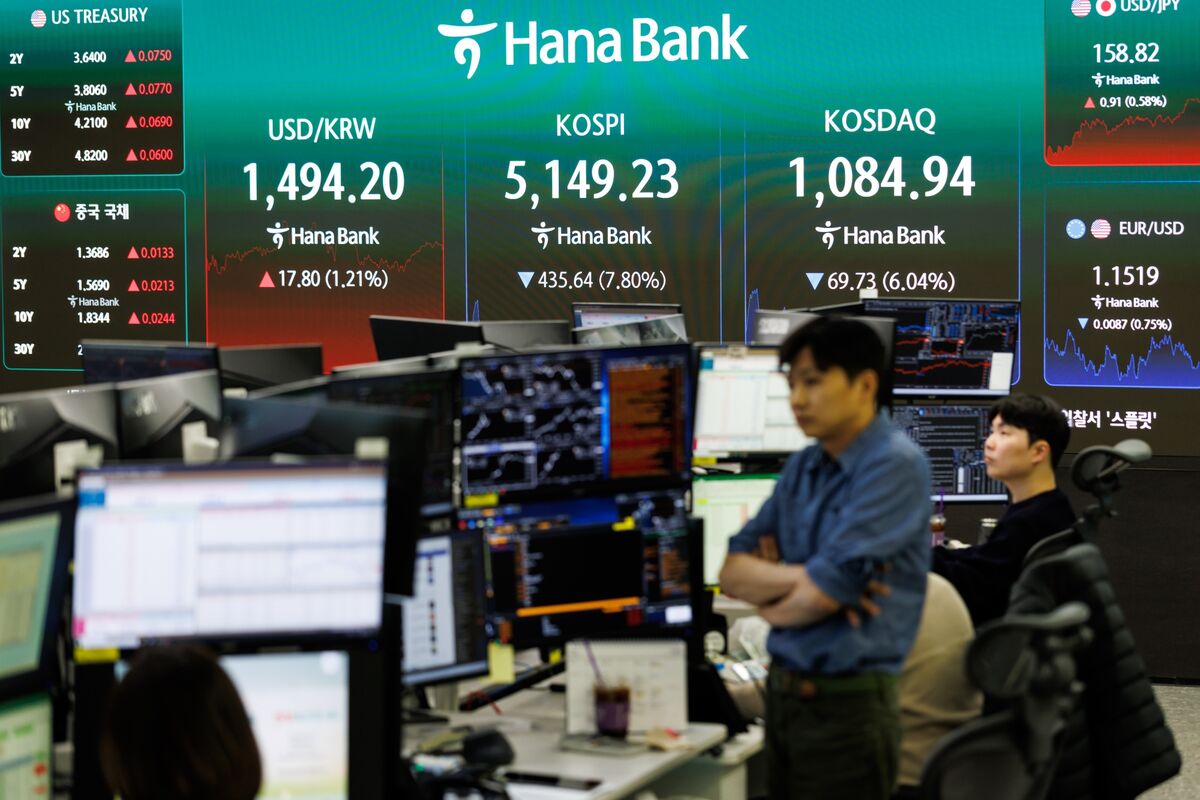
MSCI Emerging Markets Index fell 2.5% in early trading after President Trump’s ultimatum to Iran raised the risk of disruptions to Middle East energy supplies; South Korean chipmakers led the selloff. A developing-nation currency gauge dropped 0.3% and the Philippine peso was trading toward a fresh record low, signaling broader EM currency and equity pressure.
The market reaction is primarily a re-pricing of a geopolitical risk premium into energy and EM funding channels rather than a reassessment of fundamentals. A modest rise in tanker insurance and route disruption risk can lift delivered oil costs by 3-7% within days via time-charter and insurance spreads alone, which cascades into higher import bills for commodity-importing EMs and forces immediate FX selling as corporates and banks scramble for dollars. South Korea’s semiconductor complex is a natural lightning rod: high-beta cyclical names with large export exposure and concentrated shipping routes can see multiples compress ~10-20% faster than earnings would justify if risk premia persist for weeks.
Second-order effects arrive through local rates and flows: a sustained risk premium (2–6 weeks) typically widens EM local currency sovereign spreads by 50–150bp as central banks either defend FX or accept depreciation, tightening local credit and amplifying corporate stress in high-USD-debt issuers. Currency-option vol tends to spike first, making vanilla hedges more expensive and effectively increasing the cost of rolling FX exposures — an underappreciated drag on EM exporters who hedge receivables. Freight, insurance and energy cost pass-through raises near-term CPI in importers, complicating monetary policy trade-offs and potentially slowing growth 0.2–0.6pp in the following quarter for vulnerable economies.
Key catalysts to watch are operational: tanker reroutes/AIS blackouts, insurance premium prints, Brent contango/backwardation moves, CDS widening in select EM sovereigns, and any public de-escalation signals. A graceful diplomatic de-escalation or coordinated SPR/strategic supplier announcements can snap risk premia back within days; conversely a kinetic escalation would likely push oil +10%+ and trigger broader EM FX dislocations over months. Position sizing should assume high gamma around headlines; hedges that pay off on 1–4 week volatility spikes are asymmetric and preferable to naked directional exposure.
AI-powered research, real-time alerts, and portfolio analytics for institutional investors.
Request DemoOverall Sentiment
mildly negative
Sentiment Score
-0.30
