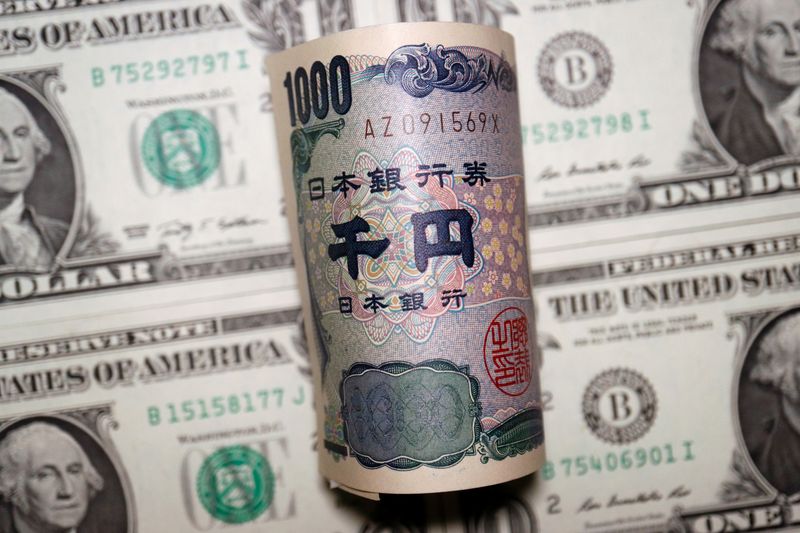
Asian currencies, led by the South Korean won and Japanese yen, rose against a weaker U.S. dollar after President Trump signaled progress in U.S.-China trade negotiations and softer-than-expected U.S. CPI data fueled expectations of Federal Reserve rate cuts; however, market moves were subdued as investors await further details on the trade deal and remain cautious given Trump's history of fluctuating stances on tariffs.
Asian currencies, notably the South Korean won and Japanese yen, appreciated against the U.S. dollar, which weakened following President Trump's affirmations of progress in U.S.-China trade negotiations and a softer-than-anticipated U.S. consumer inflation report for May. The US Dollar Index declined by 0.3% in Asian trading, reaching a six-week low, with futures also indicating a 0.3% decrease, fueled by expectations of potential Federal Reserve interest rate cuts. President Trump announced that a trade framework with China is "done," pending approval, involving Chinese export licenses for rare earth minerals and U.S. allowance for Chinese students' access, while maintaining a c.55% U.S. tariff rate on Chinese imports and a 10% Chinese tariff on U.S. goods. He also signaled impending "take it or leave it" tariff offers to other trading partners before a July 9 deadline, though he remains open to an extension. Despite these developments, market reactions were somewhat muted, suggesting the news was largely priced in, compounded by investor caution stemming from President Trump's historical unpredictability on trade policy and a general wait-and-see approach for more deal specifics. Consequently, the onshore USD/CNY and offshore USD/CNH pairs both edged 0.2% lower, while the USD/JPY pair fell 0.4%. The South Korean won (USD/KRW) was a notable outperformer, dropping 0.8%, reportedly buoyed by optimism surrounding President Lee Jae-myung’s pledge to address unfair stock market trade practices. In contrast, the USD/SGD pair was largely unchanged, the USD/INR pair was muted, and the AUD/USD pair declined by 0.2%. The May U.S. CPI data, which rose less than expected, was scrutinized for tariff-related price pressures, with ING analysts noting market positivity but cautioning against prematurely dismissing tariff concerns. The Federal Reserve is widely anticipated to maintain current interest rates in its upcoming meeting due to prevailing tariff uncertainties.
AI-powered research, real-time alerts, and portfolio analytics for institutional investors.
Request DemoOverall Sentiment
mildly positive
Sentiment Score
0.15
Ticker Sentiment
