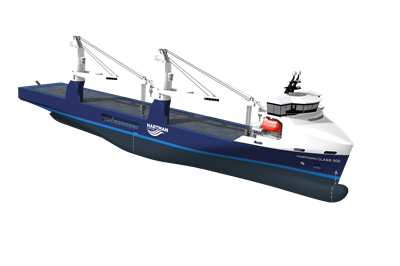
Wärtsilä has secured an order (booked in Q4 2025) to supply a Wärtsilä 31 engine, gearbox and propulsion systems for a new 3,800 DWT heavy-lift vessel being built for Netherlands-based Hartman Seatrade at the owner’s new Rock Shipbuilding yard; equipment delivery is scheduled for spring 2027. The package includes a CPP with Wärtsilä EcoControl, Opti Design hydrodynamic optimisation and a gearbox enabling PTI/PTO/PTH modes, targeting reduced fuel consumption, lower emissions and lower maintenance costs. The deal reinforces Wärtsilä’s technology-led positioning in maritime decarbonisation and adds to its backlog against a 2024 revenue base of EUR 6.4 billion.
Market structure: The press release is marginally positive for Wärtsilä (WRT1V) and specialist marine electrification/control vendors (KOG.OL, ABB.N) — winners are high-efficiency engine and propulsion suppliers and their services annuities; losers are low-cost, legacy engine OEMs and asset-heavy shipyards that compete on price rather than life-cycle efficiency. Competitive dynamics: Wärtsilä’s modular 31 engine and integrated propulsion/controls strengthen after‑sales pricing power (higher annuity mix), pressuring commoditized maintenance providers and accelerating OEM share gains in newbuilds and retrofits over the next 12–36 months. Supply/demand signal: This single order is small but directional — it confirms steady demand for fuel-efficiency upgrades in small/medium DWT segments and implies modest near-term uplift in qualified engine orders and CPP retrofits, not a market-disrupting volume surge. Cross-asset: Expect muted equity moves but positive credit sentiment for high-margin marine tech names; marginal downward pressure on bunker fuel demand growth (bearish for physical fuel forwards if scaled); FX effects negligible except NOK/SEK on stronger Kongsberg flows.
Risk assessment: Tail risks include accelerated regulatory shifts to zero‑carbon fuels (ammonia/hydrogen) that could make new diesel engine book base obsolete by 2030–35, major supply-chain disruptions delaying deliveries, or shipowner bankruptcies reducing service revenue. Time horizons: immediate (days) — negligible reaction; short-term (weeks–months) — sentiment/orderbook re-rating for Wärtsilä as Q1 order disclosures roll in; long-term (years) — structural fuel transition risk to ICE revenues. Hidden dependencies: aftermarket margin depends on global utilization and fuel price spreads; if VLSFO price falls >20% sustained, retrofit economics weaken. Catalysts to watch: quarterly backlog growth >5% q/q, IMO/EU carbon policy updates within 3–12 months, and bunker price moves >±20%.
Trade implications: Direct play — establish a 2–3% long position in WRT1V (target +20% 12 months, stop-loss -12%) to capture orderflow and annuity re-rating; complement with 1% long KOG.OL and 1% long ABB.N for control/electrification exposure. Pair trade — long WRT1V vs short FCT.MI (Fincantieri) 1:1 (1% each) to express tech/services premium over commodity shipbuilding margins. Options — buy 9–12 month 25‑delta calls or a call spread on WRT1V to leverage upside while capping premium; size to cap portfolio risk to 2% of NAV. Entry: scale in over 2–4 weeks; exit/trim at +20% or if backlog growth stalls two consecutive quarters.
Contrarian angles: Consensus may overstate the immediate macro impact — single small DWT orders don’t move global demand, so any equity re‑rating is likely underpinned by service annuities, not volumes. Missed risk: modular engines reduce time-on-site and parts turnover, potentially compressing long-term service margins despite higher initial equipment sales. Historical parallels: engine-tech cycles (e.g., Tier‑III emissions upgrades) show OEMs gain order share but aftermarket margins can lag; watch for declining consumables demand as efficiency proliferates. Unintended consequences: widespread efficiency adoptions could lower bunker demand and pressure fuel suppliers and shipowners’ revenue models; monitor service margin % and backlog growth thresholds (service margin rising >100bp YOY and backlog +5% q/q as positive signals).
AI-powered research, real-time alerts, and portfolio analytics for institutional investors.
Request DemoOverall Sentiment
mildly positive
Sentiment Score
0.32
