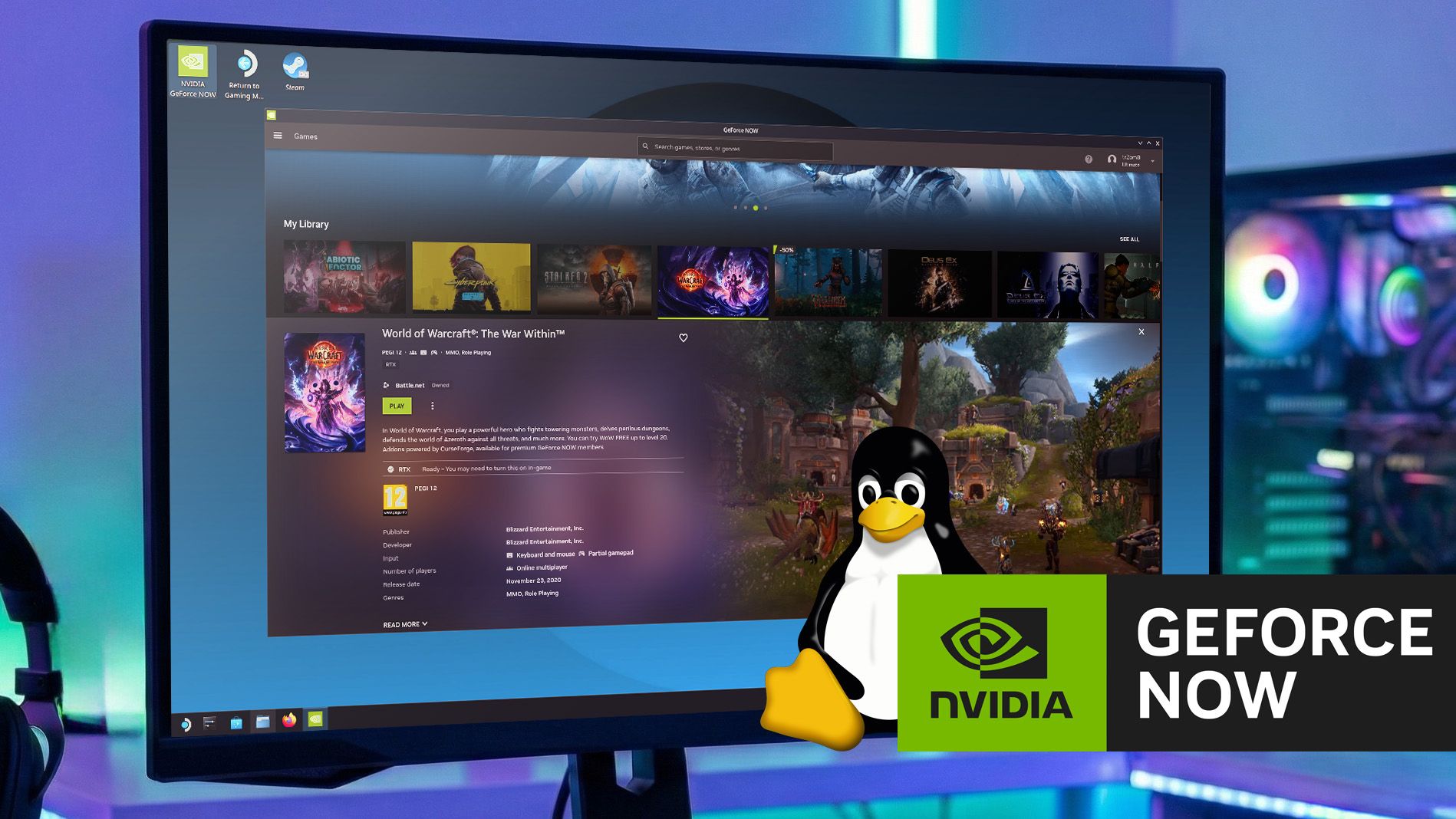
NVIDIA has expanded its GeForce NOW cloud-gaming footprint with a native Linux app targeting Debian-based Ubuntu 24.04+ and earlier Steam Deck support, leveraging recently upgraded RTX 5080 cloud GPUs capable of up to 5K@120FPS or 1080p@360FPS streaming. The move improves accessibility to high-performance PC gaming across more desktop Linux devices and may increase user engagement and subscription uptake by addressing platform gaps (e.g., lack of native ports and PC Game Pass support), though it represents incremental product/service competitive positioning rather than an immediate material revenue or earnings catalyst.
Market structure: Native Linux/Ubuntu GeForce NOW + RTX 5080 racks is a strategic win for NVDA (higher utilization, stronger software lock‑in) and for cloud infra vendors (ASML, LRCX) via sustained GPU demand; consumer PC OEMs (HPQ, DELL) could see modest pressure if cloud gaming reduces replacement cycles by 3–5% over 12–24 months. Competitive dynamics favor platforms that combine hardware+service — NVIDIA increases pricing power for high-end data‑center GPUs because rental/subscription revenue makes high ASPs more defensible, likely supporting GPU pricing for the next 2–4 quarters.
Risk assessment: Tail risks include regulatory pressure on bundling/royalty practices, large-scale data center outages, or a rapid Microsoft/AWS rollout of equivalent low‑latency GPU instances; any of these could shave 10–30% off short‑term sentiment. Near term (0–3 months) watch GeForce NOW subscriber metrics and regional latency complaints; medium term (3–12 months) watch enterprise GPU supply (inventory weeks) and new cloud GPU orders; long term (12–36 months) risk is commoditization or adverse content licensing demands raising operating costs.
Trade implications: Expect NVDA to outperform semiconductor capex names on adoption news; near‑term capital trade is to overweight NVDA and wafer‑fab equipment (ASML, LRCX) by small increments while trimming discretionary PC OEM exposure. Options: use 3–6 month bull call spreads on NVDA sized to 0.5–1% portfolio risk rather than outright calls if IV >100%; sell 30–60 day covered calls against existing NVDA holdings to harvest premium in volatile windows.
Contrarian angles: The market may underprice strategic lock‑in — GeForce NOW can convert Linux/handheld users into recurring revenue and seed demand for more rack GPUs, a multi‑year revenue driver overlooked by quarterly-focused investors; conversely, adoption can remain niche (below 5% TAM) and be overhyped, implying current sentiment could be overdone. Historical parallel: past thin‑client cycles (late 2000s) showed durable niche growth before mass adoption — use subscriber inflection points (>20% QoQ growth sustained two quarters) as a re‑rating trigger.
AI-powered research, real-time alerts, and portfolio analytics for institutional investors.
Request DemoOverall Sentiment
mildly positive
Sentiment Score
0.30
Ticker Sentiment
