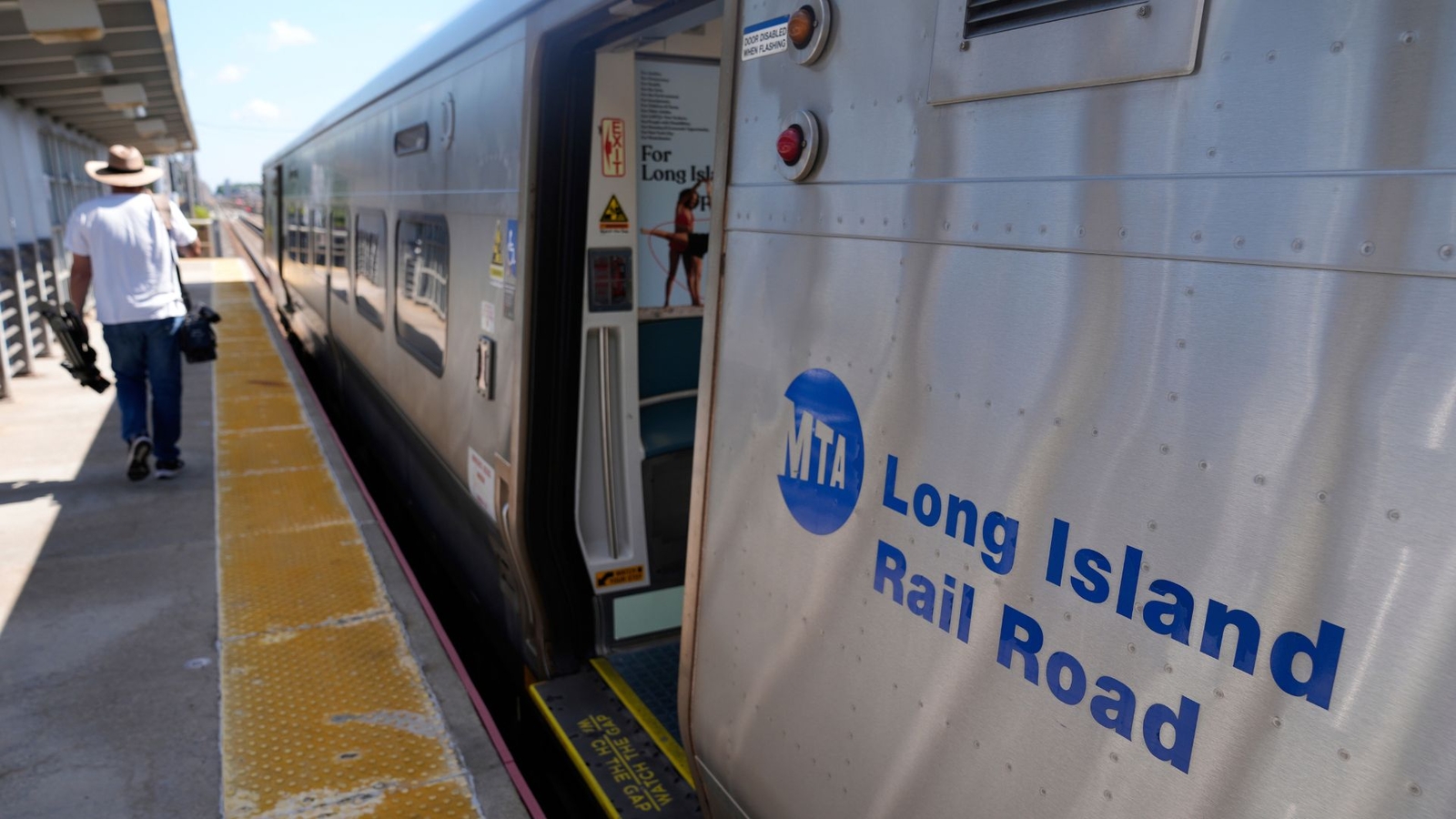
A Long Island Rail Road strike could begin Saturday at midnight, with the MTA warning service could shut down entirely if negotiations fail. The contingency plan includes shuttle buses from key Long Island stations to subway connections in Queens, plus alternate bus/subway routes for Nassau County commuters. The article signals meaningful commuter disruption and likely congestion, but the broader market impact is limited.
The immediate market read is not about one commuter rail line; it is about short-duration disruption risk across the NYC mobility stack. A full shutdown would divert a meaningful share of peak demand into buses, subways, ride-hailing, and personal vehicles, creating a same-week capacity squeeze that is far larger than headline commuter counts imply because the substitution has to happen within fixed peak windows. The first-order beneficiaries are not the transit operators themselves so much as adjacent capacity owners with pricing power during congestion spikes: for-hire fleets, parking operators near outer-rail access points, and potentially fuel retailers if elevated car usage persists even briefly. The more interesting second-order effect is on reliability-sensitive employers and logistics nodes in Long Island and eastern Queens. Even a few days of dislocation tends to raise absenteeism, delay delivery schedules, and push firms to formalize remote-work policies that are sticky beyond the event, which modestly lowers future commute elasticity. That matters for commercial real estate and suburban retail traffic: once a workforce proves it can function remotely, a strike can accelerate a pre-existing leakage in weekday footfall that lasts weeks, not days. For the listed names, the bearish signal on MTA is less about direct economics and more about political/regulatory pressure. If the shutdown becomes visible in the morning commute, the MTA's bargaining position weakens quickly, so the operational tail risk is actually that service resumes before the market has time to price a prolonged disruption; this makes the event trading opportunity asymmetric and very short-dated. NICE is more nuanced: it may capture incremental ridership, but without parking at suggested transfer points and with its own limited peak capacity, the uplift is likely operationally constrained rather than financially meaningful. The contrarian view is that the market will overestimate duration and underestimate substitution. A strike threat can produce a sharp but fleeting spike in congestion and alternative-transit usage, yet if a deal lands over the weekend the entire set-up collapses with little lasting impact. The better trade is to express a volatility view around the negotiation deadline rather than a directional thesis on the transit names themselves.
AI-powered research, real-time alerts, and portfolio analytics for institutional investors.
Request DemoOverall Sentiment
mildly negative
Sentiment Score
-0.20
Ticker Sentiment
