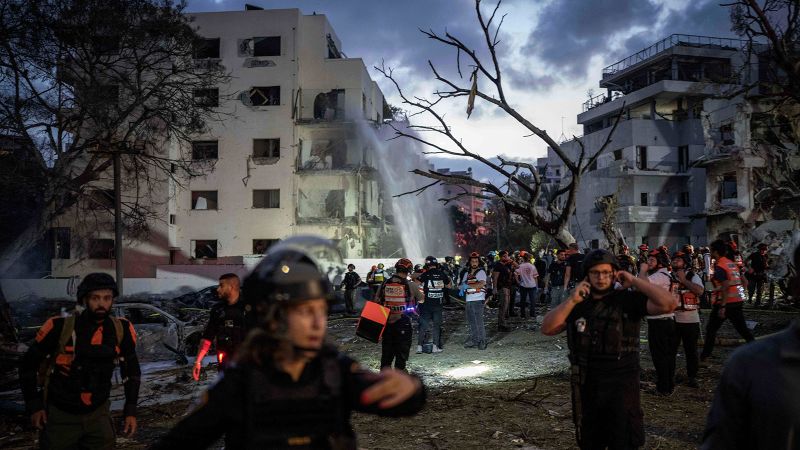
Following the recent Israeli attack on Iran, China is positioning itself as a potential peace broker, with Foreign Minister Wang Yi speaking to both Iranian and Israeli counterparts and condemning Israel's actions. China's offer to play a constructive role underscores its ambition to expand its influence in the Middle East, particularly as it deepens economic ties with Iran, though its actual leverage in de-escalating the conflict remains uncertain amid existing geopolitical complexities and U.S. involvement.
Amidst the escalating conflict between Israel and Iran, sparked by an unprecedented Israeli attack, China is strategically positioning itself as a potential peace broker, a move designed to enhance its global influence and present an alternative diplomatic voice to the United States. Chinese Foreign Minister Wang Yi has engaged both Iranian and Israeli counterparts, notably offering to play a 'constructive role' while 'explicitly' condemning Israel's actions as a violation of Iran's sovereignty—a stance contrasting sharply with Beijing's neutrality on Russia's invasion of Ukraine and indicative of hardening geopolitical alignments. This diplomatic overture aligns with China's broader strategy to expand its clout, particularly in the Global South, and deepen its economic and diplomatic ties with Iran, which include joint naval drills and significant energy trade, with China being Iran's largest energy buyer despite not officially reporting Iranian oil purchases since 2022. However, China's actual leverage in de-escalating the conflict remains uncertain, especially as the US has sanctioned Chinese entities for alleged Iranian oil trading and supplying missile fuel components. While Beijing has successfully brokered rapprochement elsewhere, such as between Saudi Arabia and Iran in 2023, experts suggest its influence as a powerbroker in this specific, entrenched conflict may be limited, with the US and regional actors likely to be the ultimate drivers of any resolution. The situation introduces significant geopolitical uncertainty, with direct implications for energy markets, international sanctions regimes, and global trade dynamics.
AI-powered research, real-time alerts, and portfolio analytics for institutional investors.
Overall Sentiment
moderately negative
Sentiment Score
-0.50
