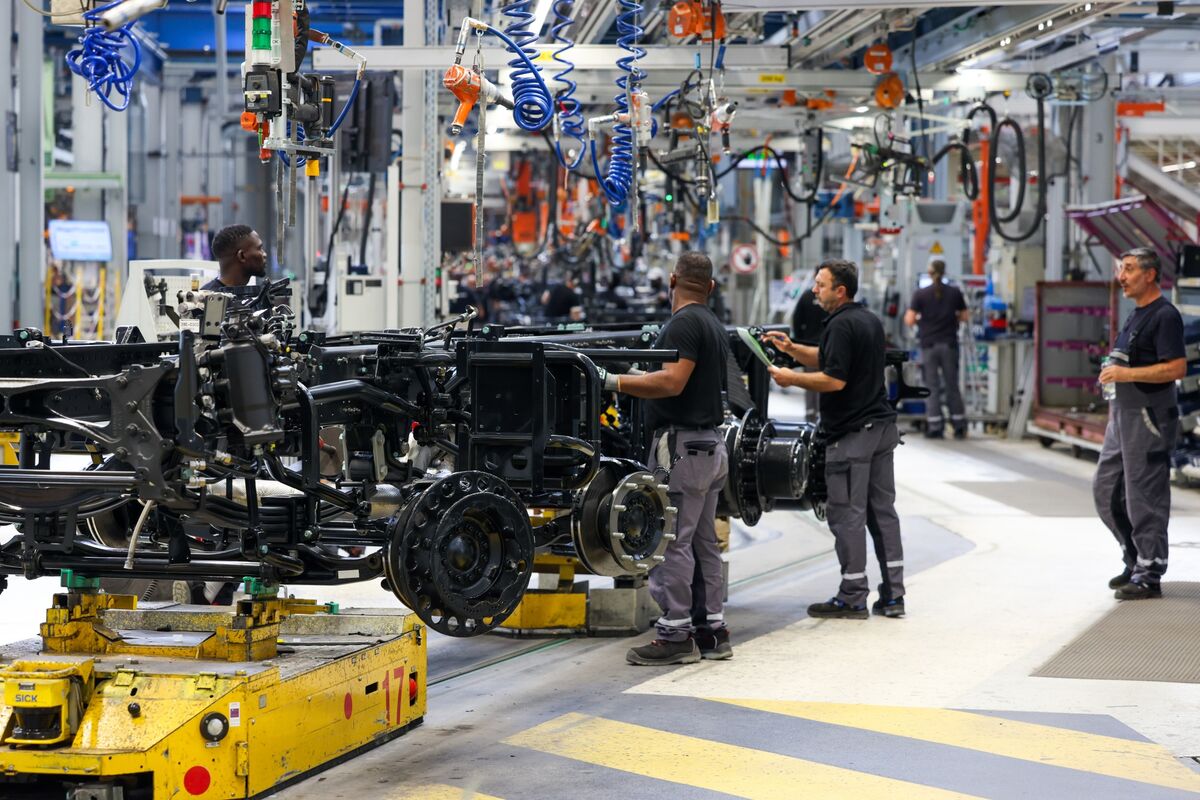
Germany's economy contracted by a revised 0.3% in the second quarter, a deeper decline than the initial 0.1% estimate, primarily driven by a significant weakening in manufacturing output following a surge related to US tariff avoidance. This downturn was compounded by a 1.4% slump in investment and weaker-than-anticipated private consumption, indicating a more pronounced economic slowdown.
Germany's second-quarter economic performance was significantly weaker than initially reported, with GDP contracting by a revised 0.3%, a notable deterioration from the preliminary -0.1% estimate. This downturn was primarily driven by a sharp decline in the manufacturing sector, which experienced a slump following an earlier surge in exports to the US intended to pre-empt tariffs. The economic weakness appears broad-based, as the contraction was exacerbated by a substantial 1.4% decline in investment, indicating eroding business confidence. Furthermore, private consumption provided significantly less support than first thought, suggesting that consumer demand is also faltering. The confluence of these factors—a trade-related manufacturing shock, falling investment, and weak consumer spending—points to a more pronounced economic slowdown for Europe's largest economy, heightening concerns of a potential technical recession.
AI-powered research, real-time alerts, and portfolio analytics for institutional investors.
Request DemoOverall Sentiment
strongly negative
Sentiment Score
-0.70
