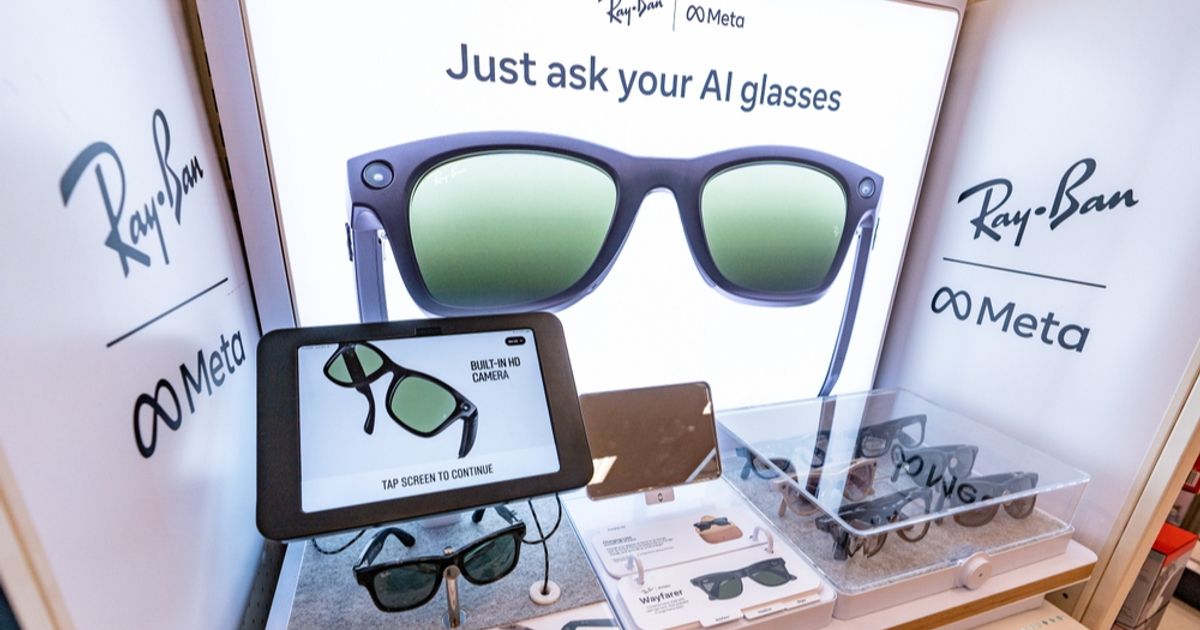
Meta has paused the planned early‑2026 international rollout of its Ray‑Ban Display smart glasses — slated for France, Italy, Canada and the UK — citing “unprecedented demand and limited inventory” and will prioritize fulfilling U.S. orders while re‑evaluating international availability. Launched in September and paired with the Meta Neural Band for gesture control, the product’s strong consumer interest underscores hardware demand but supply constraints will defer near‑term international revenue expansion; Meta showcased new features at CES and is expanding pedestrian navigation to four additional U.S. cities.
Market structure: Meta (META) is the clear near-term beneficiary — demand outstrips supply in the US, which preserves pricing power and defers international revenue but strengthens brand scarcity. Component suppliers (Qualcomm QCOM, TSMC TSM) and AR/optics vendors should see order visibility improve over 6–12 months; pure-play consumer wearable challengers and smaller AR startups face headwinds as Meta scales. Cross-asset: expect modest rotation into growth tech (small upward pressure on equities, small rise in 10y yields) and elevated implied volatility in META options for the next 30–90 days.
Risk assessment: Key tail risks include an EU regulatory privacy ban that could block relaunch (low-probability, high-impact over 3–12 months), component supply shocks that stretch fulfillment beyond 2026, or a surprise Apple AR launch within 6–12 months that steals mindshare. Immediate (days) impact is muted; short-term (weeks–months) it shifts revenue cadence to US; long-term (1–3 years) outcome hinges on software adoption of Neural Band and content/services monetization. Hidden dependencies: wristband UX, battery life, software APIs and ad integration — failures here compress lifetime value and margins.
Trade implications: Direct trade: constructive on META but prefer asymmetric exposure — stock accumulation sized 2–3% portfolio over 4 weeks, plus 6–9 month call spreads to limit premium. Pair trade: long META vs short SNAP (equal-dollar 1–2%) to play hardware monetization vs ad-cycle sensitivity. Rotate modestly into semis (QCOM, TSM) sized 0.5–1% each for 6–12 months. Use covered-call overlays (4–8 week expiries) to monetize elevated IV; avoid naked short vol into anticipated news events.
Contrarian angles: The market may underprice margin pressure from rapid ramp and international delay — scarcity masks higher per-unit opex and manufacturing scaling risk for 2–4 quarters. Historical parallels: successful scarcity (AirPods) drove pricing power, but Google Glass shows consumer pushback risk; if Meta fails to convert waitlist into repeat buyers in 90–180 days, sentiment can flip fast. Watch for gray-market resales and refund rates as an early warning of adoption fatigue.
AI-powered research, real-time alerts, and portfolio analytics for institutional investors.
Request DemoOverall Sentiment
mildly positive
Sentiment Score
0.25
Ticker Sentiment
