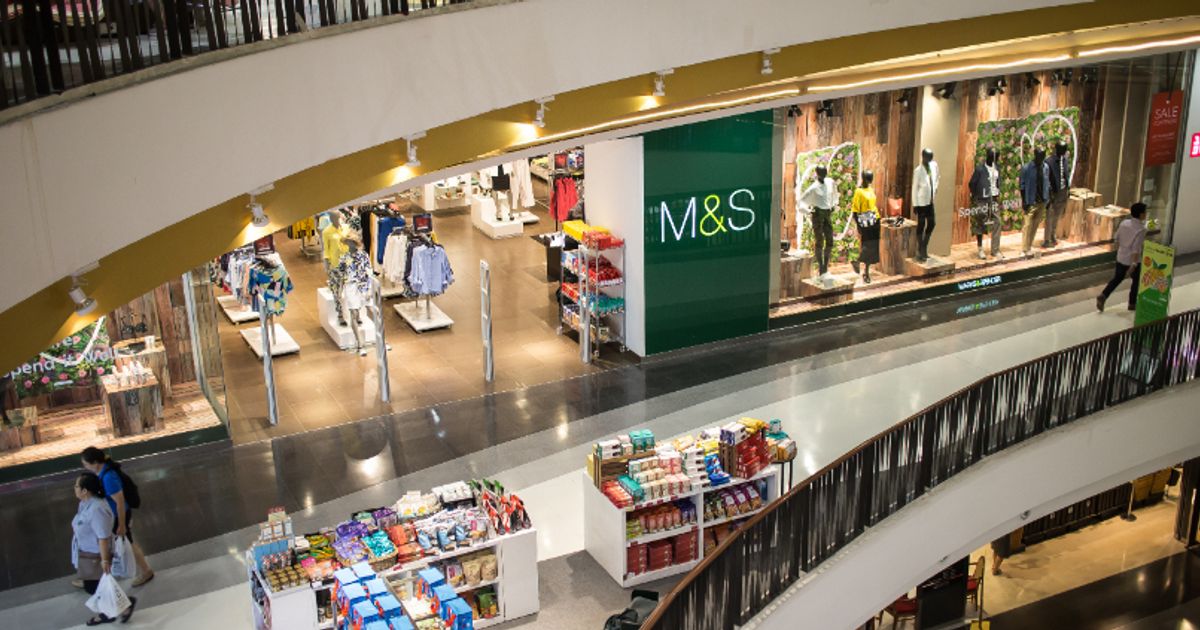
Marks & Spencer shares rose 3% to 338p after the group left full-year guidance unchanged and received supportive notes from Deutsche Bank and Shore Capital. Food performed strongly with third-quarter like-for-like sales up c.5.6% (Food sales +5.6% / Shore Food sales +6.6%), while Clothing, Home & Beauty fell around 2.5–2.9%; Deutsche flagged that higher food gross margins offset weaker clothing profitability. Deutsche reiterated a buy with a 435p target and noted the stock trades at roughly 10x forecast 2026 earnings, while Shore expects current-year profit before tax of £655m and sees 2027 P/E below 10, calling the shares materially undervalued amid resolution of inventory and post-cyber-attack systems issues.
Market structure: M&S’s update reweights winners toward food-focused operators and suppliers of grocery essentials; Food like‑for‑like +5.6% and higher gross margins imply pricing power in staples while Clothing (-2.9%) signals continued discretionary weakness. Trading multiple (~10x FY26 earnings at 338p) versus Deutsche target 435p implies a near‑term re‑rating is plausible if Food margins sustain and inventory issues remain resolved over 2–4 quarters.
Risk assessment: Key tail risks are a renewed cyberattack or a UK consumer shock (CPI spike/recession) that compresses discretionary margins — either could erase >30% of equity value in weeks. Near term (days–weeks) volatility will be driven by updates on guidance and Q3 trading; medium term (3–12 months) risk centers on execution in Clothing/Home and on inventory normalization; long term (2027+) depends on sustainable margin recovery and successful channel mix shift to online/food.
Trade implications: Prefer a focused, asymmetric exposure to MKS (LSE:MKS): buy on dips to 320–350p targeting 435p within 9–12 months, use option structures to limit downside. Rotate modest allocation from high‑end discretionary names (NEXT, ticker NXT) into food/defensive UK retailers (SBRY, TSCO) to capture secular share gains in grocery; consider a long MKS / short NXT pair to isolate re‑rating.
Contrarian angles: Consensus underestimates margin tailwinds in Food and overstates brand damage in Clothing — if online momentum and inventory correction continue, upside is underpriced. Conversely, the market may be complacent on cyber/operational relapse and prolonged high‑street traffic decline; that asymmetry favors capped‑downside option buys and modest sized equity exposure rather than full conviction longs.
AI-powered research, real-time alerts, and portfolio analytics for institutional investors.
Request DemoOverall Sentiment
moderately positive
Sentiment Score
0.45
Ticker Sentiment
