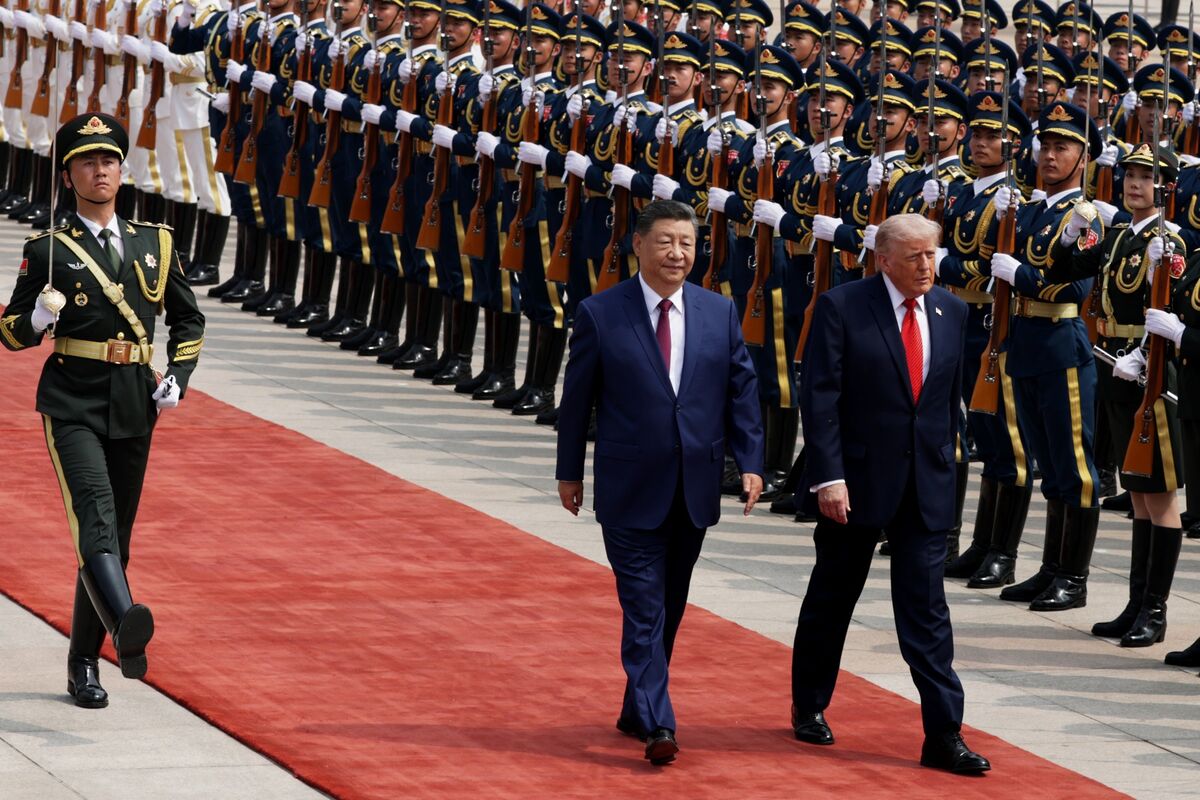
Xi Jinping’s warning that Taiwan could trigger 'clashes' and a 'highly dangerous situation' for the world’s biggest economies sharpens geopolitical risk in US-China relations. The article says Beijing released Xi’s remarks before the leaders’ meeting ended, underscoring the seriousness of the message. The escalation is likely to keep markets in a risk-off posture, with particular sensitivity around Taiwan, defense, semiconductors, and broader supply-chain exposure.
This is less about immediate market plumbing and more about a step-up in geopolitical variance around the single most systemically important flashpoint in Asia. The second-order effect is not a clean “risk-off” beta trade; it is a widening of the distribution for semis, industrial automation, shipping, and anything with concentrated Taiwan/China revenue or assembly exposure. The market usually prices Taiwan risk only after a concrete military signal, but policy rhetoric of this intensity tends to re-rate option skew first: front-end implied vol on Asia ex-Japan equities and semiconductor names should stay bid even if spot indices initially shrug. The more important transmission is supply-chain optionality. Firms with multi-sourcing, onshoring capacity, or defense-adjacent exposure gain strategic value, while pure-play exporters with just-in-time Taiwan/China dependencies face a hidden tax on valuation multiples. Expect procurement teams to accelerate inventory pre-buys and dual-sourcing decisions over the next 1-3 quarters, which can temporarily flatter revenue for equipment and logistics names while compressing margins for end markets that cannot pass through higher working capital. That favors domestic industrial capacity and defense infrastructure over cyclical hardware assemblers. Catalyst sequencing matters: the next risk spike is likely not a headline invasion scenario but a smaller coercive move around exercises, sanctions, or maritime inspections, which would still hit semis, freight rates, and insurance premia. The contrarian point is that repeated warnings can desensitize equities, so the better trade is not outright index shorting but relative value in sectors with asymmetric exposure to Taiwan disruption. If diplomatic channels visibly de-escalate, these premiums can unwind fast, but the longer the rhetoric persists, the more valuation discount gets embedded into supply-chain-sensitive names.
AI-powered research, real-time alerts, and portfolio analytics for institutional investors.
Request DemoOverall Sentiment
strongly negative
Sentiment Score
-0.55
