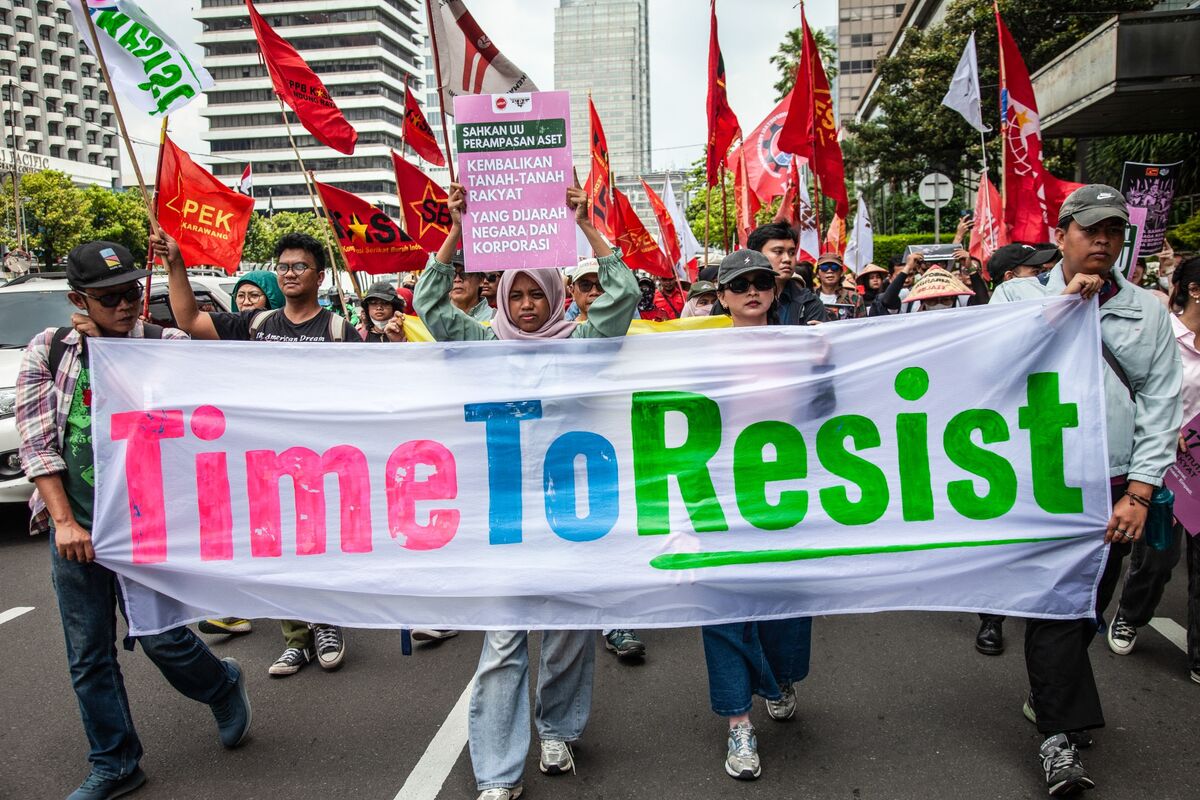
A recent Kompas survey indicates that 58.4% of Indonesians desire an opposition presence in parliament, signaling public unease with President Prabowo Subianto's coalition, which controls an overwhelming 81% of legislative seats. This sentiment, emerging amid broader public discontent, suggests potential challenges to the perceived stability and unchecked power of the dominant administration, despite the Indonesian Democratic Party of Struggle (PDI-P) holding remaining seats without declaring opposition.
A recent Kompas survey highlights a significant political undercurrent in Indonesia, revealing that 58.4% of the populace desires a formal opposition to counterbalance the government. This sentiment is particularly noteworthy given the commanding 81% majority held by President Prabowo Subianto’s coalition in the legislature, creating a de facto supermajority with limited institutional checks. The political landscape is further consolidated by the fact that the Indonesian Democratic Party of Struggle (PDI-P), which holds the remaining seats, has not declared itself as an opposition party, effectively leaving no formal counterbalance in parliament. The survey's timing, preceding major public protests over legislator benefits, suggests this desire for oversight is tied to broader public unease regarding governance and concentrated power. While the immediate market impact is assessed as low, this disconnect between the political structure and public sentiment signals a potential source of future political risk and policy uncertainty.
AI-powered research, real-time alerts, and portfolio analytics for institutional investors.
Request DemoOverall Sentiment
neutral
Sentiment Score
0.00
