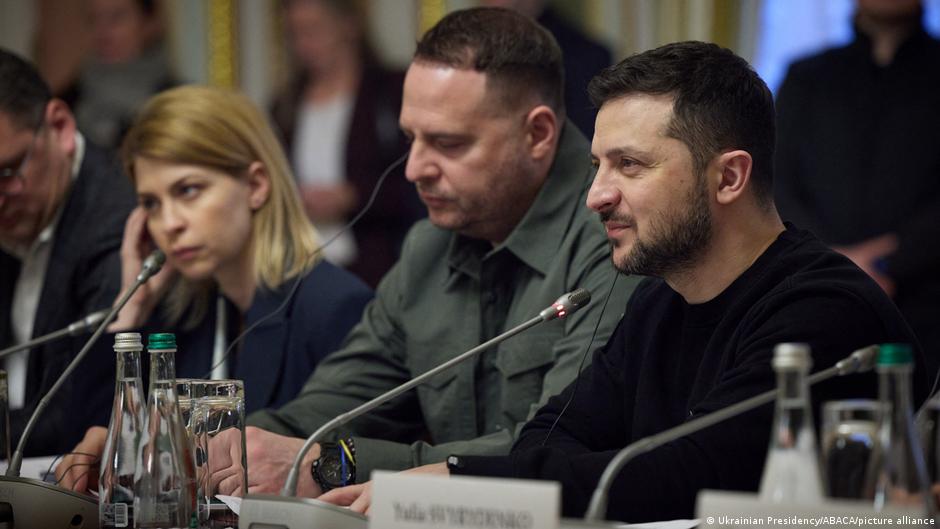
Ukraine’s anti-corruption court ordered the pretrial detention of Andriy Yermak, a close Zelenskyy ally and former chief of staff, on suspicion of money laundering, with bail set at 140 million hryvnias ($3.19 million). Prosecutors say the case involves a 460-million-hryvnia laundering scheme and is part of a broader $100 million kickback probe tied to officials and associates near Zelenskyy. The developments add political and governance risk in Kyiv, though Zelenskyy has not been implicated.
This is less a single-person legal event than a governance stress test for wartime Ukraine. The immediate market implication is a higher probability of policy friction, slower decision-making, and more uncertainty around procurement and external financing conditionality over the next 1-3 months; that tends to widen the discount investors demand for Ukraine-linked risk, even if headline military support remains intact. The bigger second-order effect is on credibility: anti-corruption enforcement can ultimately improve sovereign and quasi-sovereign access to capital, but in the near term it often exposes how much of the administrative state is dependent on informal networks. The most important transmission channel is not equities in the classic sense but funding and project execution. Any delay or reshuffle around energy, reconstruction, and defense procurement raises completion risk for contractors, inflates working-capital needs, and can push counterparties to demand tighter payment terms or sovereign guarantees. That is mildly negative for firms exposed to Ukraine rebuild optionality, but potentially constructive for Western suppliers with diversified order books if local execution becomes more fragile and they get substituted for domestic counterparties. The contrarian read is that the scandal may be medium-term bullish for Ukraine’s external financing if it convinces the IMF/EU and bilateral lenders that the anti-graft machinery is real rather than cosmetic. If that narrative takes hold, the selloff in Ukraine-risk proxies could reverse within weeks once donor money is explicitly linked to reform milestones. The near-term risk is a governance vacuum; the medium-term upside is a cleaner bidding environment and lower sovereign risk premium if prosecutions continue beyond one faction. For geopolitics, the larger question is whether this weakens negotiating coherence with Washington and delays any ceasefire-channel progress by 1-2 quarters. If so, defense consumption remains structurally supported, but peace-premium trades get pushed out, and markets should avoid pricing any diplomatic breakthrough before there is evidence of a durable successor team and message discipline.
AI-powered research, real-time alerts, and portfolio analytics for institutional investors.
Request DemoOverall Sentiment
strongly negative
Sentiment Score
-0.55
