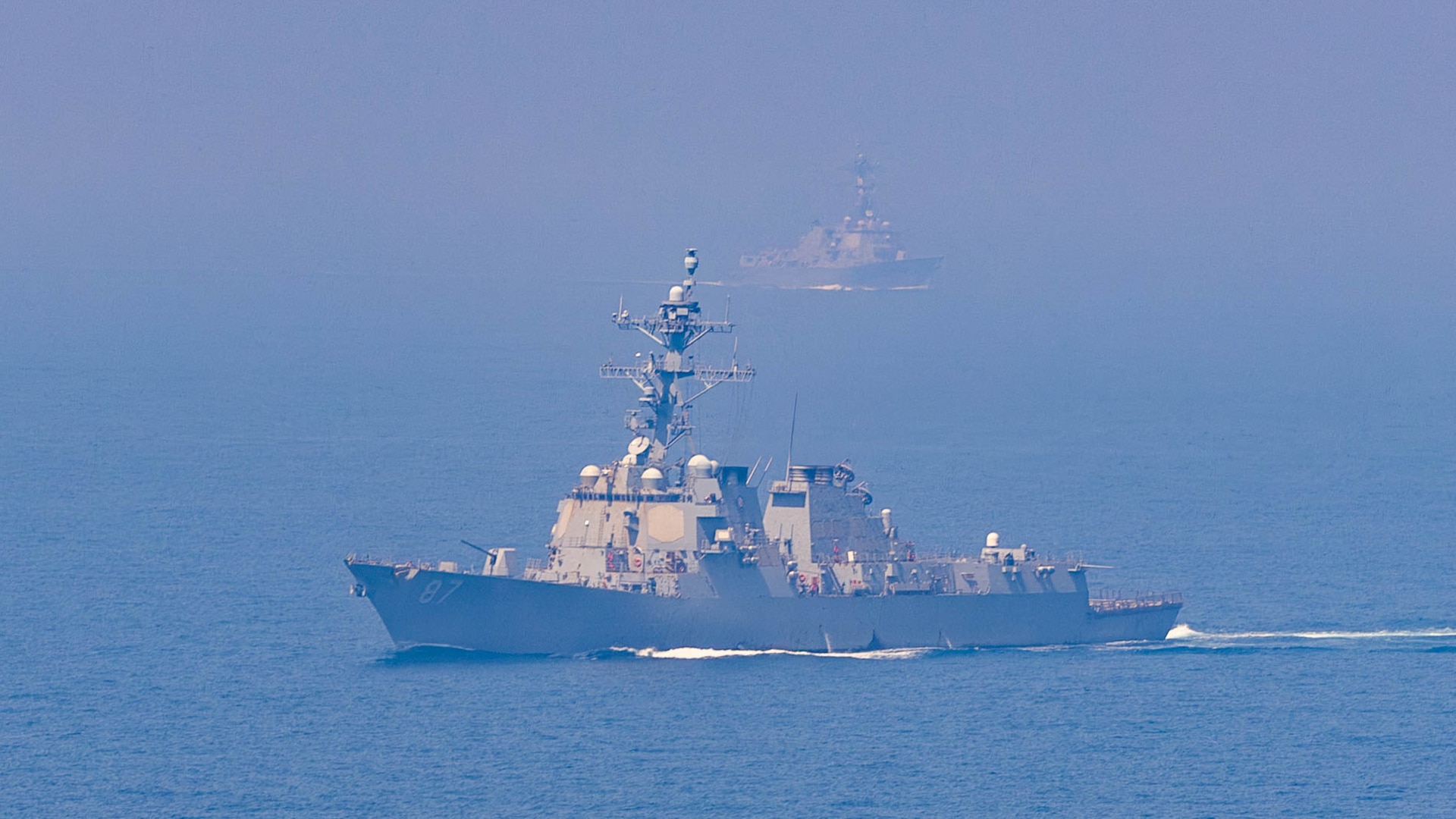
U.S. Navy destroyers transiting the Strait of Hormuz on May 7 were targeted by multiple Iranian missiles, drones, and small boats, though no U.S. assets were struck. CENTCOM said it intercepted inbound threats and carried out self-defense strikes against Iranian missile and drone launch sites, command-and-control locations, and ISR nodes. The incident raises near-term geopolitical risk in a critical shipping corridor and could pressure broader risk assets.
The market should treat this less as a one-off headline and more as a reminder that the Strait of Hormuz risk premium can reprice in hours, while the economic damage propagates over weeks through freight, insurance, and inventory channels. The first-order impact is not only higher crude, but a broader tightening in delivered-energy and shipping costs: tanker rates, war-risk premia, and rerouting costs can rise faster than spot oil, creating a larger hit to import-dependent industrials and airlines than the headline commodity move suggests.
The key second-order beneficiary is not just U.S. defense primes, but the entire maritime security stack: missile interceptors, shipboard electronic warfare, surveillance, and base defense demand become more likely to receive urgency funding if incidents repeat. On the other side, Gulf-exposed cyclicals with thin margins face a nasty sequencing problem: even if energy prices later normalize, inventory drawdowns and hedging mismatches can force near-term earnings downgrades before customers can pass through costs.
The tail risk is a broader campaign of harassment that does not need successful hits to be market-negative; repeated failed attacks still force longer transits, higher naval presence, and persistent insurance repricing. The reverse catalyst would be a visible de-escalation window plus restored shipping confidence, but that typically requires several quiet weeks, not a single calm session. Until then, the market is likely underestimating how quickly this can morph from a geopolitical headline into an input-cost shock for global trade.
Contrarianly, the move may be underpriced in terms of option skew rather than outright index level: equity investors often hedge oil first and forget shipping, defense, and industrial margins. The cleanest expression is to own assets with embedded operating leverage to conflict duration, not one-day price spikes, because the durable earnings impact comes from sustained security friction rather than the initial missile exchange.
AI-powered research, real-time alerts, and portfolio analytics for institutional investors.
Request DemoOverall Sentiment
strongly negative
Sentiment Score
-0.55
