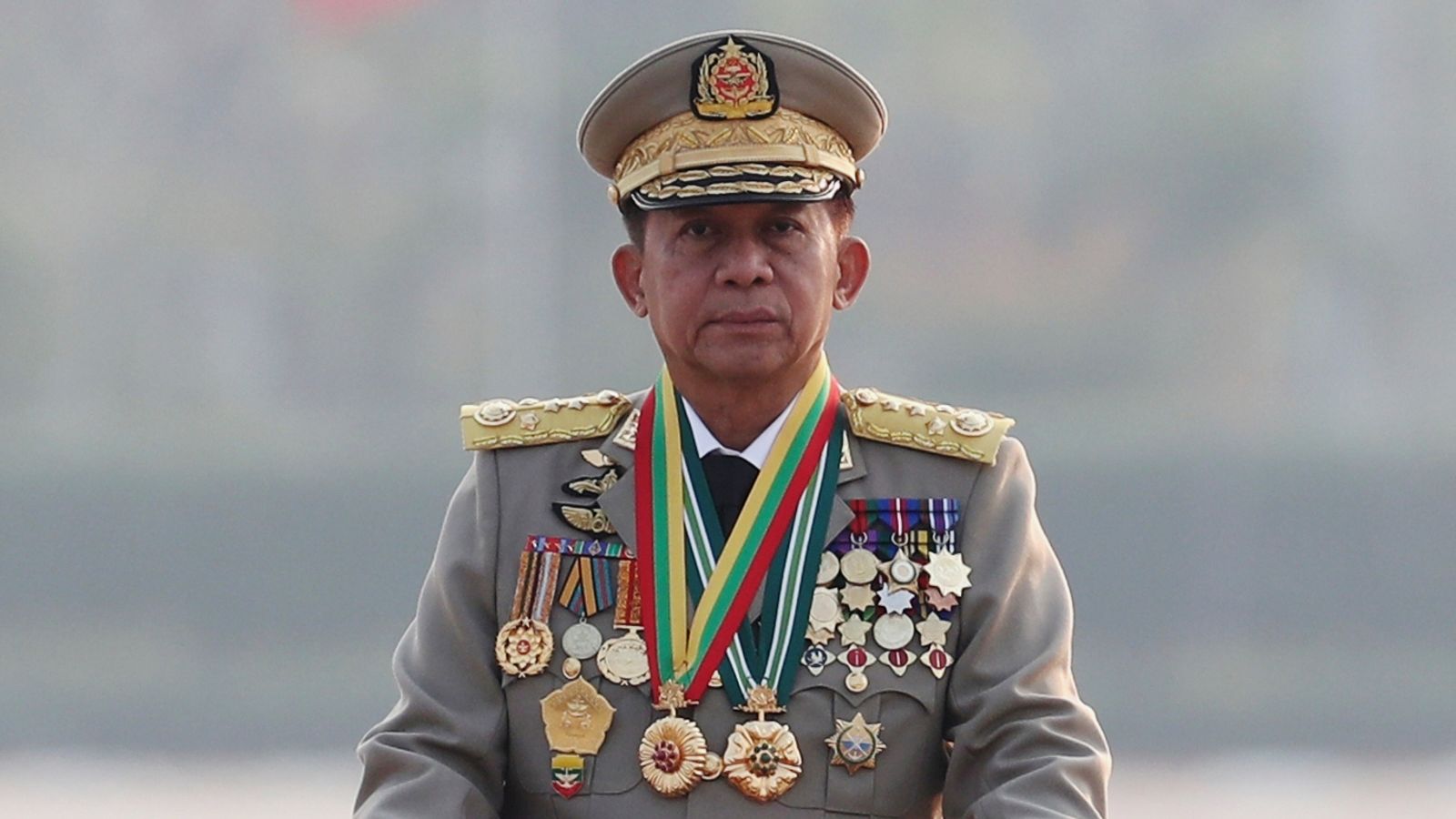
Min Aung Hlaing was elected president with 429 of 584 parliamentary votes, consolidating power after his 2021 coup; he stood down as commander-in-chief and proposed Ye Win Oo as his military successor. The victory formalizes junta control amid ongoing civil war and a 27-year prison term for Aung San Suu Kyi, increasing political and security risks. Expect risk-off pressure on Myanmar and nearby emerging-market exposures, potential for intensified military operations, and heightened regional diplomatic and sanction-related scrutiny.
The political consolidation in Myanmar materially raises the probability of protracted, asymmetric conflict and a Western sanction regime that pushes the country deeper into China's economic orbit. Expect near-term (0–6 months) disruptions concentrated in cross-border energy and commodity flows — particularly offshore gas and jade/precious timber export routes — with medium-term (6–24 months) effects on supply chains as buyers reroute to India/China or increase spot purchases.
Financial markets will price a higher frontier-premium: thin local FX markets can gap quickly, and regional contagion historically manifests as 100–300bps widening in ASEAN sovereign spreads in tail scenarios. For corporates, the transmission is two-fold — revenue shocks for firms directly tied to Myanmar commodity exports and margin pressure for regional energy importers forced into higher-cost LNG or pipeline alternatives.
Defense procurement and infrastructure financing are the implicit long-duration plays: constrained access to Western capital and procurement channels increases dependence on Chinese credit and arms, but also prompts neighbours to accelerate defensive procurements and border security upgrades. Key near-term catalysts to watch are (1) any major interruption to offshore gas output, (2) new EU/US targeted sanctions or secondary-sanctions guidance, and (3) visible bilateral credit/arms agreements between China/India and Myanmar — any of which could re-rate regional suppliers and trade flows within 1–12 months.
Reversal scenarios that would unwind risk premia are a credible negotiated settlement, rapid restoration of open export corridors, or a decisive diplomatic pivot from major neighbours; these are lower-probability and would likely take 12–36 months to materialize given current alignment dynamics.
AI-powered research, real-time alerts, and portfolio analytics for institutional investors.
Request DemoOverall Sentiment
strongly negative
Sentiment Score
-0.70
