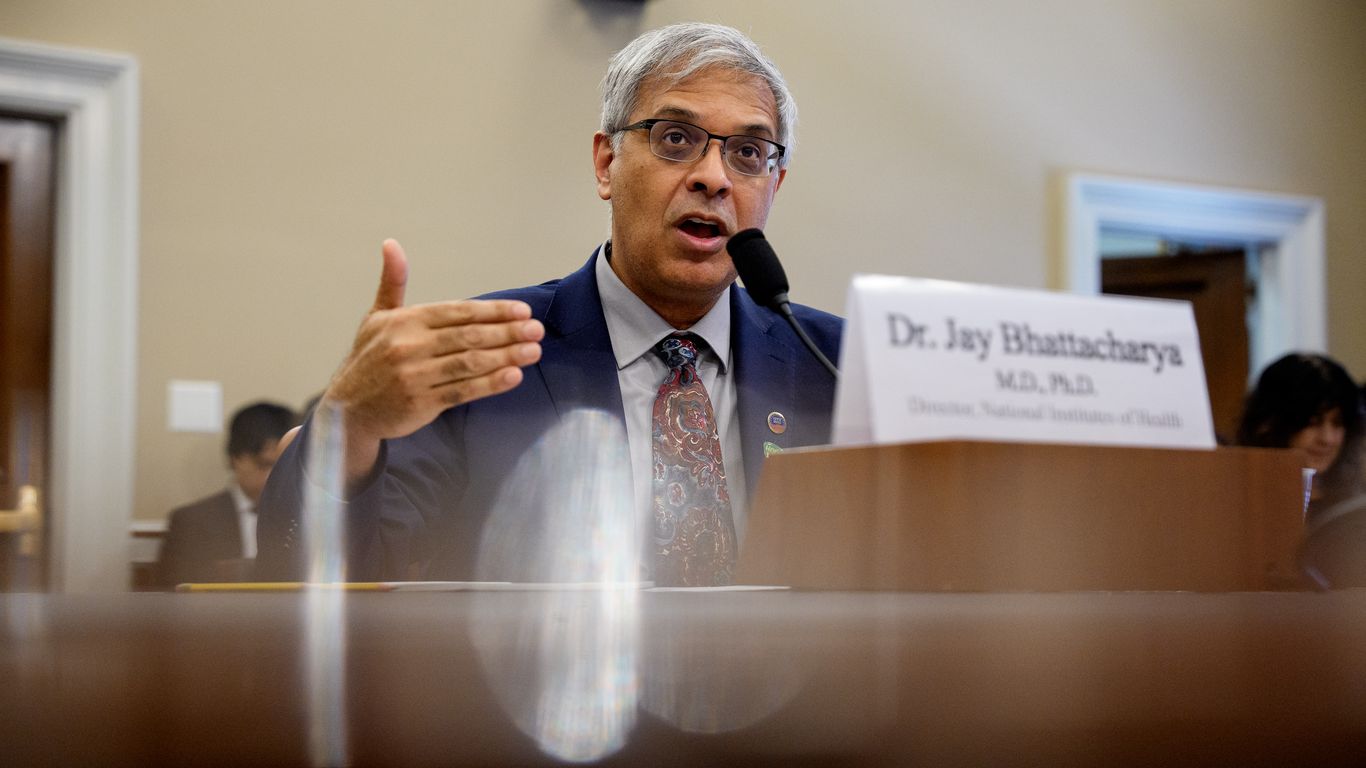
The White House indefinitely postponed naming a permanent CDC director, leaving acting head Jay Bhattacharya to run the agency past a statutory deadline. The delay preserves administration flexibility to pivot CDC policy on vaccines ahead of the midterms but leaves the agency without a confirmed political leader, raising operational and reputational risk amid reported scientific disagreements with HHS Secretary Robert F. Kennedy Jr.
The leadership vacuum at the CDC is a policy-risk multiplier, not a one-off staffing story — it raises probability of fragmented, state-driven public health responses that materially increase near-term demand for diagnostics, surveillance and treatment capacity. Expect a 10–30% swing in testing volumes regionally during episodic respiratory spikes when federal guidance is soft; private labs and CROs capture the bulk of that revenue because states lean on contractors to plug surveillance gaps.
Second-order winners are firms that can scale testing, field surveillance or substitute therapeutics quickly (large diagnostics, certain CROs, antiviral drugmakers). Conversely, vaccine rollouts that rely on cohesive federal messaging risk slower uptake, shaving seasonal booster volumes by an estimated 5–15% in the first 12 months if messaging remains fragmented — a meaningful hit for players whose revenue depends on recurring adult immunizations.
Political timing is the dominant catalyst. A nomination delay tied to election dynamics or intra-administration misalignment could keep elevated uncertainty for 3–9 months; a confirmed director acceptable to both the Secretary and the administration would compress volatility within 30–60 days. Tail risk: a localized outbreak with measurable morbidity would flip sentiment and spike demand for diagnostics and therapeutics within 7–30 days, rewarding fast-to-scale operators and penalizing firms tied to discretionary preventive uptake.
Consensus underestimates the persistence of spending reallocation: grants and contracts will likely shift toward operational testing and therapeutics contractors (vs. prevention programs) for 6–18 months, creating asymmetric returns for nimble services providers versus vaccine-centric manufacturers.
AI-powered research, real-time alerts, and portfolio analytics for institutional investors.
Request DemoOverall Sentiment
mildly negative
Sentiment Score
-0.15
