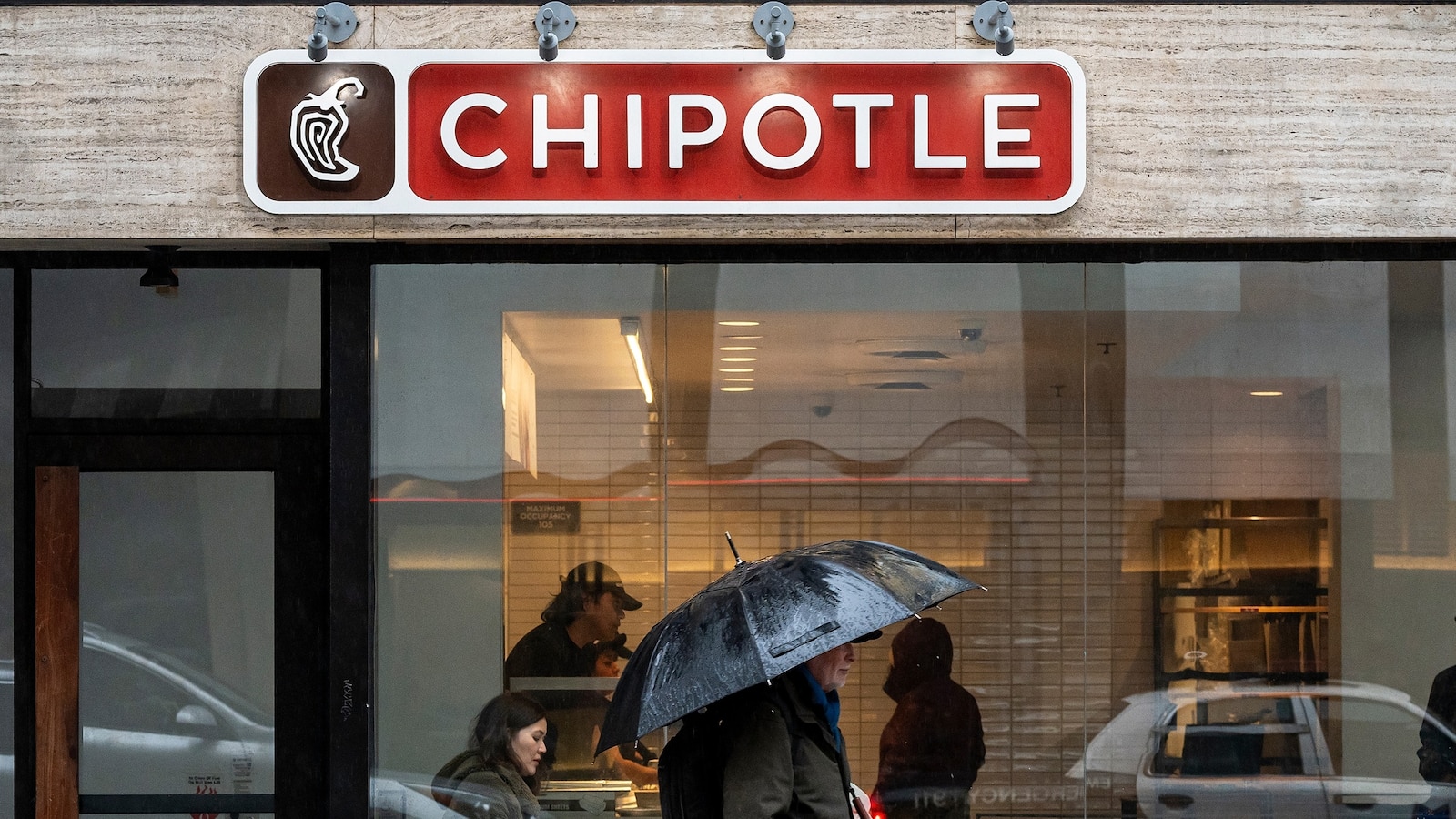
Major restaurant chains, including Chipotle, Sweetgreen, McDonald's, and Wingstop, are reporting a significant slowdown in consumer spending, particularly among low-income customers, citing persistent macroeconomic pressures and inflation. Chipotle reversed its 2025 same-store sales forecast to a decline, with shares plummeting over 20% post-earnings, while Sweetgreen experienced a nearly 10% same-store sales drop, notably among younger, lower-income demographics. McDonald's and Wingstop also observed reduced traffic and sales in low-income areas, with Wingstop noting the trend spreading to middle-income consumers. This widespread deceleration in discretionary spending, alongside declining consumer sentiment and record household debt, signals a potential weakening in the broader U.S. economy, where consumer activity drives two-thirds of GDP.
Major restaurant chains, including Chipotle, Sweetgreen, McDonald's, and Wingstop, are signaling a significant deceleration in consumer spending, particularly among lower-income demographics. This widespread weakness is attributed to persistent macroeconomic pressures and elevated inflation, impacting discretionary spending across the industry. The University of Michigan's consumer sentiment index, now at its lowest since 2022, corroborates this trend, alongside record household debt levels.
Chipotle reversed its 2025 same-store sales forecast to a decline, leading to a more than 20% share price drop post-earnings, as customers earning under $100,000 (40% of sales) reduce dining frequency. Sweetgreen reported a nearly 10% same-store sales decline in Q3, a stark reversal from prior growth, with sales to its 25-35 age demographic falling approximately 15%. McDonald's observed "nearly double-digit" traffic declines among low-income customers, despite overall 2.4% same-store sales growth.
Wingstop experienced over 5% domestic same-store sales decline in Q3, notably indicating the trend's expansion to middle-income consumers in some regions. This synchronized downturn in consumer discretionary spending, which accounts for two-thirds of U.S. economic activity, suggests a broader economic weakening beyond isolated company performance. The uncertain duration of this trend poses a significant risk to future corporate earnings and overall economic growth.
AI-powered research, real-time alerts, and portfolio analytics for institutional investors.
Request DemoOverall Sentiment
strongly negative
Sentiment Score
-0.80
Ticker Sentiment
