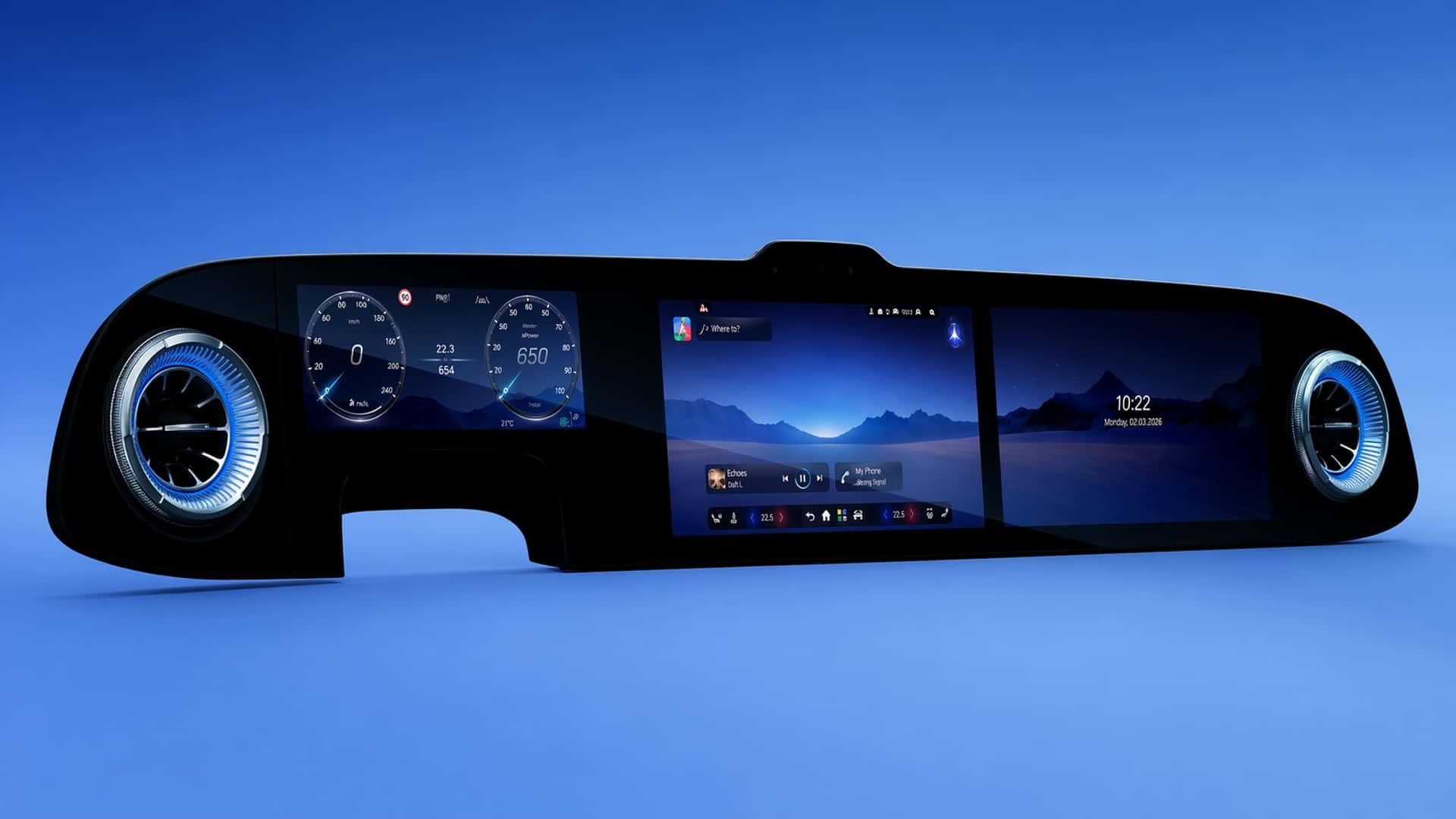
Mercedes' base 2027 C-Class EV will come with three separate dashboard displays: a 10.3-inch digital cluster, a 14-inch central screen, and a non-touch passenger-side display. Buyers must upgrade to the optional Superscreen for a touch-capable passenger display, while the Hyperscreen bundles a single 39.1-inch continuous panel. The article frames this as part of Mercedes' broader screen-heavy interior strategy, but it is primarily a product/design update with limited near-term market impact.
Mercedes is signaling that interior digitization has moved from a feature into a brand-defining constraint: once the dashboard architecture is fixed around large glass surfaces, differentiation shifts from hardware quality to software UX, content ecosystem, and margin-rich option packaging. That is bullish for OEMs with strong premium pricing power and weak for suppliers of traditional switchgear, trim, and tactile HMI components, because the value pool migrates further toward display modules, graphics processors, camera/sensor integration, and in-cabin software licensing. The second-order effect is that this architecture raises the cost of entry-level luxury while compressing the perceived gap between trims. If the base car already looks expensive, the option mix becomes more about monetizing software-entitled features and rear-seat/entertainment upsells than about metal and leather. That tends to improve gross profit per unit in the near term, but it also increases residual-value risk if used-car buyers start to discount screen-heavy cabins faster than mechanically differentiated ones, especially over a 3-5 year horizon. For competitors, the message is clear: the interior benchmark is now a moving target that requires continuous refreshes, which could force BMW/Audi/Volkswagen to keep spending on infotainment and cockpit architectures just to avoid looking dated. The contrarian risk is that screen saturation eventually becomes a liability—consumer fatigue, distraction concerns, and software bugs can turn a premium feature into a warranty and reputation issue. If regulators tighten scrutiny on driver distraction or if user experience is fragmented across multiple display suppliers, the market could re-rate the “more screens = more luxury” thesis within 12-24 months. Ford is only marginally implicated here, but the broader read-through is that mainstream incumbents without a compelling digital cabin story may face pricing pressure at the upper end and have to spend more to defend share. The real winner is likely the semiconductor/display supply chain rather than the automakers, provided automotive-grade display demand keeps compounding and content-per-vehicle rises faster than unit volumes.
AI-powered research, real-time alerts, and portfolio analytics for institutional investors.
Request DemoOverall Sentiment
neutral
Sentiment Score
-0.05
Ticker Sentiment
