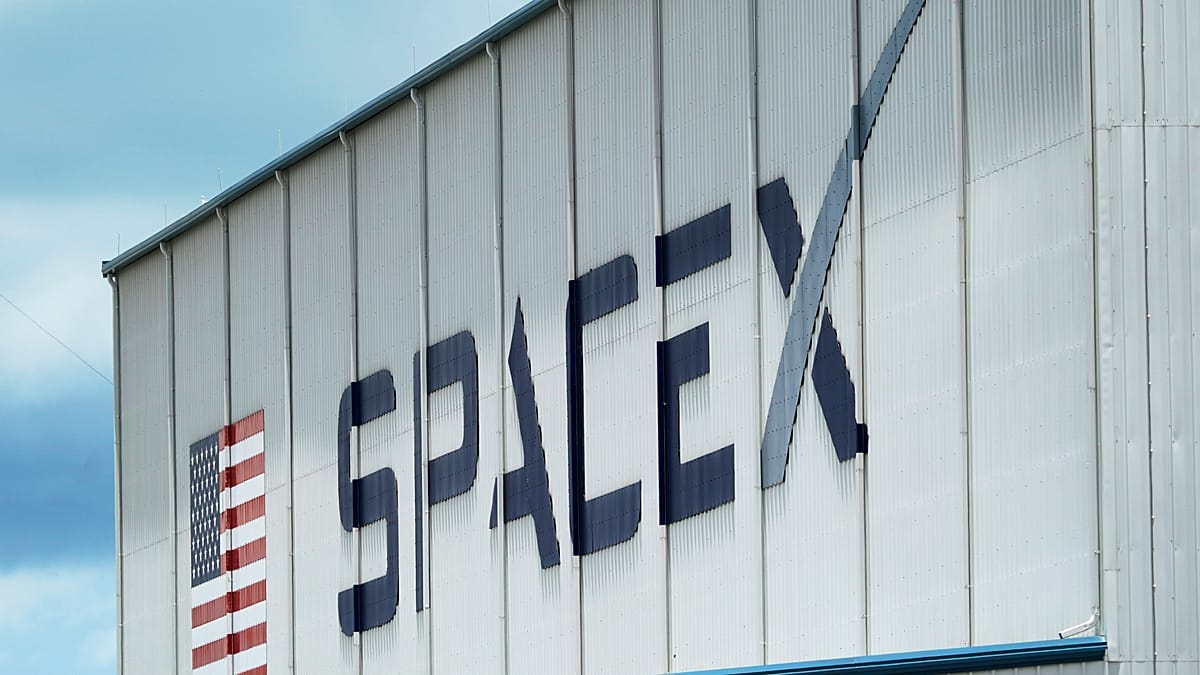
SpaceX launched its Starfall spacecraft on a Falcon 9 test mission, with FAA filings indicating a payload capacity of about 2,200 lbs (998 kg) and potential uses ranging from microgravity research to rapid point-to-point cargo delivery. The mission is notable for its secrecy and the speculation that it could support military logistics, though no official confirmation has been given. SpaceX said the vehicle will splash down in the Pacific after demonstrating controlled flight.
The market should read this less as a single product demo and more as a signal that SpaceX is building a reusable, regulated logistics layer that can sit between launch and defense procurement. If that platform becomes credible, the value accrues first to the prime contractor with the lowest marginal cost per mission and the deepest government relationships, not to the end-customer sectors. That is incrementally negative for smaller launch competitors and for any defense logistics concept that depends on fixed-wing or slow sealift economics. The second-order effect is that even a modest payload class can matter strategically if it materially shortens delivery time for high-value, low-mass cargo. That puts a premium on mission reliability, re-entry cadence, and regulatory approvals over raw payload size; the commercial use case is likely a wrapper around the defense use case, not the other way around. For TSLA, the direct equity read-through is limited, but the stock can still absorb headlines because investors already discount Musk operational optionality as a conglomerate-like call option. The near-term risk is reputational and regulatory: secrecy around the mission raises the odds of political scrutiny, especially if the program is later framed as dual-use. Over the next 1-3 months, the key catalyst is whether follow-on filings, Pentagon language, or test cadence confirm this is becoming a recurring platform rather than a one-off demonstration. Over 6-18 months, the bigger issue is whether SpaceX can convert the concept into contracted utilization; without that, the market will fade the headline premium quickly. The contrarian view is that the move may be overinterpreted as a defense breakthrough when it is still mostly an engineering and certification milestone. If the platform remains constrained to subscale cargo and intermittent tests, the economic moat is less about replacing military logistics and more about creating another high-margin niche service. In that case, the real winner is not a new category of defense spend, but the incumbent with the best cost curve and most permissive launch infrastructure.
AI-powered research, real-time alerts, and portfolio analytics for institutional investors.
Request DemoOverall Sentiment
neutral
Sentiment Score
0.05
Ticker Sentiment
