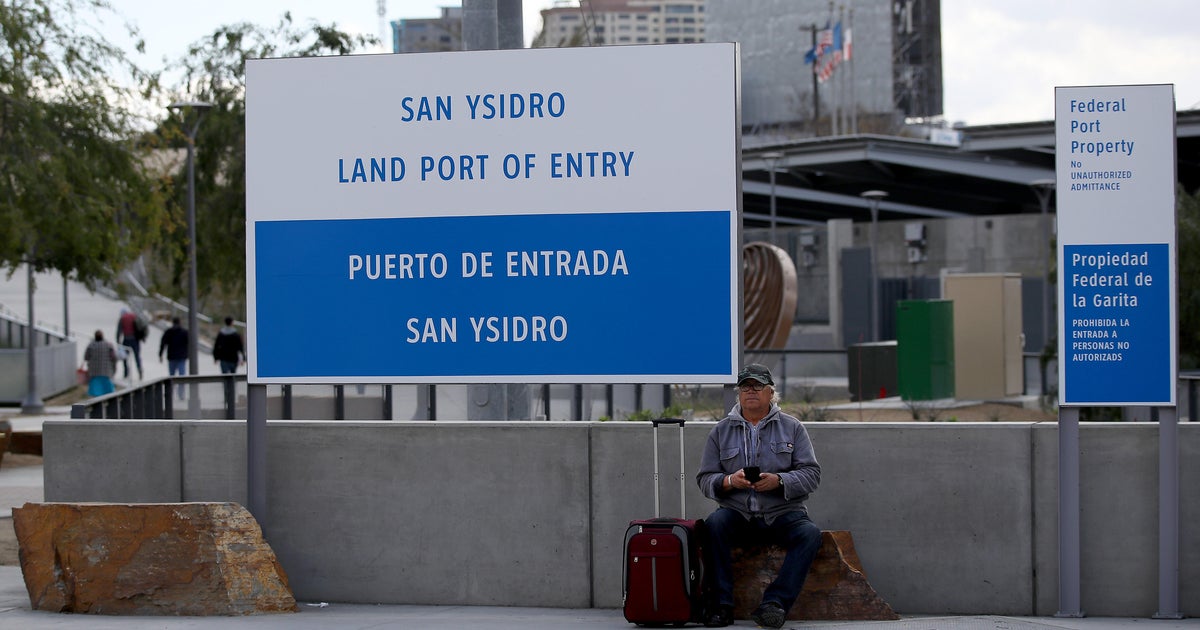
A federal appeals court blocked President Trump's directive that sought to suspend asylum access and allow summary removals at the U.S.-Mexico border. The D.C. Circuit held that the Immigration and Nationality Act does not permit the executive branch to bypass asylum and withholding-of-removal procedures, though one judge partially dissented on the legality of denying asylum applications outright. The ruling can still be appealed to the full D.C. Circuit or the Supreme Court.
This is a meaningful procedural setback for the administration, but the marketable signal is not the ruling itself — it is the increased probability that immigration policy becomes slower, more litigated, and more operationally fragmented over the next 6-12 months. That raises the odds of uneven enforcement rather than a clean policy swing, which is usually more important for sectors tied to border throughput, detention capacity, and labor availability than headline rhetoric suggests.
The first-order winners are legal-service providers, detention contractors, and compliance-heavy businesses that benefit from prolonged adjudication and backlog creation. Second-order, restaurants, agriculture, construction, and logistics could see a less abrupt labor shock than a hard-line enforcement scenario would imply, supporting labor supply stability and reducing near-term wage pressure at the margin. The real risk is that policy uncertainty keeps capex and hiring decisions conservative in border states and among companies with high undocumented labor exposure.
Catalyst-wise, the next swing factor is not another court decision alone but whether the administration shifts from border deterrence to interior enforcement, which would move the pain from migrant inflows to employer audits and worksite enforcement. That shifts the earnings risk from headline-sensitive operators to businesses with opaque labor sourcing, and it can show up with a 1-2 quarter lag in margin compression rather than immediate top-line disruption. If the Supreme Court takes the case, volatility rises, but absent a reversal, the practical effect is a de facto delay strategy that reduces the odds of a full asylum-system shutdown in the next election cycle.
The contrarian view is that the market may be underestimating how much of the administration's immigration agenda can still be implemented without this specific tool. If enforcement simply migrates toward deportation logistics, detention buildout, and employer penalties, the policy impact on labor markets could eventually be more disruptive than a border-asylum ban, just later and less visibly. In that sense, the ruling is bullish for near-term labor availability but not necessarily bearish for the broader enforcement trade.
AI-powered research, real-time alerts, and portfolio analytics for institutional investors.
Request TrialOverall Sentiment
neutral
Sentiment Score
-0.05
