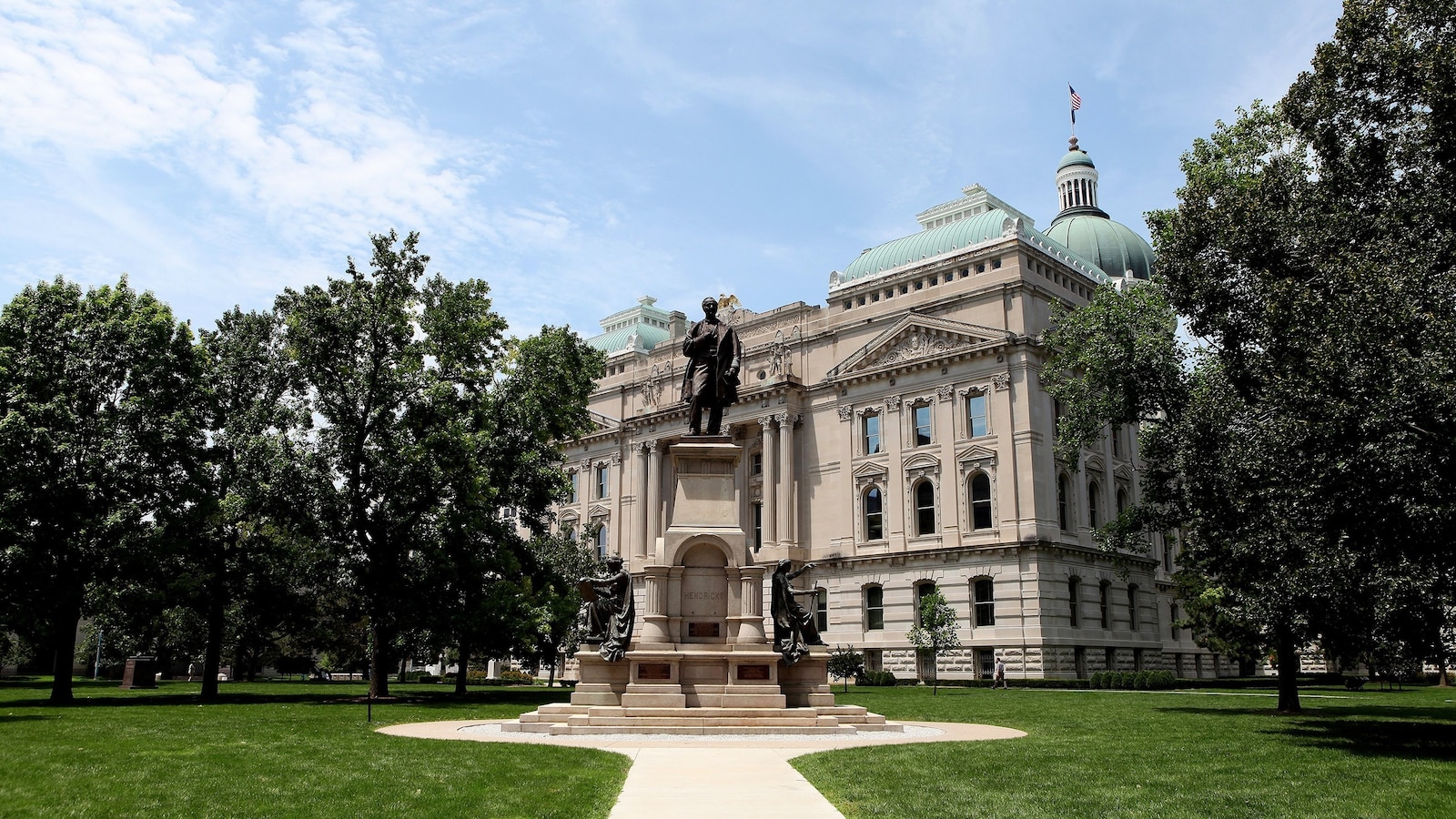
Indiana’s state Senate is set to vote on a mid‑decade, Republican‑drawn congressional map that would make two Democratic-held U.S. House districts lean Republican and potentially add GOP seats in 2026 (current delegation 7 R‑2 D); although the map cleared committee, its passage is uncertain because several Republican senators oppose it despite a 40‑10 GOP majority. The proposal has backing from the White House, Governor Mike Braun, VP J.D. Vance and pressure from former President Trump and Speaker Mike Johnson, while conservative groups such as Turning Point Action and Club for Growth are threatening primary challenges and running ads to force support. The fight has exposed intra‑party divisions and security concerns—some senators reported bomb/swatting threats—raising political and operational risks for Indiana Republicans whether the bill passes or collapses.
Indiana's state Senate is scheduled to vote on a mid‑decade Republican-drawn congressional map that would make two Democratic-held U.S. House districts lean Republican and potentially add GOP seats in 2026; the state currently has a 7 Republican / 2 Democrat delegation and the proposal cleared committee and procedural votes. The Republican caucus holds a 40-10 majority in the Senate, but several GOP senators have publicly opposed the bill and Senate President Pro Tem Rodric Bray has indicated there may not be enough votes to pass the map, creating tangible uncertainty about the outcome.
The proposal has high-level backing from the White House, Governor Mike Braun, Vice President J.D. Vance and active pressure from former President Trump, who publicly urged passage and threatened primary challenges against dissenting senators; Speaker Mike Johnson also phoned senators to lobby for a yes vote. Conservative outside groups such as Turning Point Action and Club for Growth are investing in ads and phone campaigns to influence the vote, while at least one senator (Michael Crider) remains a firm no, highlighting intra‑party fractures.
Passage would increase the likelihood Republicans can protect their razor‑thin House majority and advance the president's agenda in the near term, while failure would expose divisions that could prompt primary fights and longer‑term instability in state GOP politics; reported bomb/swatting threats against some senators add security and operational risk. Sentiment on the issue is mixed and the provided market_impact_score (0.2) suggests limited direct market reaction, but election‑cycle political risk and primary spending trajectories warrant monitoring for policy and governance implications.
AI-powered research, real-time alerts, and portfolio analytics for institutional investors.
Request DemoOverall Sentiment
mixed
Sentiment Score
0.00
