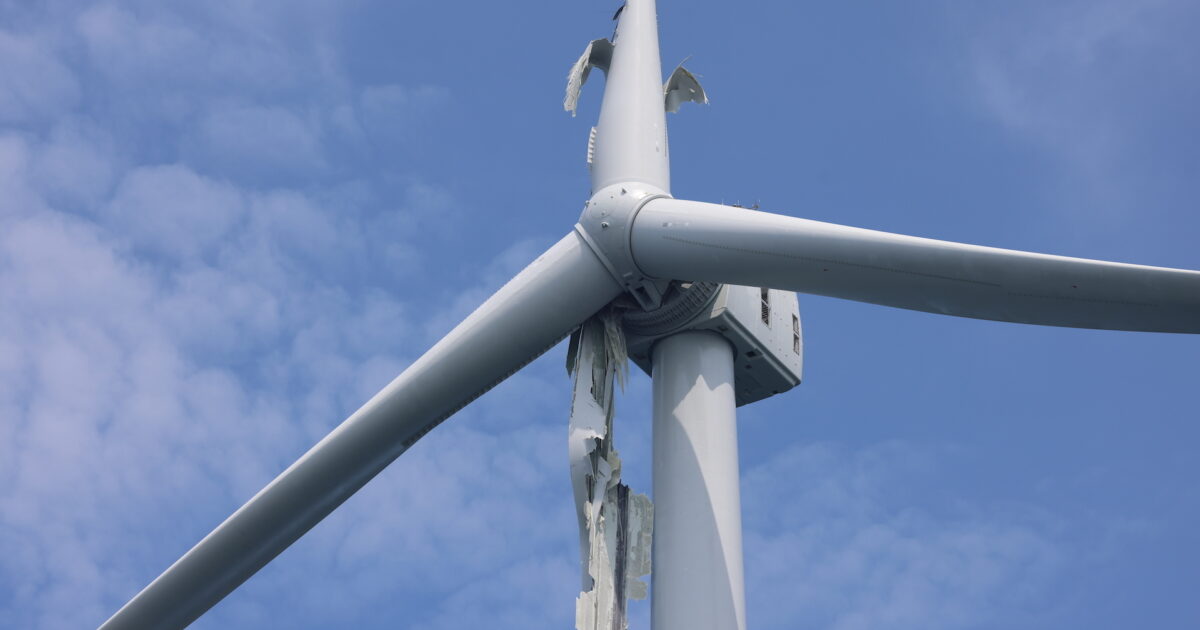
Vineyard Wind is suing GE Renewables to stop it from terminating turbine service agreements, warning the $4.5 billion offshore wind project could fail without the manufacturer’s support. The dispute centers on more than $300 million in alleged unpaid bills, while Vineyard Wind claims it is owed over $545 million for defective blades and says the project could default on its loans and face foreclosure if commissioning stalls. The case adds to a series of setbacks for the 62-turbine Nantucket-area wind farm, which has already suffered blade failures, shutdowns, and regulatory scrutiny.
This is less a project-level dispute than a financing stress test for the entire US offshore wind stack. If a marquee, already-built asset cannot transition cleanly from construction to operations because the OEM controls the software, blades, and service layer, every future project in the channel should reprice the value of “bankability” versus installed hardware. The second-order winner is not another turbine OEM so much as lenders and insurers, who can demand higher spreads, tighter reserve accounts, and more aggressive completion guarantees across the sector.
For GE Vernova, the near-term risk is not just legal damages; it is a credibility hit that can leak into backlog conversion and service-margin visibility. The market typically underestimates how much of wind economics sits in long-dated O&M annuities and warranty economics, so any perception that GE can selectively exit distressed jobs raises the cost of capital for its OEM franchise and could pressure valuation multiples even if earnings are only modestly affected. The bear case broadens if counterparties begin litigating defect responsibility publicly, because that converts a one-off project issue into a pattern risk on asset quality and execution.
The catalyst path is binary over the next 1-3 months: either the parties reach a standstill/novation that preserves operating control, or the lender stack starts behaving like a distressed credit. If default language is triggered, this becomes a restructuring story, not an infrastructure story, and the equity can gap down hard before any final court ruling. The longer-term overhang is even more damaging: if decommissioning funding remains deferred, the project can become a stranded-asset political issue, increasing policy scrutiny on future offshore permits.
The contrarian angle is that the market may already be pricing much of the litigation and defect headline risk into GEV, while underpricing the possibility of a negotiated economic reset that socializes losses across the capital structure. But the asymmetry still looks negative because the burden of proof is now on GEV to show it can protect its balance sheet without impairing its installed-base credibility. That makes the stock vulnerable to any incremental headline on default, injunctions, or lender enforcement.
AI-powered research, real-time alerts, and portfolio analytics for institutional investors.
Request DemoOverall Sentiment
strongly negative
Sentiment Score
-0.78
Ticker Sentiment
