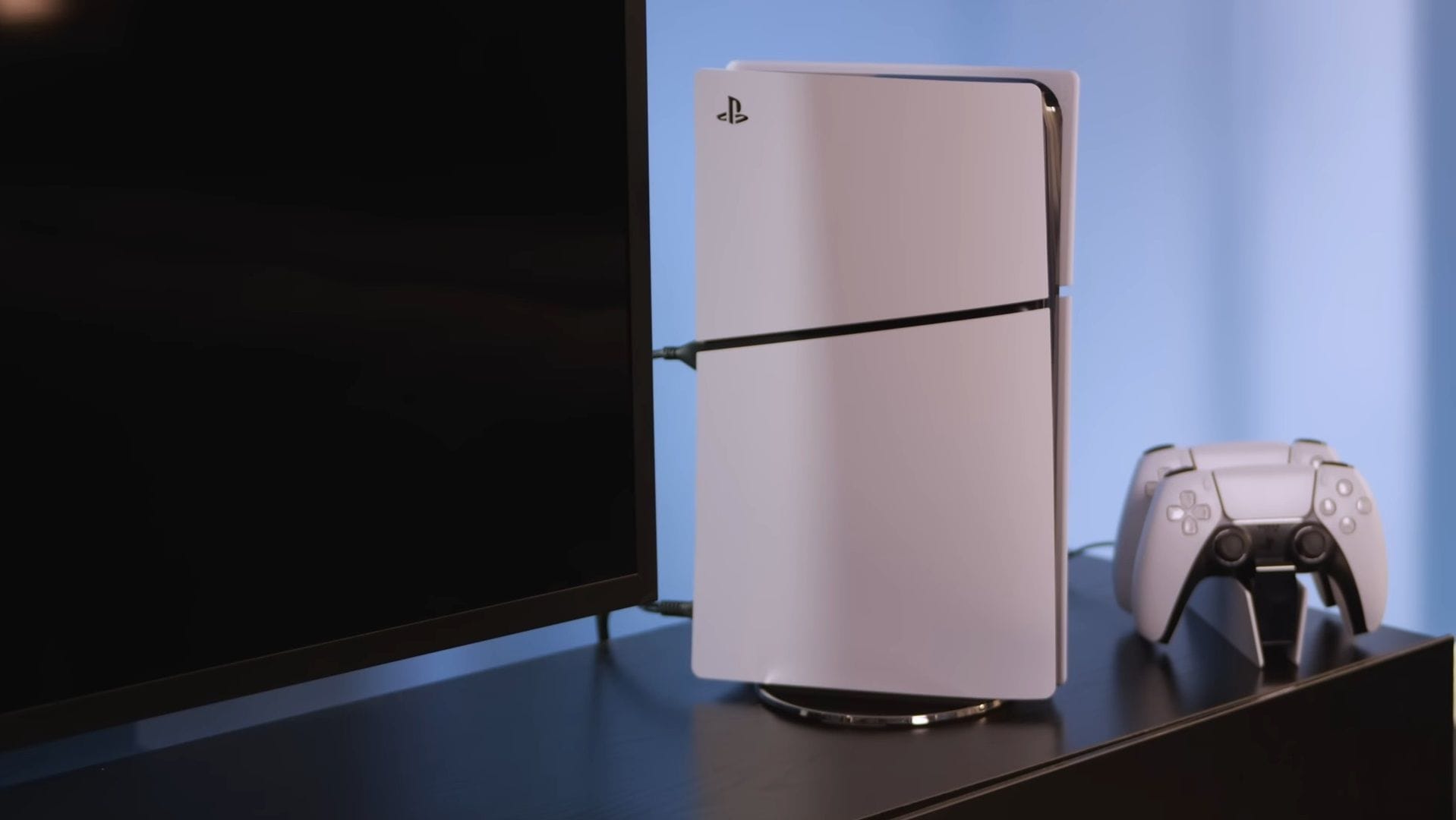
Leaks claim Sony's unreleased PS6 will feature a 30GB memory configuration and the PS6 handheld 24GB, reportedly using GDDR7 3GB modules at 32Gbps in a 160-bit bus (five-module clamshell doubling) yielding ~640 GB/s bandwidth versus the PS5's 448 GB/s. The report, citing a reliable leaker and referencing AMD CEO Lisa Su's comment on a 2027 Xbox timeline, notes a potential ~$100 BOM increase for higher RAM but expects memory prices to fall within 1–2 years; the details remain unconfirmed and should be treated as speculative.
Market structure: If the PS6 rumors are accurate, winners are AMD (semi‑custom SoCs for consoles), GDDR7 suppliers (Micron MU, SK Hynix, Samsung) and Sony (content/services upside from a stronger install base), while low‑memory PC GPU SKUs (8GB cards) and mid‑cycle GPU OEMs face demand erosion. A 30GB/24GB console spec and ~640 GB/s bandwidth (vs PS5 448 GB/s) shifts pricing power toward silicon and memory suppliers; Sony can choose to pass through ~+$100 BOM or absorb margin compression, altering channel pricing vs prior cycles.
Risk assessment: Tail risks include false leaks, console delays to 2028, GDDR7 yield shortfalls, or a rapid memory price collapse that undermines supplier upside; any of these could swing earnings +/-20% for exposed suppliers. Immediate market reaction should be muted (days), earnings guidance and supplier trade data will matter in weeks/months, and the real revenue/margin impact crystallizes over 2026–2028 as consoles ship. Hidden dependencies: developer adoption of memory‑heavy titles, cloud gaming substitution, and Sony/MSFT bundling strategies can amplify or negate hardware specs.
Trade implications: Direct plays favor semi‑custom and memory suppliers; options flows should focus on 12–24 month LEAPs to capture the 2027 launch. Consider relative plays: long AMD vs short lower‑end GPU exposure, and long MU/000660.KS (SK Hynix) as a cyclical memory recovery trade. Catalysts to watch: AMD/SONY commentary, Micron monthly trade data, and Lisa Su earnings cadence.
Contrarian angles: Consensus assumes higher BOM is a one‑time cost — but if developers optimize for 30GB, PC GPU demand could structurally shift, making memory suppliers' multi‑year cycle stronger than currently priced. The market may underprice Sony’s software/recurring revenue upside from a larger install base; conversely, it may be overpricing a memory supplier pop if GDDR7 yields lag. Historical parallel: PS4/PS5 cycles show hardware margin compression is often offset by software/PSN ARPU gains within 12–24 months, so hedge any hardware exposure accordingly.
AI-powered research, real-time alerts, and portfolio analytics for institutional investors.
Request DemoOverall Sentiment
mildly positive
Sentiment Score
0.12
Ticker Sentiment
