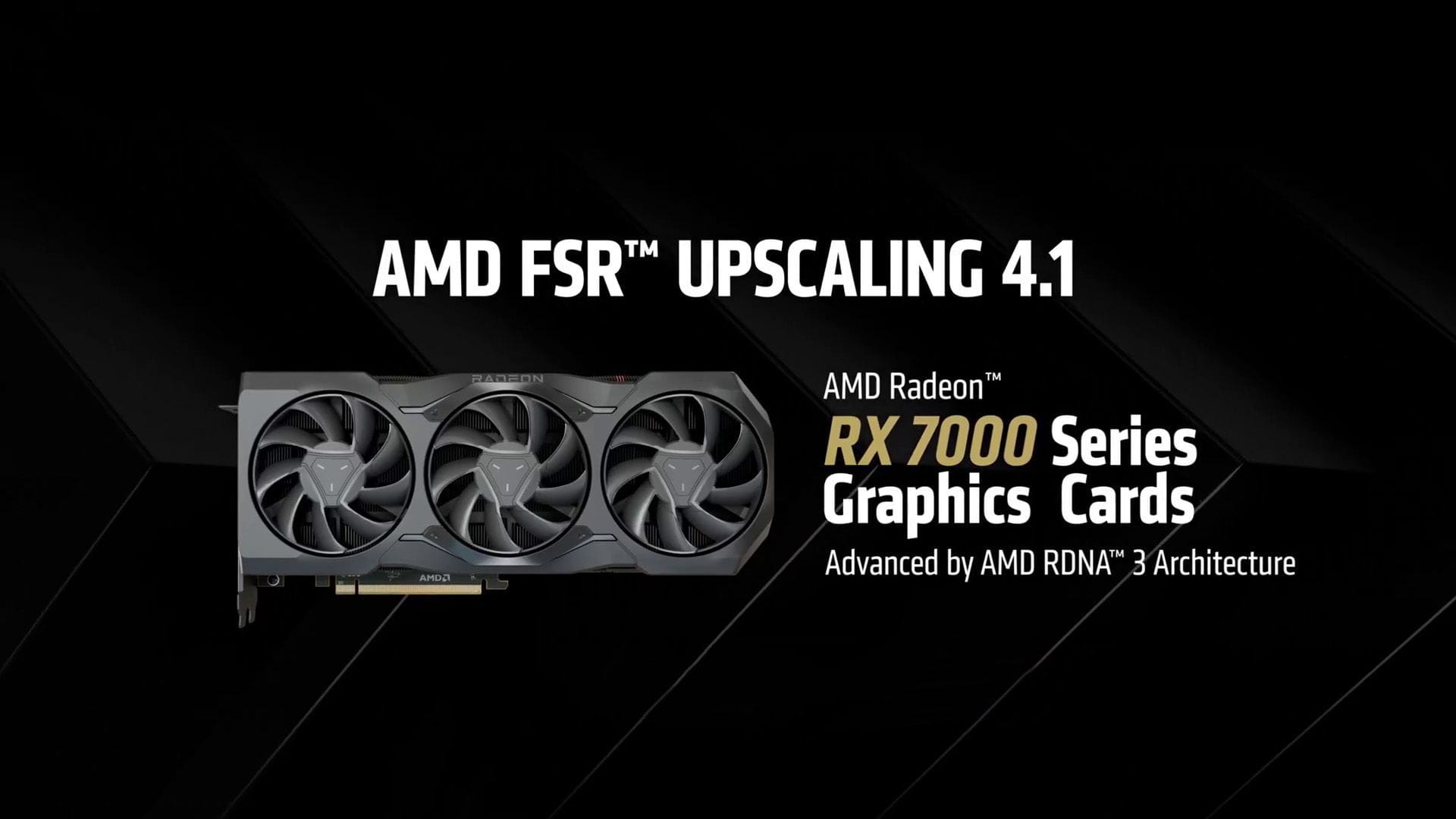
AMD announced FSR 4.1 will launch for Radeon 7000 series GPUs in July 2026, with RDNA 2 / Radeon RX 6000 support planned for early 2027. The update is expected to improve image quality and frame rates and will ship with support for 300+ games at launch. The news is positive for AMD's gaming graphics ecosystem, but the delayed rollout for older cards limits near-term market impact.
This is less about near-term unit economics for AMD and more about defensibility of its software stack. Broadening advanced upscaling to older installed bases extends the useful life of Radeon hardware and raises the switching cost for users deciding whether to stay inside the AMD ecosystem or migrate to an Nvidia-centered workflow. The second-order implication is that AMD is using software compatibility to partially offset its weaker brand premium in discrete GPUs, which should support share retention even if it does not immediately translate into ASP uplift. The biggest near-term beneficiary may actually be AMD’s add-on ecosystem: stronger perceived GPU longevity tends to lift attach rates for monitors, peripherals, and future GPU replacements within the same brand, while also improving retailer sell-through of midrange boards. On the competitor side, Nvidia is pressured at the margins in value-conscious segments because the moat is no longer just raw performance; the relevant comparison becomes total experience over a 2-3 year ownership cycle. That matters most in the sub-$500 GPU tier where buyers are more software-sensitive and less benchmark-pure. The main catalyst risk is execution, not demand. If real-world image quality gains are inconsistent across titles or drivers introduce regressions, the announcement becomes a marketing event rather than a usage driver, and the stock impact fades within weeks. Longer term, the more interesting issue is whether AMD can turn this into a recurring platform narrative that supports higher gross margin by reducing the need to compete purely on silicon specs. Consensus may be underappreciating the optionality in AMD’s gaming mix if software becomes a larger part of the value proposition. However, the move is not likely to change the enterprise case on its own; the stock still trades more on data center credibility than gaming enthusiasm. The opportunity is in sentiment and relative positioning, not a fundamental rerating unless this is followed by measurable adoption, lower churn, or a visible improvement in Radeon share over the next 2-4 quarters.
AI-powered research, real-time alerts, and portfolio analytics for institutional investors.
Request DemoOverall Sentiment
mildly positive
Sentiment Score
0.45
Ticker Sentiment
