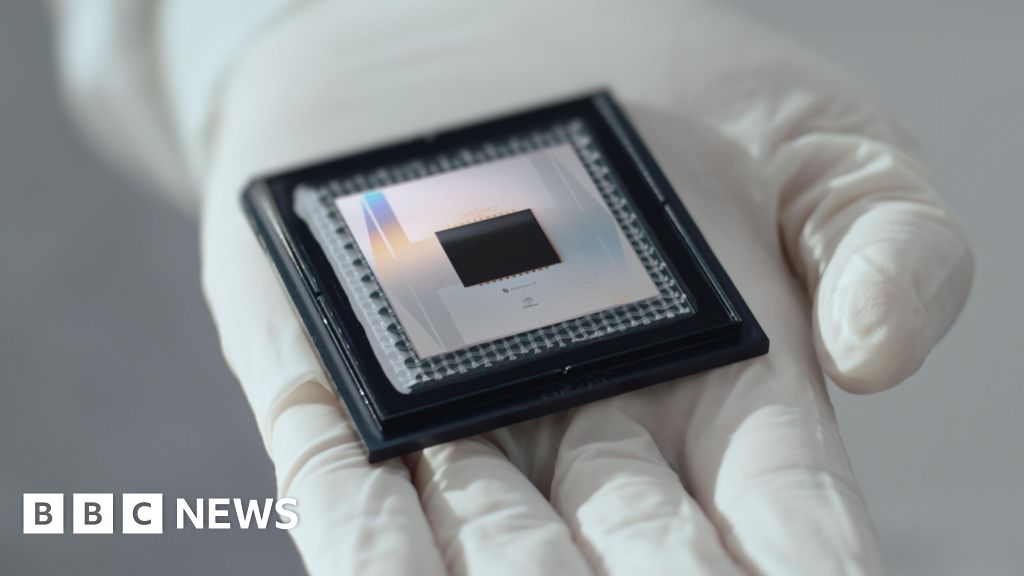
Google has partnered with the UK's National Quantum Computing Centre to invite UK researchers, via an open competition, to propose experiments using its state-of-the-art Willow quantum processor and to collaborate with Google and NQCC experts on design and execution. The initiative aims to accelerate discovery and uncover practical applications in life sciences, materials, chemistry and fundamental physics, while leveraging UK academic expertise amid growing industry competition from Amazon, IBM and domestic players such as Quantinuum (valued at $10bn). Backed by UK government support (£670m committed and an estimated £11bn potential economic contribution by 2045), the programme could help move experimental quantum devices toward real-world impact and strengthen the UK’s position in the global quantum race.
Google has announced an open competition with the UK's National Quantum Computing Centre (NQCC) to give researchers access to its Willow quantum processor, inviting proposals and joint experimental work with Google and NQCC experts; University of Surrey’s Professor Paul Stevenson characterized the move as beneficial for UK researchers and Google. The programme builds on Willow’s 2024 unveiling as a notable technical step and explicitly aims to uncover real-world applications in life sciences, materials, chemistry and fundamental physics through collaborative experiments.
The announcement occurs amid active industry competition—Amazon and IBM are developing rival quantum systems—and a growing UK quantum ecosystem that includes seven machines at the NQCC and private firms such as Quantinuum (valued at $10bn in September). The UK government has committed £670m to the technology and projects a potential £11bn economic contribution by 2045, framing the initiative as both industrial policy and talent development.
The practical market impact is cautiously positive: the programme may accelerate discovery and skills transfer (per NQCC director Dr Michael Cuthbert) but current devices remain largely experimental with few immediate commercial use cases. For investors this implies strategic, long-horizon significance for Alphabet (GOOG/GOOGL) and industry peers, while near-term revenue or profit impacts for incumbents and rivals are likely limited absent demonstrable applied breakthroughs.
AI-powered research, real-time alerts, and portfolio analytics for institutional investors.
Request DemoOverall Sentiment
mildly positive
Sentiment Score
0.35
Ticker Sentiment
