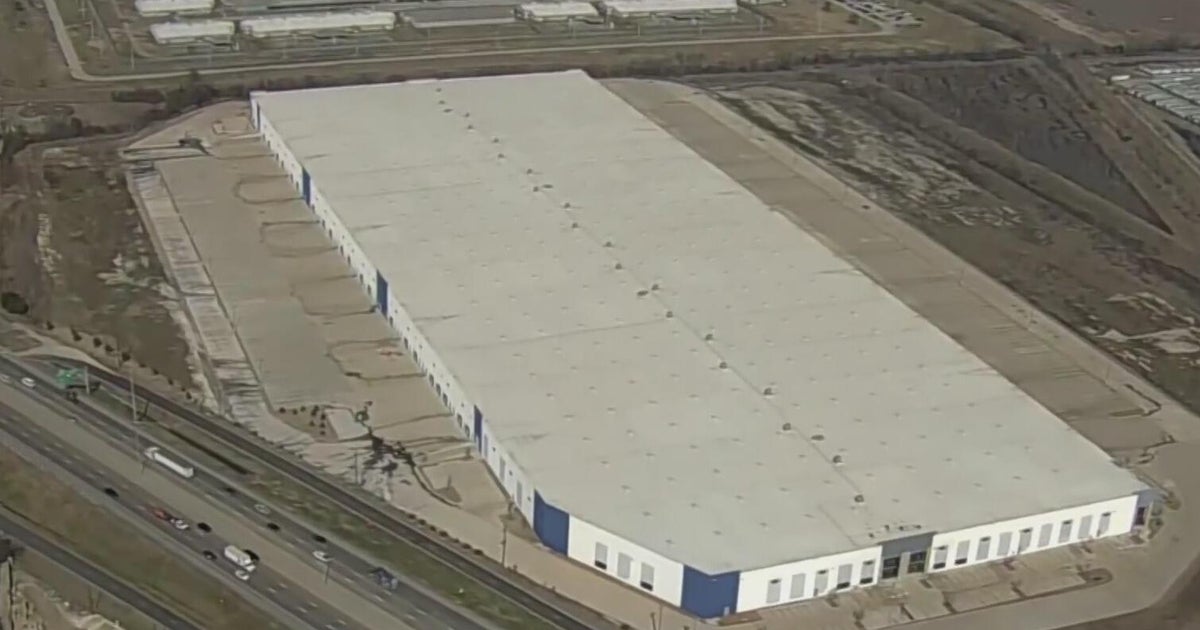
Majestic Realty Co. confirmed it was contacted about the potential sale of a million-square-foot warehouse in Hutchins, Texas, but will not sell or lease the property to U.S. Immigration and Customs Enforcement; the facility had been reported as a candidate to house up to 10,000 detainees in a city of roughly 6,000. Local officials and residents expressed relief at the announcement; the property remains on the market and Majestic gave no reason for declining a DHS transaction. For investors, the news is a localized reputational and political development with minimal direct financial impact on markets, though it underscores community pushback risks for large logistics/property transactions near population centers.
Market structure: This outcome is a mild positive for industrial landlords in Dallas–Fort Worth because a 1,000,000 sq ft asset remaining on the open market increases near-term supply but avoids the reputational and operational uncertainty of a 10,000-person detention use. Winners: investment-grade industrial REITs (PLD, REXR, EGP) that can avoid politically controversial tenants and maintain premium rents; Losers: niche custodial/contractors and private prison names (GEO, CXW) who lose a potential ad hoc demand source. Expect localized rent pressure of at most ~10–25 bps in submarket vacancy over 3–6 months rather than broader cap-rate moves.
Risk assessment: Tail risks include DHS pivoting to other vacant mega-warehouses, triggering reputational contagion across owners and a potential 20–75 bps cap-rate premium for properties with high political exposure over 6–12 months. Immediate risk (days) is headline-driven volatility; short-term (weeks–months) entails leasing outcomes and permit filings; long-term (quarters) is a structural policy/legal shift that could create new tenant exclusion clauses. Hidden dependency: municipal permitting and local ordinances can permanently impair a seller’s exit value; monitor county records and state-level executive actions as second-order signals.
Trade implications: Tactical: establish a 1–3% overweight in PLD and 1% overweight in REXR/EGP (industrial REITs) to capture flight-to-quality in next 3–9 months, funded by a 0.5–1% underweight or outright short in GEO and CXW (private prison operators). Options: buy 3-month puts on GEO/CXW (10% OTM) or vertical put spreads to limit premium; buy 6–9 month call diagonals on PLD to leverage rental resilience. Pair trade: long PLD, short CXW; exit if DHS announces new site within 30 days or if PLD spreads widen >30 bps vs NAREIT industrial index.
Contrarian angles: The market may overstate systemic risk to industrial real estate—historical parallels (airport/controversial-tenant episodes) show localized yield widening that reversed within 6–12 months as cashflow stability reasserted itself. Consensus misses the pricing premium landlords can charge for tenant vetting and reputational covenants; owners that adopt exclusion clauses may trade at a 10–50 bps premium. Unintended consequence: increased contractual complexity and capex for legal/PR can compress near-term NOI by 1–3% for exposed assets — a hidden cost to model into valuations.
AI-powered research, real-time alerts, and portfolio analytics for institutional investors.
Request DemoOverall Sentiment
neutral
Sentiment Score
0.00
