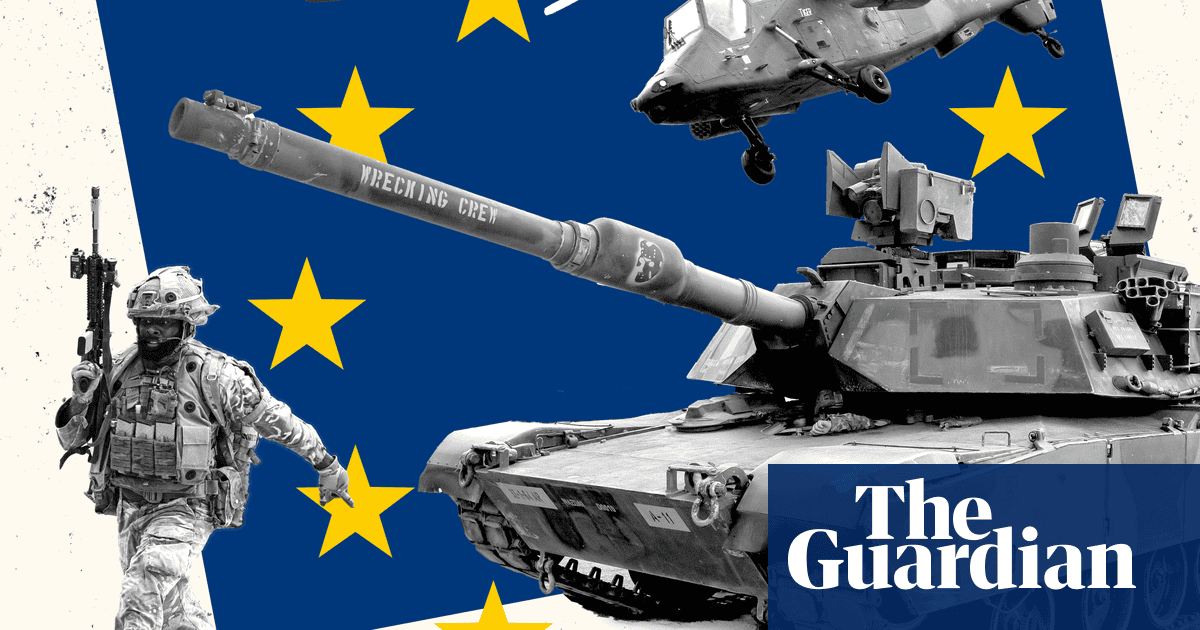
European leaders are poised to approve a significant boost to defense spending at the NATO summit, targeting 5% of GDP amid US pressure and a push for military independence. Despite this ambition and initiatives like the EU's €150bn "Safe" program, Guardian analysis reveals Europe's deep and persistent reliance on US-made military hardware, including advanced fighter jets and missiles, with recent procurement heavily favoring American suppliers over intra-European alternatives. This enduring dependency exposes European security to US policy shifts and supply chain vulnerabilities, underscoring the substantial financial and logistical hurdles to achieving genuine defense autonomy.
European nations are set to approve a significant increase in defense spending to a new target of 5% of GDP, driven by a desire for strategic autonomy amid concerns over the reliability of the U.S. as a security partner. However, procurement data reveals a stark contradiction to this ambition, highlighting Europe's profound and persistent dependence on American military hardware. Analysis indicates that nearly half of Europe's active fighter jets are U.S.-made, and since 2020, less than 10% of the 26,036 missiles purchased by the EU, UK, and Norway were from intra-European deals, with the majority sourced from the U.S. This reliance extends to advanced systems like Lockheed Martin's F-35, which European alternatives struggle to compete with due to prohibitive development costs. Even major economies like Germany, Italy, and the UK prioritize U.S. suppliers. While initiatives like the EU's €150bn "Safe" program aim to foster a domestic defense market, this deep-seated dependency on the U.S. industrial base creates significant strategic vulnerabilities, including supply chain bottlenecks and exposure to shifts in American foreign policy.
AI-powered research, real-time alerts, and portfolio analytics for institutional investors.
Overall Sentiment
moderately negative
Sentiment Score
-0.40
Ticker Sentiment
