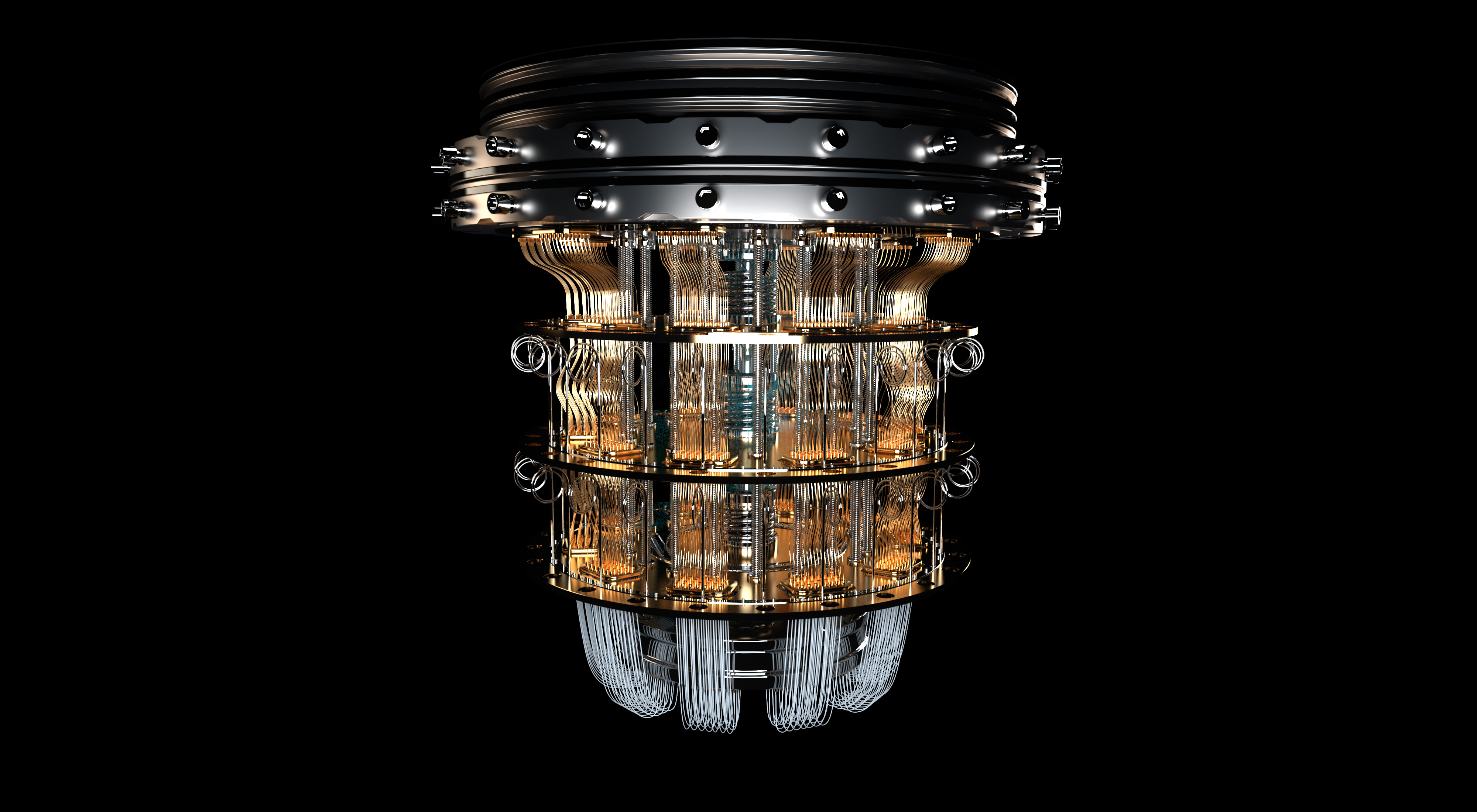
IonQ (IONQ) has experienced significant stock volatility, up 40% year-to-date but recently selling off, prompting analysis of its long-term investment potential. The company differentiates itself in quantum computing with a trapped-ion approach, boasting a high 99.99% two-qubit gate fidelity and less demanding cooling requirements than competitors, albeit with slower processing speeds. While IonQ aims for a first-mover advantage, the article suggests that achieving a 100x return to a $2.1 trillion market cap is highly improbable given current quantum computing market projections of $15-30 billion by 2030-2040, even under bullish assumptions, though it acknowledges the market's potential could be underestimated.
IonQ (IONQ) has demonstrated significant stock volatility in 2025, with a 40% year-to-date gain despite a recent sell-off driven by a broader market pivot towards risk-off sentiment. The company distinguishes itself in the quantum computing space by utilizing a trapped-ion approach, which offers advantages such as less stringent cooling requirements for supporting equipment and a high 99.99% two-qubit gate fidelity, surpassing most competitors' sub-99.9% accuracy. This fidelity translates to one error per 10,000 calculations, a notable improvement over 99.9% fidelity's one error per 1,000.
However, this technological advantage comes with trade-offs; the trapped-ion method currently exhibits significantly slower processing speeds compared to superconducting machines. While IonQ aims for a first-mover advantage, the article highlights that even 99.99% fidelity is below the estimated 99.9999% required for quantum computers to outperform classical ones. The broader market consensus projects useful quantum computing to emerge no earlier than 2030, leaving substantial time for competitive dynamics to evolve.
The prospect of a 100x return, transforming a $10,000 investment into $1 million, would require IonQ to achieve an improbable $2.1 trillion market capitalization. Even under highly bullish assumptions—capturing 100% of a projected $30 billion quantum market by 2030-2040 with a 50% profit margin and a 50x earnings multiple—IonQ would reach only $750 billion. While the article acknowledges the potential for underestimation of the quantum computing market, drawing parallels to Nvidia's GPU revenue, the current valuation trajectory for such returns appears highly speculative and challenging.
AI-powered research, real-time alerts, and portfolio analytics for institutional investors.
Request DemoOverall Sentiment
mixed
Sentiment Score
-0.15
Ticker Sentiment
