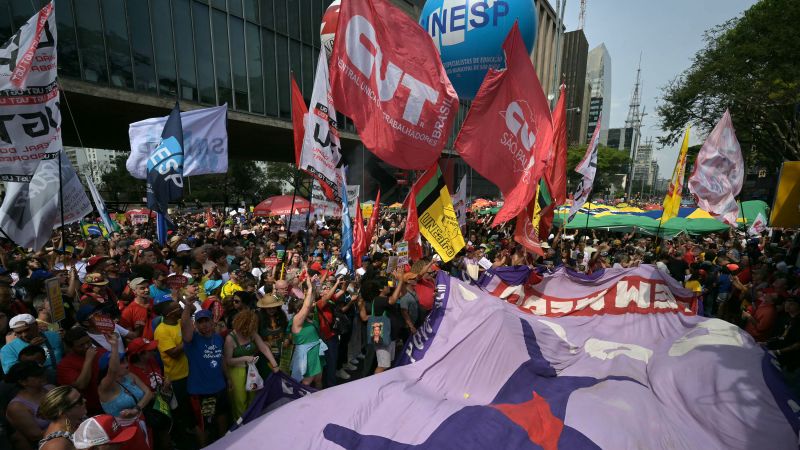
Widespread protests erupted across Brazil against legislative efforts to grant amnesty to former President Jair Bolsonaro and his allies, who were convicted of attempting a coup, and to shield lawmakers from prosecution. These demonstrations follow the lower house's fast-tracking of an amnesty bill and passage of an amendment hindering lawmaker arrests, challenging the rule of law after Bolsonaro's 27-year sentence for attempting to overturn the 2022 election. The public outcry, despite deep national divisions on Bolsonaro's fate, underscores significant political instability and governance risks in Latin America's largest economy.
Recent events in Brazil signal a significant escalation in political and institutional risk for Latin America's largest economy. Widespread protests have erupted in opposition to legislative maneuvers in the lower house, specifically the fast-tracking of a bill that could grant amnesty to former President Jair Bolsonaro and the passage of an amendment shielding lawmakers from prosecution. These actions directly challenge the judicial system, which recently sentenced Bolsonaro to 27 years in prison for attempting to overturn an election, and suggest a potential erosion of the rule of law. The country remains deeply polarized, as evidenced by a recent Datafolha poll showing a narrow 50% to 43% split on whether the former president should be jailed. This deep societal division, combined with the mobilization of influential cultural figures against the legislative agenda, indicates that political tensions are high and the path to a stable governance framework is uncertain. The conflict is not merely partisan but strikes at the core of Brazil's democratic institutions, creating an unpredictable policy environment that heightens country risk for foreign investors.
AI-powered research, real-time alerts, and portfolio analytics for institutional investors.
Overall Sentiment
neutral
Sentiment Score
0.00
