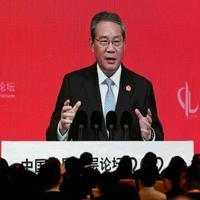
Chinese Premier Li Qiang said China is willing to help expand the global "trade pie" by further opening up and criticized unilateralism by certain countries, remarks reported at the China Development Forum. The comments are diplomatic, signaling openness to trade liberalization but contain no immediate policy or numeric commitments and are unlikely to move markets materially.
This kind of high-level signaling tends to act as a catalyst for marginal reopening of trade corridors rather than a wholesale regime change; expect measurable effects in volumes and spreads rather than immediate policy liberalization. Mechanism: quicker customs clearance, pilot tariff/quotas and targeted FDI approvals typically lift intermediate-goods imports first — I would model a 2–5% incremental rise in Chinese intermediate imports over 6–12 months concentrated in copper, nickel, and containerized components.
Second-order winners are commodity exporters and logistics chains that can scale quickly: port operators, container lines and global commodity miners capture volume upside with low incremental capex and therefore disproportionate cashflow leverage. Losers include domestic import-substitute manufacturers and companies whose profit pools rely on elevated trade friction (certain local defense/surveillance suppliers and premium “secure-sourcing” vendors). Expect margin compression for substitute suppliers over 12–24 months as pricing pressure returns.
Key risks and catalysts: a near-term sentiment pop can be reversed by sharper export-control moves from the US/EU or a geopolitical shock (Taiwan Strait, sanctions escalation) — those are binary tail events with 0–90 day realization. The credible path to sustained re-integration requires legal/regulatory unbundling (12–36 months); absent that, flows will be lumpy and concentrated in commodities and logistics rather than technology transfer.
Practical implication: trade volatility will cluster around specific policy announcements (customs pilot rollouts, tariff lists, RMB settlement trials). Tactical positions should therefore be time-boxed to 3–12 month windows, sized to survive a geopolitical shock, and paired where possible to neutralize macro beta while capturing structural re-rating of trade-sensitive assets.
AI-powered research, real-time alerts, and portfolio analytics for institutional investors.
Request DemoOverall Sentiment
neutral
Sentiment Score
0.05
