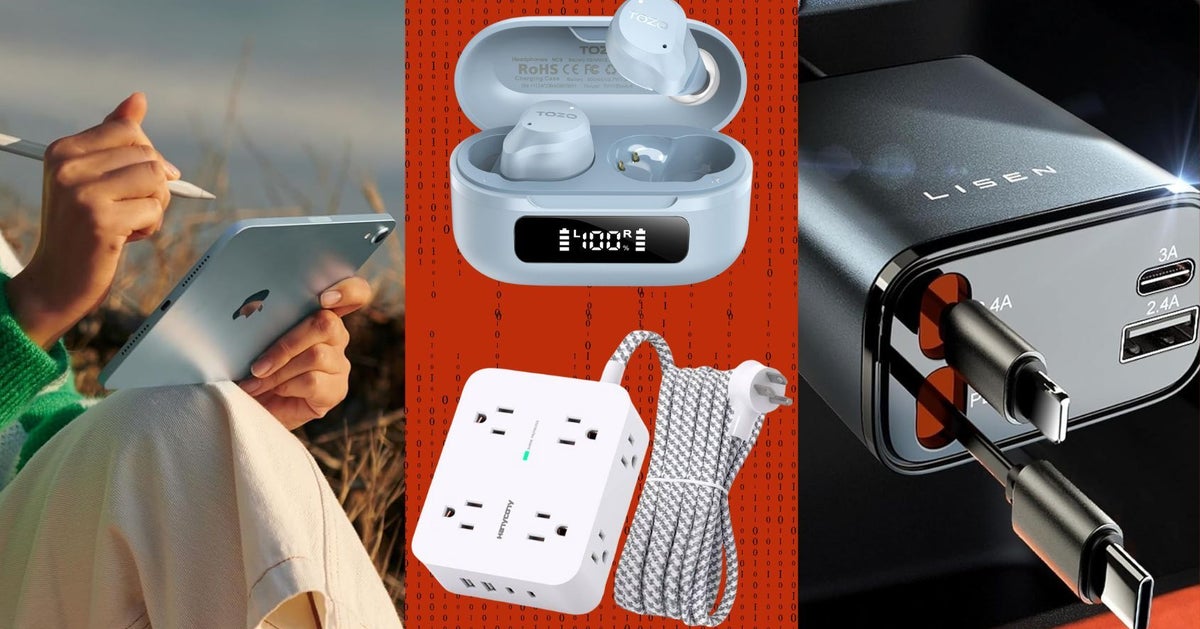
Retailers are promoting after-Christmas and Boxing Day year-end discounts across consumer electronics, with notable price cuts on Apple hardware and accessories — e.g., iPad mini A17 Pro ~20% off, AirPods up to 47% off, Beats Studio Pro 51% off, Apple Watch Ultra 2 25% off, AirTag 17% off and various chargers/cables between ~17–29% off. The roundup also highlights broader tech deals (surge protectors, earbuds, controllers) as merchants clear inventory and push holiday-season purchasing. These promotions indicate continued retail discounting that may modestly support near-term consumer spending but are unlikely to drive material market or company-level moves.
Market structure: Deep post-holiday discounts (advertised 17–51% on accessories and selected Apple hardware) favor retailers and traffic-driven players (AMZN, BBY) and third‑party accessory makers, while pressuring hardware ASPs and component suppliers. If discounts translate into a net 5–10% volume uplift but 8–12% lower realized prices on promoted SKUs, quarter‑over‑quarter hardware revenue could be roughly flat-to‑down ~2–4% while services/recurring revenue remains the primary margin engine for AAPL.
Risk assessment: Immediate (days–weeks) upside from higher sell‑through; short term (1–3 months) risk is inventory glut forcing deeper markdowns (>30% across core SKUs) and ~100–200bps gross margin compression for vendors. Tail risks include regulatory rulings on Apple’s ecosystem (low probability, high impact over 6–18 months), China supply shocks, or a macro shock that collapses discretionary spending. Key hidden dependency: promotions that sacrifice short‑term hardware margin can accelerate services subscription growth with 6–18 month payback.
Trade implications: Tactical: establish a small overweight in AAPL (2–3% portfolio) via a 3‑month call spread (buy ATM, sell 10% OTM) to capture upside from post‑holiday demand while capping cost; complement with a 1–2% long on BBY to play retail traffic. Relative: pair long AAPL vs short XRT (equal dollar 1% positions) to express Apple share resiliency versus broader discretionary retail. Set stop losses: trim if Apple gross margin falls >150bps QoQ or retailer inventory days rise >10% YoY.
Contrarian angles: Consensus fears “discounting = weak demand”; instead, discounts may be strategic to drive services ARPU—monitor services ARPU and activation rates which, if up 3–5% sequentially, validate aggressive buys. Overdone reaction would be selling AAPL for temporary markdowns; underdone risk is deeper markdowns signalling consumer stress—use SKU discount depth (threshold 30%) as a binary sell trigger.
AI-powered research, real-time alerts, and portfolio analytics for institutional investors.
Request DemoOverall Sentiment
mildly positive
Sentiment Score
0.30
Ticker Sentiment
