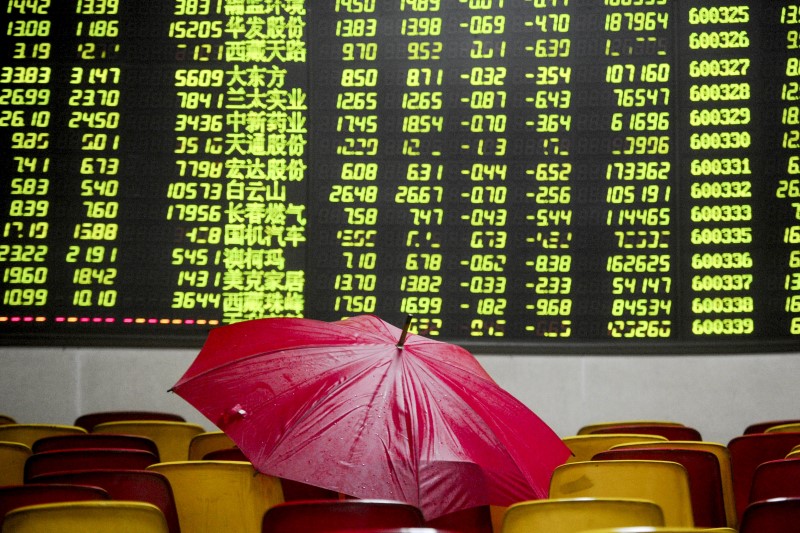
Asian stocks were mixed as the Trump-Xi summit in Beijing began, with Chinese shares down 0.8% on the CSI 300 and 0.7% on the Shanghai Composite after recent multi-year highs prompted profit-taking. Hong Kong rose 0.7% and Alibaba jumped 5% after it said it will spend more on AI over the next three years, while Australia’s ASX 200 fell 0.1% for a fifth straight session on Iran-war inflation and oil-supply concerns. Regional markets remain sensitive to trade tariffs, Taiwan, AI, and broader geopolitics, with S&P 500 futures up 0.1%.
The key market signal is not the summit headline itself, but the divergence between China-beta and the rest of Asia: mainland equities are already priced for diplomatic optimism, while Hong Kong is still trading as the cleaner expression of policy optionality. That favors selectively owning firms with direct AI monetization and government-backed capex sensitivity over broad China indices, because any tariff de-escalation would first show up in semis, cloud, and domestic platform names rather than in cyclical exporters. In other words, the immediate winner is not “China” as a macro trade, but the handful of balance-sheet leaders that can convert political thaw into incremental spending power. BABA is the cleanest example of a second-order beneficiary. The market is discounting the earnings print, but the more important variable is whether AI capex converts Alibaba from a low-growth e-commerce proxy into a compute-and-cloud spend vehicle with a longer runway. If management is signaling a multi-year spend step-up, the stock can re-rate before the profit pool improves, because investors typically underwrite option value on platform infrastructure faster than they underwrite margin expansion. The bigger risk is that the summit delivers symbolism, not implementation, while oil stays elevated and keeps inflation sticky. That combination is toxic for the trade-sensitive parts of Asia: higher input costs hit manufacturers first, then show up in weaker export orders and softer FX. If headlines disappoint over the next 1-3 trading sessions, the crowded pre-summit long-China trade likely unwinds faster than the broader risk market, especially after multi-year highs. The contrarian read is that the move is already partially done, but the AI announcement creates a narrower, better-defined opportunity in quality internet/compute names than in the index itself. The market may be underestimating how quickly a geopolitical thaw can reopen spend budgets, but overestimating how much it helps legacy exporters. That argues for playing relative performance, not outright beta.
AI-powered research, real-time alerts, and portfolio analytics for institutional investors.
Request DemoOverall Sentiment
neutral
Sentiment Score
0.05
Ticker Sentiment
