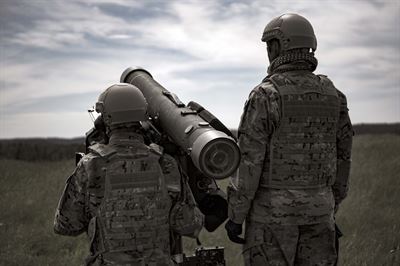
Saab has secured a SEK 3 billion order from the Lithuanian Ministry of National Defence for RBS 70 Bolide missiles, with deliveries scheduled for 2028–2032 under an existing RBS 70 NG framework agreement that includes the Swedish Defence Materiel Administration (FMV). The deal reinforces Saab’s position in short-range air-defence systems and expands its footprint in Lithuania, where RBS 70 has been in use since 2004 and is integrated into mobile MSHORAD vehicles, supporting predictable multi-year revenue and production planning.
Market structure: The SEK 3bn Lithuania RBS 70 order (deliveries 2028–2032) is a multi-year revenue add that strengthens Saab's backlog and pricing power in short-range air defence; expect modest positive re-rating for SAAB-B.ST and tier-1 European defence primes (RHM.DE, KOG.OL) as Baltic/NATO procurement momentum persists. Direct winners are Saab and vehicle-integration suppliers; losers are non-defence OEMs tied to commercial aerospace where capex shifts may tighten orderbooks. Cross-asset: modest supportive effect on SEK vs EUR on sustained export flows; limited near-term sovereign bond impact, but persistent defence spending can widen deficits and nudge regional yields +5–15bp over years.
Risk assessment: Tail risks include export-control denials, contract delays, component shortages (semiconductors, rare materials) and project-cost overruns that could wipe 5–20% of expected margin contribution; political risks (Russia escalation or EU procurement shifts) are second-order. Immediate market impact is muted (days); short-term (weeks–months) risk centers on supplier awards and cadence; long-term (2028–2032) revenue realization is most material. Hidden dependency: Saab’s reliance on Swedish FMV frameworks and third-country components that require US/EU licenses.
Trade implications: Direct play is a concentrated 2–3% long in SAAB-B.ST (target +15–30% in 12 months) and a complementary 6–12 month call-spread to cap premium cost; overweight RHM.DE and KOG.OL (1–2% each) for regional defence exposure. Pair trade: long SAAB-B.ST vs short commercial aerospace (BA, AIR.PA) to express defence/capex rotation; use option structures (bull-call spreads, calendar spreads) to limit downside while capturing multi-year backlog re-rating.
Contrarian angles: Market may overvalue near-term EPS impact — deliveries are back-loaded to 2028–2032 so earnings uplift is delayed; conversely the market may underprice early supplier revenue from integration work (2025–2027). Historical parallels (post-2014 Baltic/NATO buys) show multi-year supplier chains can generate 10–25% cumulative supplier revenue uplifts before final deliveries. Unintended consequences include concentration risk in Saab and export-license friction that could compress realized margins versus headline order value.
AI-powered research, real-time alerts, and portfolio analytics for institutional investors.
Request DemoOverall Sentiment
mildly positive
Sentiment Score
0.30
