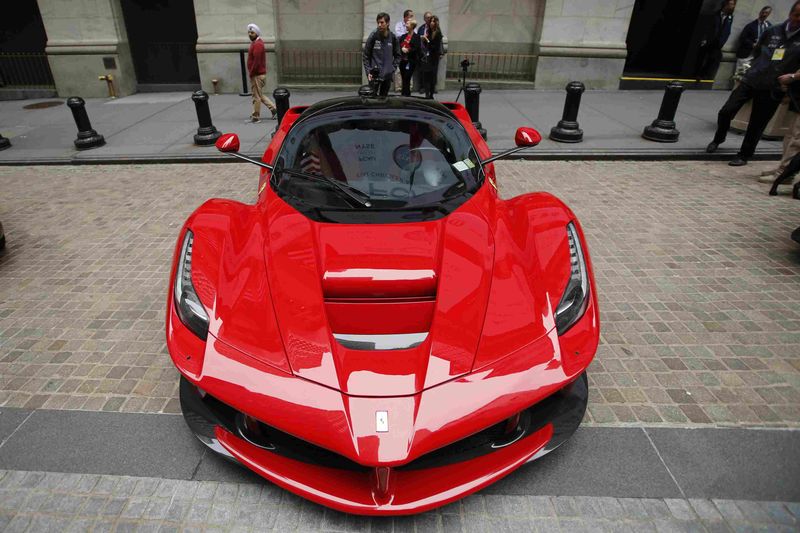
Ferrari posted a Q4 earnings beat and received price-target upgrades (Deutsche Bank to €460; Bernstein SocGen to $410), while shares trade at $333.98 after a 32.57% decline over the past six months (near a 52-week low of $312.51). The company has halted most shipments to the Middle East (4.6% of 2025 shipments) due to hostilities but mitigated revenue/margin impacts by bringing forward U.S. deliveries originally scheduled for Q2 2026; the order book runs through end-2027. Management scheduled a Q1 2026 call for March 31 at 17:00 CET.
Ferrari’s structural advantages — build-to-order economics, exceptionally high revenue-per-unit, and a multi-year order backlog — create asymmetry: short-term shipment disruptions compress reported volumes but do little to erode long-term margin per car. That disconnect means earnings volatility can be concentrated in near-term quarters while underlying free cash generation remains resilient, creating windows where optionality in equity or derivatives is attractive versus buying straight cyclical auto exposure.
Second-order winners include premium logistics providers and specialty insurers that can re-price Gulf routes and marine hull/cargo risks; suppliers with flexible production footprints (Italy/Europe-centric) will fare better than those tied to single-region production lines. Downside tail risks are concentrated — a prolonged rise in war risk premia that drives sustained insurance surcharges, a step-up in freight lead times that forces price concessions to keep delivery windows, or visible cancellations from marginal customers that would materially weaken the order-book illusion.
From a trading standpoint, the market frequently overprices transitory headline risk and underprices resilience in luxury pricing power. That creates a favorable skew for directional exposure funded by selling time premium: buy multi-quarter bullish exposure with defined downside protection, or sell near-term volatility anchored to headlines while maintaining core long exposure. Watch for two short-term triggers that will re-rate the name: normalized shipping/insurance costs (improves margins within 1–3 quarters) and the next revenue-per-unit print (confirms pricing hold-through).
AI-powered research, real-time alerts, and portfolio analytics for institutional investors.
Overall Sentiment
mildly positive
Sentiment Score
0.30
Ticker Sentiment
