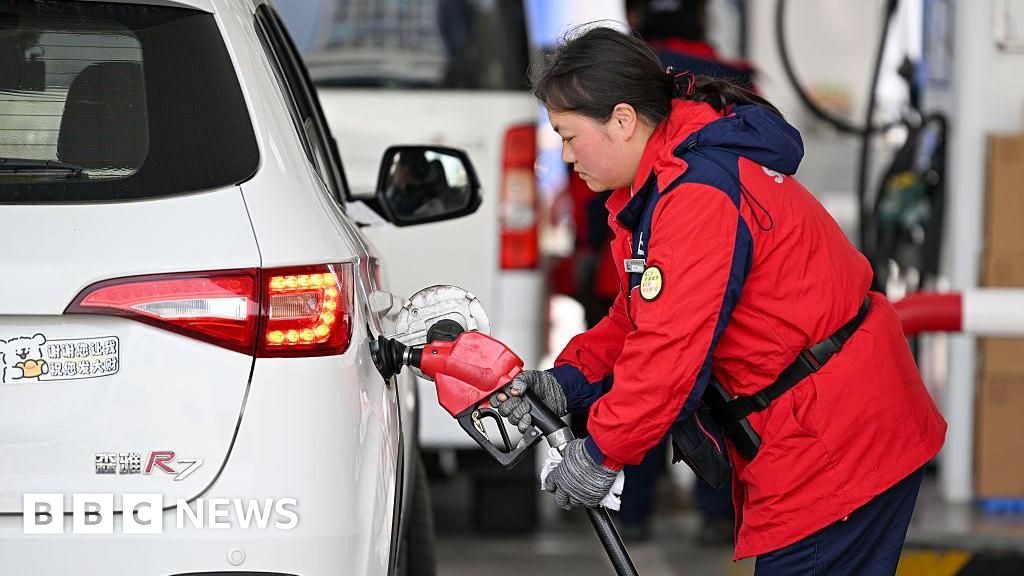
Key event: Iran's attacks and threats have effectively disrupted the Strait of Hormuz, choking ~20m barrels/day (~20% of global oil flows) and pushing oil toward ~$120/bbl. China consumes ~15–16m bpd, sources >10% of its imports from both Saudi Arabia and Iran and nearly 20% from Russia, and holds large emergency stockpile estimates ranging from ~900m to 1.4bn barrels (~1.5–3 months of imports); Beijing has ordered refineries to stop fuel exports. Near-term consequences include sharp domestic fuel price moves (reported petrol and diesel increases of ~695 and ~670 yuan per tonne) and higher feedstock costs for petrochemicals, though China’s coal base, expanded renewables and rapid EV adoption provide material downside mitigation.
Market mechanics will be driven less by physical shortages than by insurance, freight and storage premia once maritime routes are perceived as risky. That makes the near-term price signal volatile: expect spot spreads to widen and temporary contango-driven floating storage to emerge as owners arbitrage time-value rather than as a pure production shortfall. These dynamics play out over days-to-weeks, but can persist for months if insurance/war-risk layers remain elevated. China’s response set in motion latent structural shifts: reallocating seaborne demand toward pipeline and term volumes, accelerating capacity upgrades where contract take-or-pay exists, and tightening incentives for counterparties willing to accept higher political risk. That creates a two-speed market — low-cost, locked-in term barrels and higher-priced, short-cycle spot barrels — which will compress margins differently across refiners, midstream operators and traders depending on their contract mix. Second-order winners are owners of shipping capacity and working-capital-rich trading houses that can finance floating storage and capture the calendar curve. Losers include jet-fuel intensive businesses and short-cycle petrochemical producers exposed to spike-in feedstock costs and freight surcharges. The policy axis — how long importers prioritize domestic supply over export revenues — is the key arbiter of regional product cracks versus crude differentials. Watch the reversal triggers: rapid de-escalation (diplomatic corridor or escort convoys), coordinated SPR releases, and material easing of war-risk insurance. Any of those can unwind contango and crush time-charter and storage premia within 30–90 days; absent such catalysts, elevated risk premia are likely to linger and re-rate asset classes tied to seaborne logistics and coal-to-oil substitution.
AI-powered research, real-time alerts, and portfolio analytics for institutional investors.
Request DemoOverall Sentiment
mildly negative
Sentiment Score
-0.25
