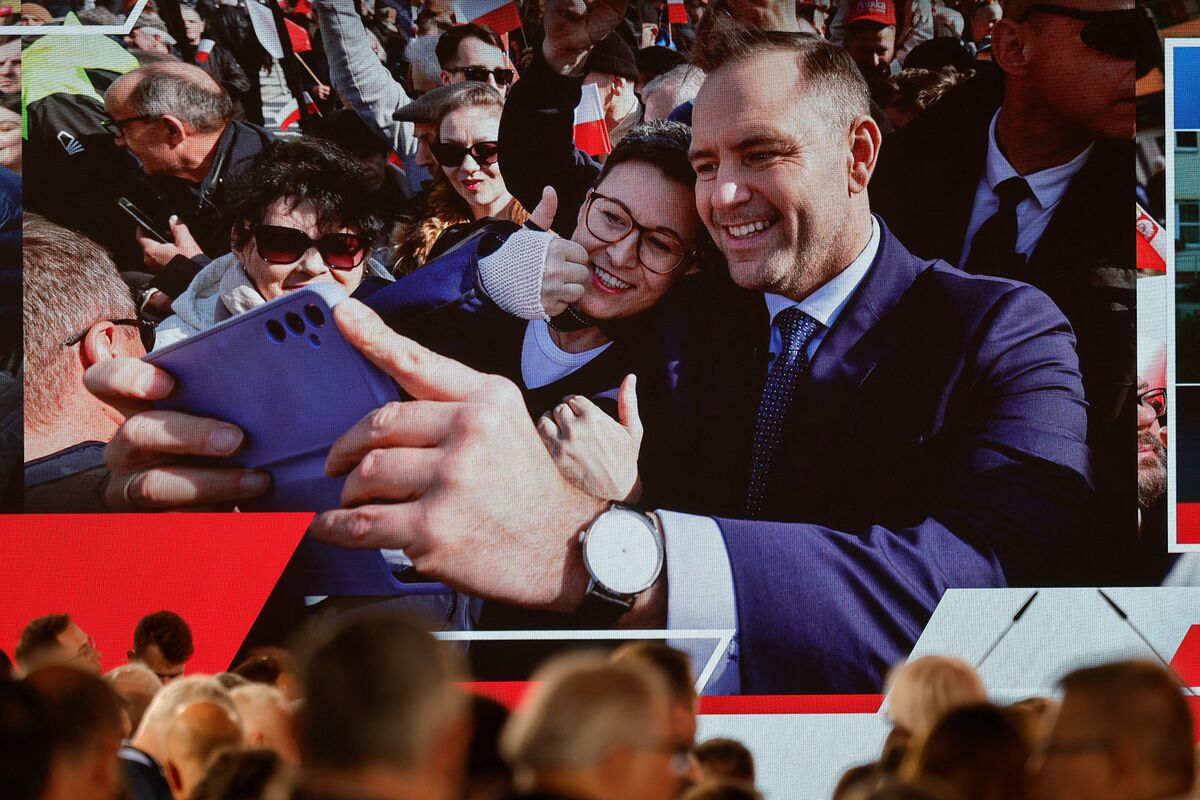
A nationalist candidate has been elected president of Poland in a narrow victory, signaling a continued trend of right-wing populism in Europe and globally. This development occurs amidst shifts in the world order influenced by US President Donald Trump's policies, suggesting a potential reshaping of international relations and trade dynamics.
Poland's recent presidential election has resulted in a narrow and somewhat surprising victory for a nationalist candidate, described as Trump-backed, highlighting a continued upward trend in right-wing populism within Europe and potentially beyond. This electoral outcome is framed within the context of a broader movement and evolving global political alignments, influenced by US President Donald Trump's policies which are characterized as shaking up the world order. The primary significance for investors lies in the potential for such political developments to alter international relations, trade policies, and overall geopolitical stability. Although the immediate sentiment and market impact signals associated with this specific news are neutral, indicating no immediate quantifiable market disruption from this report, the underlying political shift warrants attention for its longer-term implications on the European political and economic landscape.
AI-powered research, real-time alerts, and portfolio analytics for institutional investors.
Request DemoOverall Sentiment
Neutral
Sentiment Score
0.00
