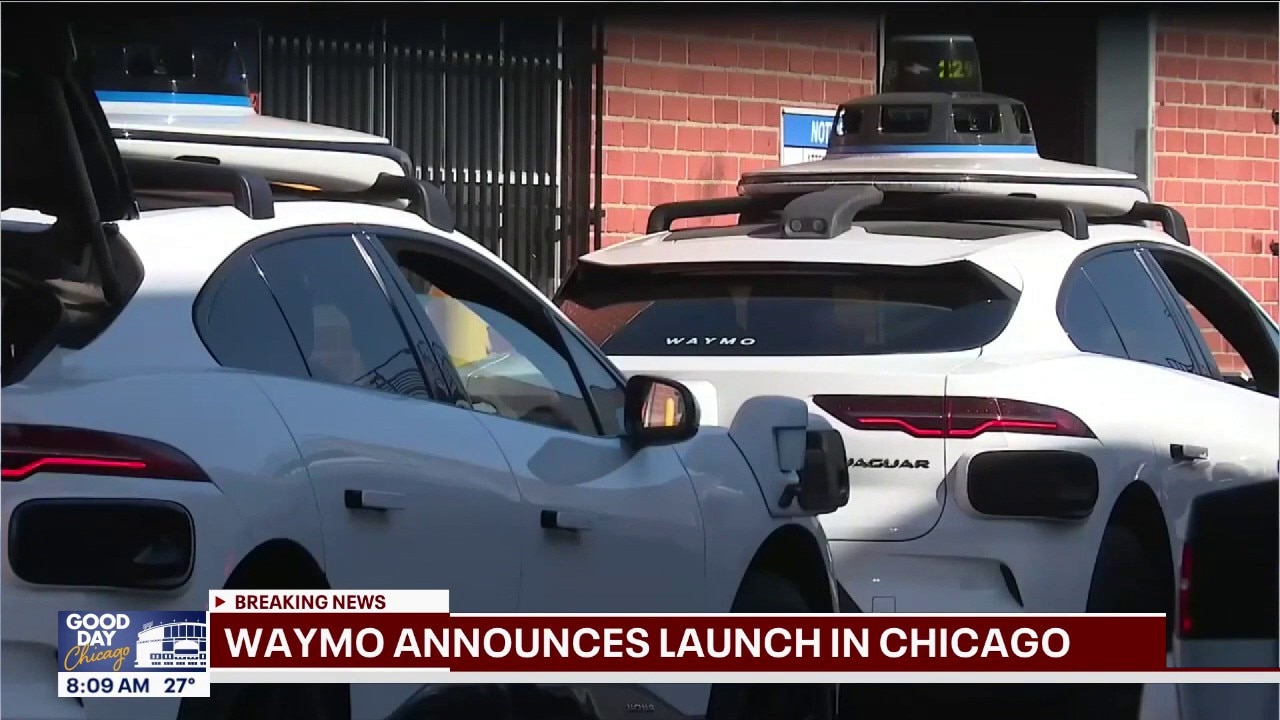
Waymo has begun initial mapping and manual testing in Chicago as groundwork for a potential autonomous ride‑hailing rollout, highlighting that its Waymo Driver has logged more than 127 million fully autonomous miles and recorded significantly fewer serious‑injury crashes and pedestrian collisions versus human drivers in its existing service areas. The company is coordinating with community leaders and policymakers but provided no timeline for service launch, signaling progress on urban deployment and safety credentials while leaving near‑term revenue or operational impacts uncertain.
Market structure: Waymo’s Chicago mapping/testing concretizes a gradual shift of urban mobility economic rents from incumbent drivers and dispatch platforms toward vertically integrated tech platforms and sensor/chip suppliers. Direct beneficiaries are Alphabet (GOOGL) for Waymo IP, NVDA and lidar/vision suppliers (e.g., LAZR) for compute/sensors; losers in the medium term are pure-play ride-hail operators (LYFT) and local-for-hire labor pools as unit labor costs compress. The logged 127M autonomous miles signals technical progress but not immediate revenue scale—expect a 2–5 year commercialization curve with localized network effects determining pricing power.
Risk assessment: Key tail risks are a high-profile safety incident or an adverse regulatory ban that could pause deployments and force multi-year write-downs (probability low–medium, impact high). Short-term (days–weeks) market reaction will be headline-driven; medium-term (3–12 months) depends on municipal permitting and insurance frameworks; long-term (2–5 years) depends on fleet economics, capital intensity, and public policy. Hidden dependencies include access to low-cost capital for fleet rollout, local winter-weather sensor performance, and third-party mapping/data partnerships that could be single points of failure.
Trade implications: Implement concentrated tech exposure (GOOGL, NVDA, LAZR) to capture platform and supplier upside while selectively hedging ride-hail exposure (LYFT, UBER). Use options to express asymmetric views: buy long-dated calls on NVDA/GOOGL and buy put spreads on LYFT to limit capital at risk. Monitor regulatory and safety catalysts—city permits, insurance rule changes, or federal guidance—that can compress or expand timelines.
Contrarian angles: The market often assumes rapid displacement of incumbents; reality likely is phased substitution—commercial viability in dense micro-markets first—so near-term passenger volumes for UBER/LYFT may be resilient for 12–36 months. This under-weights the optionality embedded in Alphabet’s balance sheet (Waymo upside not fully priced) while overpricing existential risk for diversified UBER; historical parallels: Google Maps/Android monetized slowly but created durable platform value. Unintended consequences include municipal taxation/ride caps that could raise operating costs for AV fleets and slow adoption.
AI-powered research, real-time alerts, and portfolio analytics for institutional investors.
Request DemoOverall Sentiment
mildly positive
Sentiment Score
0.25
