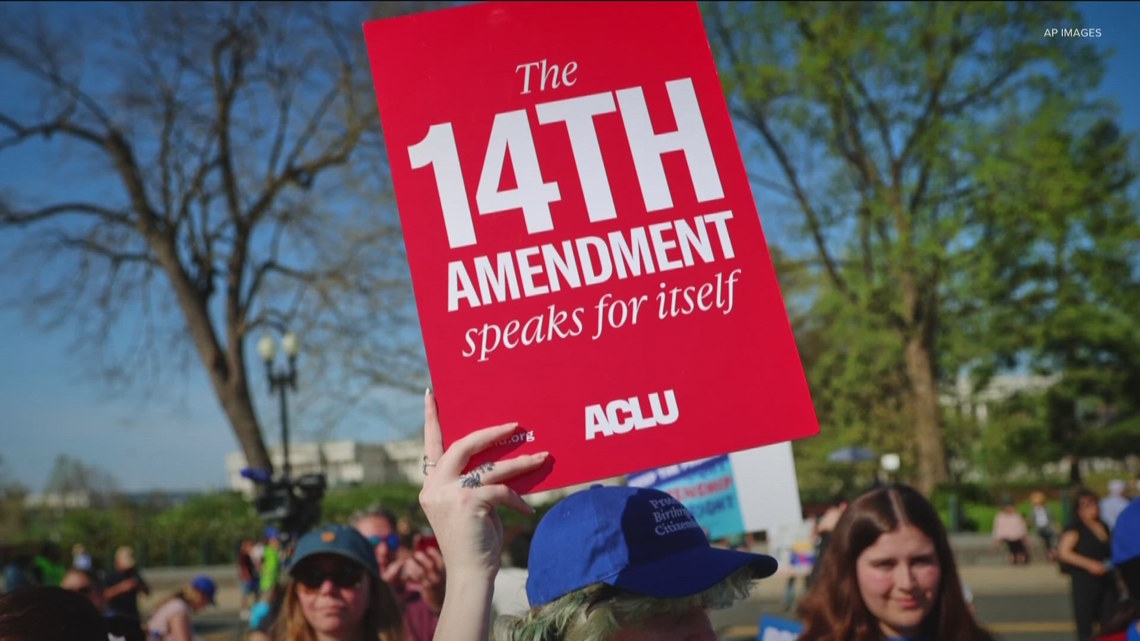
Key event: The U.S. Supreme Court heard arguments over whether a president can curtail 14th Amendment birthright citizenship by executive order; a decision is expected this summer. Solicitor General John Sauer argued for limiting automatic citizenship for children of undocumented or temporary-status parents, while ACLU's Cecillia Wang argued the plain text of the 14th Amendment grants citizenship to anyone born on U.S. soil. Chief Justice Roberts and several justices expressed skepticism toward the administration's position, which relies on narrowing 14th Amendment application despite over a century of precedent (notably United States v. Wong Kim Ark). The ruling could have material policy implications for immigration enforcement, but timing and market effects remain uncertain.
This case is less about one policy and more about precedent risk: a durable Supreme Court ruling that validates executive unilateral alteration of constitutional text would widen the set of politically driven regulatory actions across sectors (healthcare, immigration enforcement, tech surveillance) and raise legal-risk premia priced into companies that rely on stable statutory frameworks. Expect winners to be firms that sell one-off federal services (border infrastructure, data analytics, labor management tech) because agencies can rapidly scale procurement if enforcement policy tightens; contract award timing will line up with FY budget cycles, so meaningful revenue inflection for suppliers is most likely 6–18 months after a decisive ruling.
Second-order demand effects matter for regional labor markets and municipal credit: restricting automatic citizenship reduces the expected growth of the native-born cohort in specific MSAs over decades, increasing wage pressure in low-skill service sectors sooner rather than later and compressing margins for franchise-heavy restaurant and residential-serviced REITs in border-adjacent metros. Conversely, automation and capex-focused vendors (POS, robotics, payroll SaaS) are optionality beneficiaries as operators accelerate labor-substituting investment; their revenue cadence could pick up within 12–24 months as franchisors accelerate rollout decisions.
Catalysts and tail risks are binary and time-boxed: the Court’s ruling this summer is the primary 1–3 month catalyst that will reprice policy-sensitive equities and political-risk proxies; a close decision or procedural remand would likely keep volatility elevated into the fall midterms. The main reversal path is legislative action or a split opinion that limits executive authority — both would materially reduce the procurement and enforcement scenarios priced into defense/IT contractors and quickly flatten the relative outperformance trade that follows a pro-enforcement ruling.
AI-powered research, real-time alerts, and portfolio analytics for institutional investors.
Request DemoOverall Sentiment
neutral
Sentiment Score
0.00
