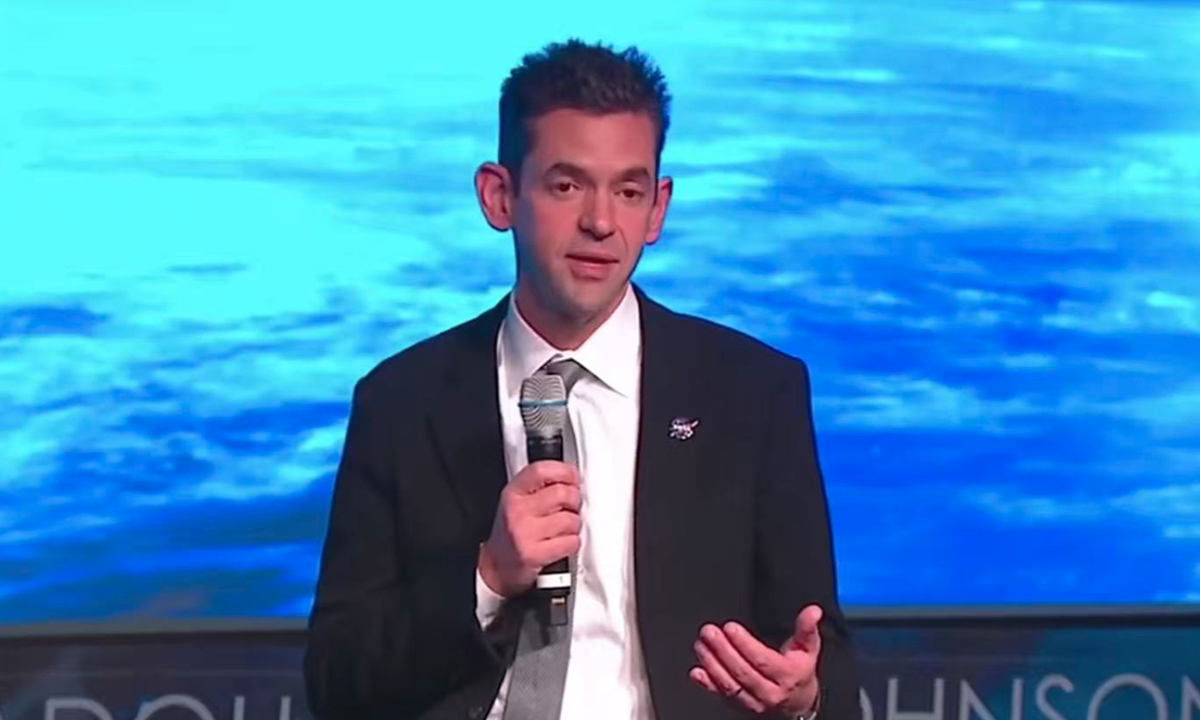
NASA's newly confirmed administrator Jared Isaacman used a December 19 agency town hall to argue for re-evaluating historically rigid NASA requirements—citing China's installation of an air fryer on the Tiangong station as an illustrative 'upgrade'—and pledged to accelerate lunar-return plans while expanding commercial partnerships. The remarks signal a potential agency-wide shift toward lower risk tolerance and greater commercial engagement that could alter procurement priorities and opportunity sets for space contractors, but contain no immediate financial metrics and are unlikely to be near-term market-moving news.
Market structure: The Isaacman-led push to reassess "rigid" NASA practices favors commercial space providers and systems suppliers (launch, life‑support, on-orbit logistics) at the expense of slow-moving legacy contractors that resist change. Expect a gradual reallocation of procurement — we model a 5–15% shift of NASA-relevant spend into commercial contracts over 3–5 years — which increases pricing power for scarce launch capacity and specialized subsystems. Cross-asset: higher aerospace/defense cashflows should tighten credit spreads for investment‑grade defense names and support USD as risk‑adjusted demand for U.S. tech strengthens; metal inputs (titanium, aluminum) see modest upside if capex accelerates.
Risk assessment: Tail risks include a high‑visibility on-orbit mishap that triggers regulatory rollback (negative shock) or geopolitical escalation prompting U.S. export controls on Chinese suppliers (positive for domestic primes). Time horizons matter: immediate (0–90 days) = sentiment swings and HR/policy memos; short (3–12 months) = RFPs and pilot commercial contracts; long (1–5 years) = contract awards and industrial consolidation. Hidden dependency: commercial partner capacity is concentrated (single‑source risks, e.g., private launch providers), so supply shocks can spike costs quickly.
Trade implications: Favor overweight of large defense/aerospace contractors: NOC, LMT, RTX — establish 2–3% portfolio longs and buy 12‑month calls ~25% OTM for leverage; selectively add growth/space exposure via MAXR and RKLB at 1–2% positions (high volatility). Short or hedge consumer‑space beta like SPCE (1–2% short or buy 9–12 month puts) because commercialization rhetoric favors infrastructure/providers not retail tourism. Pair trade: long LMT vs short SPCE to capture rotation into durable contractors.
Contrarian angles: The market may treat the air‑fryer anecdote as symbolic noise — procurement changes are slow and Congress controls budgets; if NASA reallocation <5% over 3 years, defense primes may be overvalued on expectation. Historical parallel: 1990s outsourcing cycles rewarded incumbents that integrated new commercial suppliers; unintended consequence: loosening safety protocols could raise insurers' premiums and contractors' contingent liabilities, favoring cash‑rich primes over thinly capitalized start‑ups.
AI-powered research, real-time alerts, and portfolio analytics for institutional investors.
Request DemoOverall Sentiment
neutral
Sentiment Score
0.05
