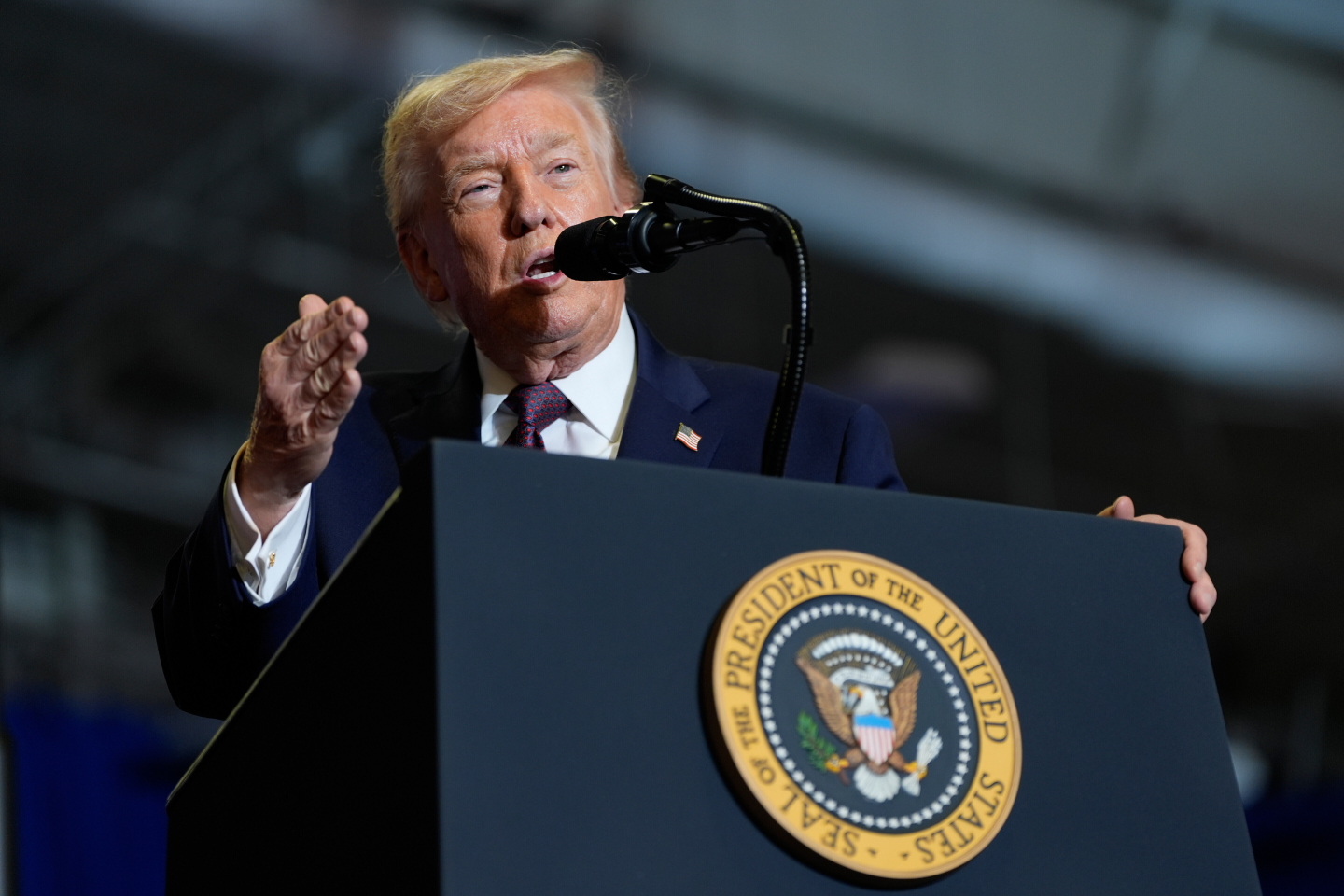
The column argues that President Trump is confronting the same political-economic dilemma that plagued President Biden: official metrics may imply a healthy economy while large swaths of the public do not feel better off. That disconnect between headline data and lived experience constrains policy options, weighs on consumer confidence and spending, and represents a political risk that could indirectly affect consumer-facing sectors and risk assets ahead of elections.
Market structure: A narrative where headline macro metrics (GDP, unemployment) look “fine” while consumer sentiment and real-wage squeeze persist favors defensive and discount retail over discretionary and premium services. Expect outperformance of consumer staples and dollar/discount operators (WMT, DG) vs consumer discretionary (XLY, M, TGT) by ~3–6% over 3 months if spending softens; weaker goods demand will reduce industrial commodity draws (copper, oil) and create downward pressure on cyclicals. Bond markets will trade on policy ambiguity — weaker feel-good data but stable headline metrics raises tail hedging flows into long-duration Treasuries and gold intermittently.
Risk assessment: Short-term (days–weeks) risks are event-driven: CPI/PCE prints, payrolls or a major campaign shock could swing sentiment 100–300 bps in indices; medium term (1–6 months) the key tail is a Fed policy pivot (cut of 25–75 bps) if private consumption collapses. Hidden dependencies include regional bank lending standards and real wage trends; a 2–3 month inventory destock at retailers would amplify margin compression vs sales misses. Catalysts to watch: next two CPI/PCE releases, Jan retail sales, Fed minutes and presidential debate cycle.
Trade implications: Tactical trades — establish 2–3% long in DG and 2–3% long XLP ETF as defensive consumption hedge, funded by a 2–3% short in XLY or high-multiple retailers (M, TGT) for 3-month horizon. Buy 3–6 month puts on XLY (5–7% OTM) to hedge consumer cyclical exposure and consider a 1–2% allocation to TLT if 10y yield breaks below 3.50% as a volatility hedge. Pair trade: long COST (COST) vs short RH or other discretionary name sized 1:1 for 6–12 months if same-store sales diverge.
Contrarian angles: Consensus underweights the possibility that “feel” reverses quickly if nominal wage growth reaccelerates (unexpected payroll upside >+250k), which would reflate cyclicals — a 6–8% snapback is plausible in 1–3 months. The market may be prematurely selling high-quality discretionary long-term compounders (AMZN, MCD) where fundamentals remain intact; avoid indiscriminate shorting. Unintended consequence: aggressive fiscal or pre-election stimulus could render defensive positioning crowded and force rapid rotation back into cyclicals.
AI-powered research, real-time alerts, and portfolio analytics for institutional investors.
Request DemoOverall Sentiment
neutral
Sentiment Score
-0.10
