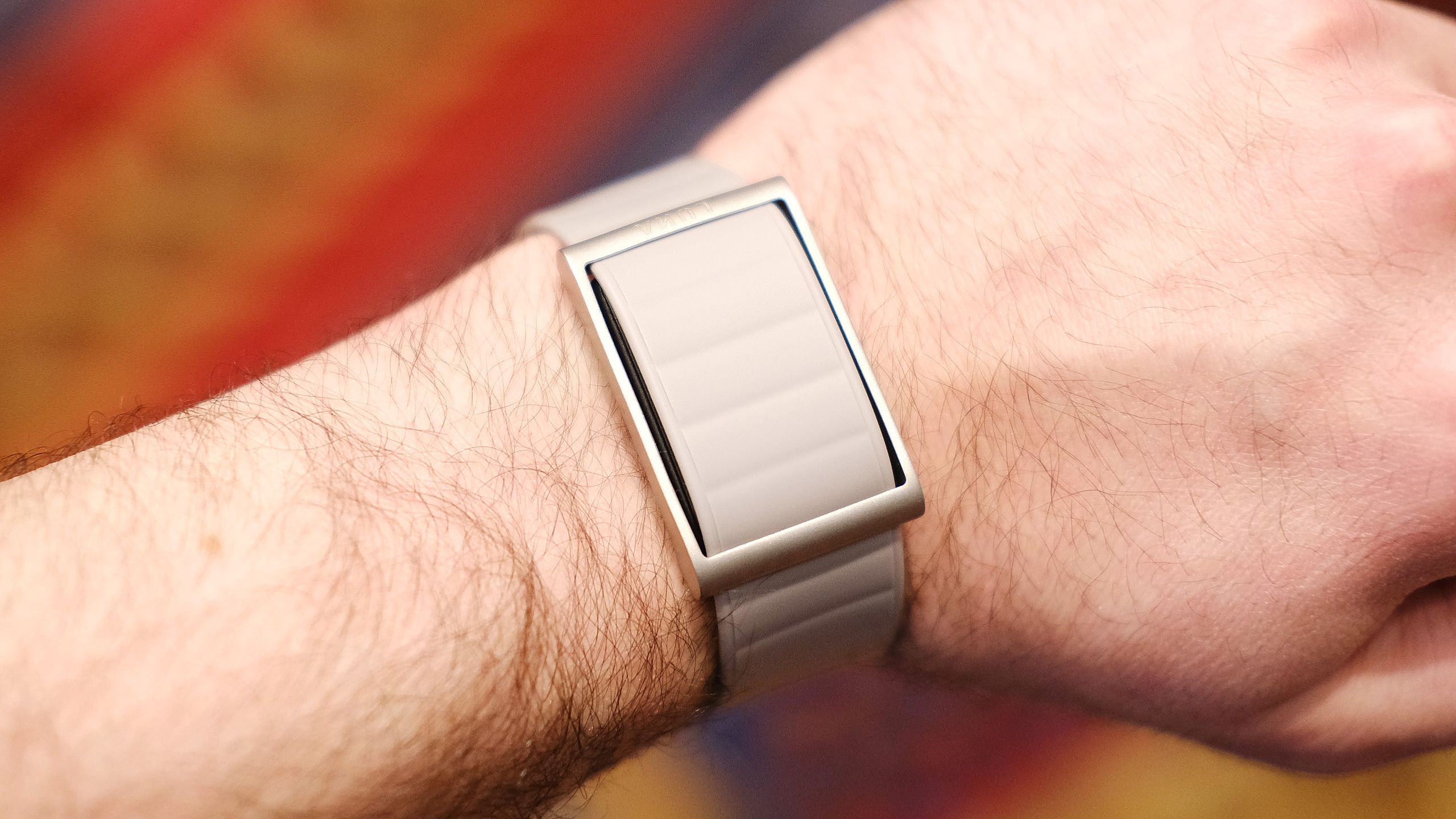
Five new wearable product launches at CES 2026 highlight a push for more affordable, consumer-friendly health and fitness devices: Amazfit's $169 Active Max smartwatch (1.5" AMOLED, 3,000 nits, up to 25 days battery), the $149 Luna Band (screen-less, subscription-free, voice commands), the $249 Even Realities R1 smart ring (sleep/HRV/SpO2 tracking and smart-glasses controls), the lightweight Ascentiz H1 Pro consumer exoskeleton, and the Naox Link doctor-prescribed take-home EEG earbuds. The cohort underscores continuing secular demand for accessible health-monitoring wearables and potential incremental revenue upside for consumer-device makers and medical-device incumbents, though none of the announcements are likely to be near-term market-moving by themselves.
Market structure: CES highlights accelerating fragmentation of wearables — winners are low-cost hardware OEMs (Amazfit-style) and component suppliers (sensors, batteries, Bluetooth SoCs) that can scale volume; losers are mid-priced independent watch-makers (e.g., Garmin) and incumbents that rely on hardware ASPs without services stickiness. Pricing power will bifurcate: premium ecosystems (Apple) keep >30% gross margin while commodity trackers drive ASP erosion of ~100–300bps over 12–24 months for non-ecosystem players.
Risk assessment: Key tail risks are regulatory (FDA/CE pushback on consumer EEG and clinical claims) and data-privacy fines (GDPR/CCPA) that could impose one-time charges >$100M for larger players or stall product launches for startups. Immediate effect (days–weeks) is CES-driven sentiment; short-term (1–6 months) is retail channel inventory and holiday sell-through; long-term (1–3 years) is services monetization and clinical validation. Hidden dependency: winners need subscription/AI services to recoup low hardware margins; absence of that increases churn.
Trade implications: Expect a modest reallocation into semiconductors and health-tech services: component demand could lift select chip suppliers’ revenue 3–8% YoY in next 2–4 quarters. For equities, favor premium platform owners with services (AAPL) and large AI/AR integrators (GOOGL) while trimming standalone hardware names (GRMN); use options to express asymmetric views around upcoming earnings and FDA calendar.
Contrarian angles: The consensus underestimates regulatory friction for home EEG and overestimates immediate consumer adoption of exoskeletons — these could be niche for 3–5 years, limiting near-term TAM. Conversely, Apple’s ecosystem pricing resilience is likely underpriced; historical parallel: smartphone era showed durable premium margins despite cheaper alternatives, so don’t assume parity-based share shifts quickly erode AAPL’s services runway.
AI-powered research, real-time alerts, and portfolio analytics for institutional investors.
Request DemoOverall Sentiment
mildly positive
Sentiment Score
0.35
Ticker Sentiment
