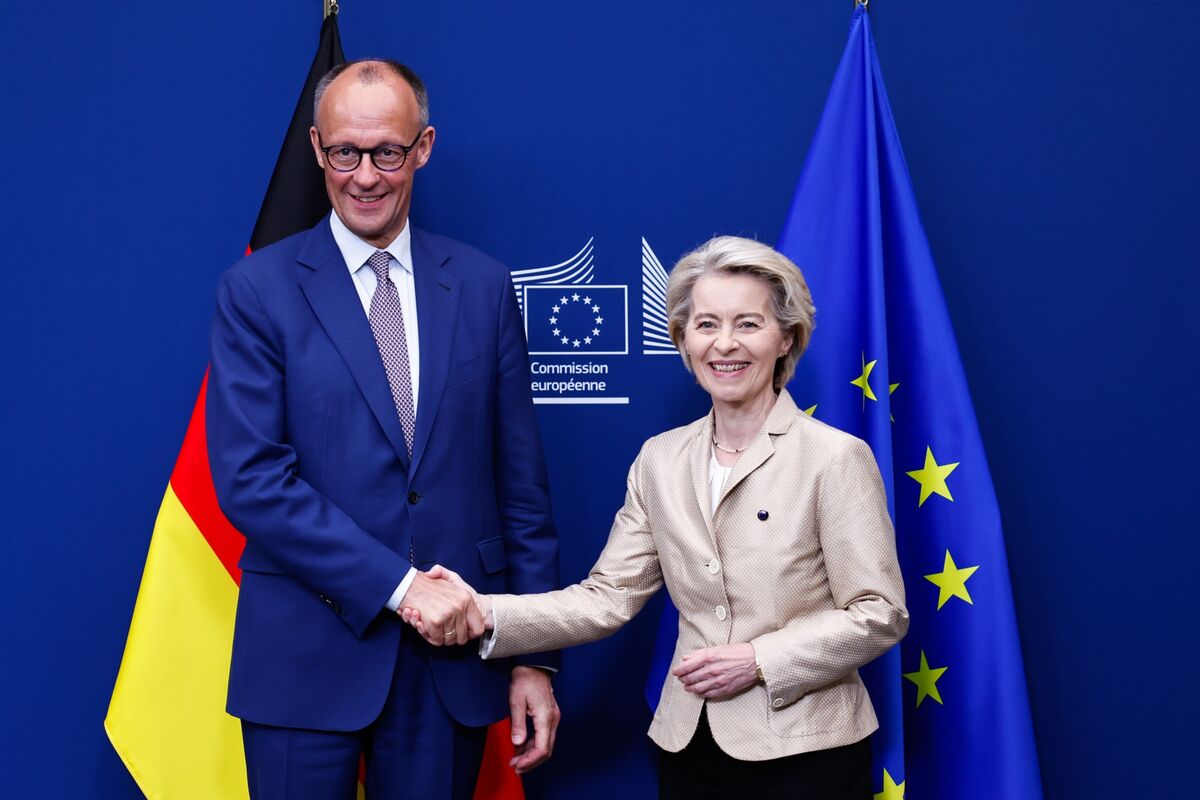
A burgeoning rivalry between Friedrich Merz, representing Berlin's influence, and EU Commission President Ursula von der Leyen from Brussels, is creating internal tensions over EU leadership. This power struggle, rooted in German conservative politics, threatens to undermine the European Union's cohesion and ability to present a united front amidst mounting external challenges.
A significant political rivalry is developing between Friedrich Merz, representing an increasingly assertive Berlin, and EU Commission President Ursula von der Leyen in Brussels. This power struggle, rooted in their shared history within German conservative politics, threatens to disrupt the European Union's internal cohesion at a critical time. The article suggests this battle for influence is close to becoming public, which could undermine the EU's ability to present a united front while facing what are described as "mounting challenges." The situation introduces a degree of political uncertainty, reflected in the moderately negative sentiment score (-0.45), and while the immediate market impact is assessed as low (0.35), the potential for leadership instability could create future headwinds for European political and economic policymaking.
AI-powered research, real-time alerts, and portfolio analytics for institutional investors.
Request DemoOverall Sentiment
moderately negative
Sentiment Score
-0.45
