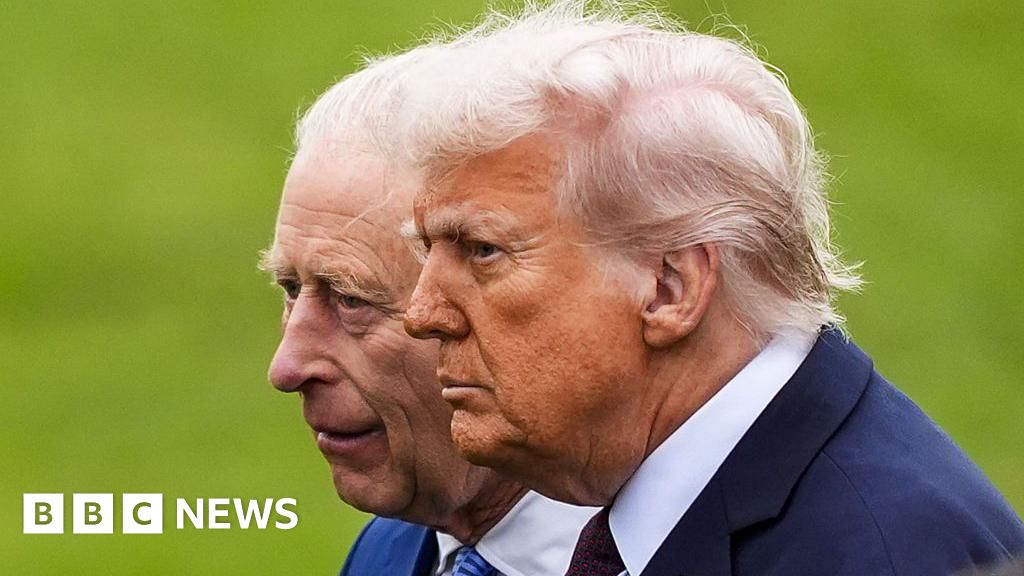
King Charles III and Queen Camilla’s U.S. state visit is framed as a high-stakes diplomatic test amid strained U.S.-UK relations, the Iran/Middle East conflict, and renewed scrutiny over the Epstein scandal. The trip includes a speech to Congress, a state dinner, and symbolic stops in Washington, New York, and Virginia, with the UK seeking leverage on NATO, Ukraine, and trade. The article is largely political and diplomatic commentary, with limited direct market relevance.
This is not a direct market event, but it is a live read on the probability distribution for UK-US policy tone over the next 1-2 quarters. The main second-order effect is not “soft power” in the abstract; it is whether a royal reset can reduce the odds of headline-driven friction that bleeds into defense procurement, transatlantic trade negotiations, and risk premium on UK assets. If the visit lands well, it modestly lowers the probability of further deterioration in UK cyclicals, GBP, and UK defense contractors tied to US interoperability and NATO spending credibility.
The bigger optionality sits in reputational risk around the Epstein issue. Any visible distancing by the King from survivors would be read in the US as a governance failure, not a protocol issue, and could amplify anti-monarchy sentiment just as the visit is meant to stabilize the relationship. That creates a narrow window for media-driven volatility, especially in UK-facing consumer and travel names if protest activity dominates coverage, but the more durable impact would be on the monarchy’s ability to serve as an effective diplomatic intermediary over the next 6-12 months.
For markets, the relevant channel is sentiment rather than fundamentals: a successful visit could improve the odds of constructive UK-US signaling on Ukraine, NATO, and trade, which is mildly supportive for defense and international-capex themes. Failure would likely be absorbed quickly, but it would embolden the view that bilateral ties are structurally degraded, making UK assets more hostage to US political shocks. That asymmetry matters because the downside from a misstep is larger than the upside from a polished performance, given already-stretched skepticism.
The contrarian view is that the market may be overestimating the event’s ability to change policy and underestimating its value as a volatility suppressor. Even a mediocre visit can still serve as a pressure-release valve if it channels tensions into choreographed symbolism rather than substantive escalation. In that sense, the tradable signal is less about a grand reset and more about whether the visit prevents fresh headline risk from compounding into a broader UK political discount.
AI-powered research, real-time alerts, and portfolio analytics for institutional investors.
Request TrialOverall Sentiment
neutral
Sentiment Score
-0.10
Ticker Sentiment
