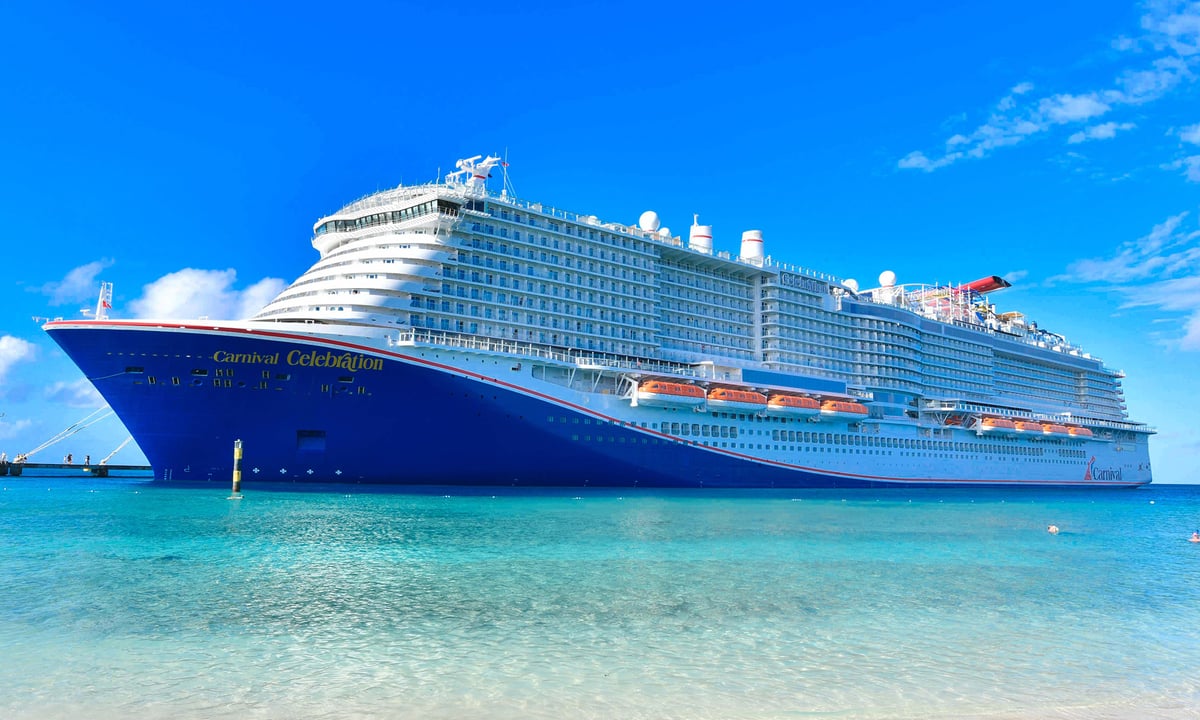
Carnival reported fiscal 2025 Q3 revenue of $8.2 billion, up 3% year-over-year and roughly double pre-pandemic levels, with record sales, customer deposits and net yields and $2.4 billion of net income over the last three quarters. Analysts forecast EPS CAGR of 13.2% for fiscal 2025–2027; management is expanding the fleet (1–2 new ships per year) and pushing into Australia/New Zealand, while refinancings ($11 billion in 2025) and rating upgrades have helped lower leverage from pandemic peaks despite $26.5 billion of total debt (~79% of market cap). Trading at a P/E of 13.4 and with strong post-pandemic demand, the company is positioned for mid-to-high single-digit-plus earnings-driven upside and is presented as a candidate to outperform over a five-year horizon.
Market structure: Strong post-pandemic demand is a direct win for large cruise operators (CCL, RCL, NCLH), shipyards (Fincantieri, Meyer) and port/shore-service providers, while short-haul hotels/airlines lose share on cost-per-trip economics. Carnival’s 1–2 new ships/yr strategy risks modest capacity growth versus rebounding demand, supporting pricing power (net yields at record levels) but preventing a supply glut given multi-year build times. Credit markets should continue to tighten for issuers like CCL as ratings improve; higher bunker fuel would transmit directly to margins and to oil markets via incremental bunker demand.
Risk assessment: Key tail risks are (1) a COVID-variant or travel-shock that cuts bookings >15% within 3–6 months, (2) a 200–400 bps widening in corporate spreads that re-prices Carnival’s $26.5B debt obligations, and (3) stricter emissions/regulatory costs (IMO-like rules) adding material capex. Near-term (weeks) volatility hinges on quarterly bookings; medium-term (6–18 months) exposure centers on refinancing windows and fuel. Hidden dependencies include FX on Australasian expansion and second-order impacts of younger, price-sensitive customers requiring promotional pricing.
Trade implications: Establish a staged long in CCL (2–3% portfolio) for a 3–5 year hold, funded by trimming lower-conviction travel names (hotels/airlines). Use a relative-value pair: long CCL vs short NCLH (1:1) for 6–12 months to express balance-sheet advantage; size relative to capital structure. Options: buy Jan 2028 CCL LEAPS ATM or 18-month call spreads to capture upside, or sell 6-month 10% OTM covered calls against positions to generate yield while collecting premium.
Contrarian angles: Consensus underprices cyclical downside — record yields today can reverse quickly if volume softens, and fleet growth plus environmental capex can dilute free-cash-flow if utilization drops 3–5pts. Conversely, upside is underappreciated if Carnival cuts net debt by $5–8B over 3 years: equity could rerate from P/E 13.4 toward 16–18x. Historical parallels to post-2009 leisure rebounds show big multi-year upside but material mid-cycle drawdowns; plan sizing and protection accordingly.
AI-powered research, real-time alerts, and portfolio analytics for institutional investors.
Request DemoOverall Sentiment
moderately positive
Sentiment Score
0.55
